The computing industry is currently witnessing a fundamental pivot toward the local execution of neural network models. Yet, for far too long, access to state-of-the-art AI capabilities has been the exclusive preserve of those wielding expensive, high-end hardware. Samsung is now poised to challenge this status quo, proposing a solution that brings high-performance computing to the mainstream. Project GAIA aims to transform budget-tier computers into fully-fledged intelligent workstations.
At the heart of Samsung’s latest strategic pivot lies the development of GAIA, a specialized accelerator designed to fundamentally redefine performance benchmarks for entry-level personal computers. As generative AI evolves from a luxury into a baseline software requirement, Samsung is betting on a dedicated hardware layer capable of efficiently managing neural network workloads, eliminating the reliance on prohibitively expensive flagship GPUs.
The technical foundation of GAIA is built upon Samsung’s cutting-edge 4-nanometer process. The chip's core is an optimized Neural Processing Unit (NPU), engineered to handle the heavy lifting of model inference and fine-tuning. Essentially, GAIA represents a sophisticated translation of Samsung’s mobile expertise—technologies previously honed in Exynos chipsets—reimagined for the specific rigors and requirements of desktop environments. By offloading computationally intensive tasks from the CPU to this specialized silicon, Samsung significantly reduces power consumption while drastically enhancing system responsiveness.
Strategically, GAIA is aimed at emerging markets and the mid-range consumer segment. To accelerate adoption, Samsung has already deployed prototypes to major system integrators, including Lenovo and HP. The objective of these partnerships is to cultivate an ecosystem where even budget-friendly devices can support complex AI functionalities "out of the box," reducing the absolute dependency on cloud-based computing.
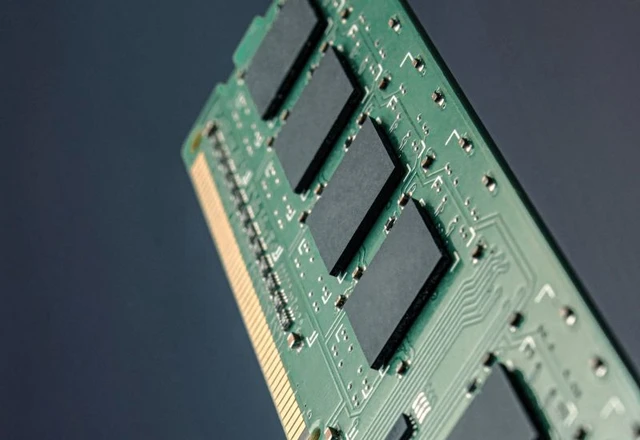
However, the true technological leap lies not just in the NPU itself, but in its synergy with memory architecture. Samsung intends to integrate GAIA into a Processing-in-Memory (PIM) framework. In traditional von Neumann architecture, the constant shuttling of data between the processor and RAM creates a notorious "bottleneck" that throttles AI performance. PIM technology overcomes this by enabling DRAM modules to perform basic computations directly within the memory dies.
This approach effectively erases the boundary between data storage and data processing. Coupled with the GAIA accelerator, this paves the way for devices that maintain a budget-friendly bill of materials while delivering high-tier efficiency in machine learning tasks. Consequently, entry-level PCs are being transformed from simple word-processing and browsing tools into fully capable edge computing nodes, capable of processing intelligent user queries autonomously and with high velocity.
 Nvidia’s Technological Pragmatism in the Open-Model Race