In an era defined by the absolute dominance of neural networks and a global shortage of specialized memory, Nvidia has firmly cemented its position as the preeminent tech titan of the AI age. Yet, beneath the veneer of a corporation now pivoted toward data centers, there remains a legacy that effectively forged modern gaming. The new initiative to release collectible GeForce cards represents an effort to bridge the company's current computational triumph with the very roots of the industry. This is more than a mere marketing ploy; it is a symbolic nod to the foundation upon which the empire was built.
Nvidia’s strategic trajectory has pivoted decisively toward high-performance infrastructure for artificial intelligence. This shift has become so absolute that it triggered a global shortage of the high-bandwidth memory essential for training massive language models. Consequently, the consumer segment—the very face of the company for decades—has been temporarily relegated to the periphery. Market anticipation for next-generation graphics cards remains in a state of limbo; unofficial reports suggest that the latest consumer hardware may not debut until next year.
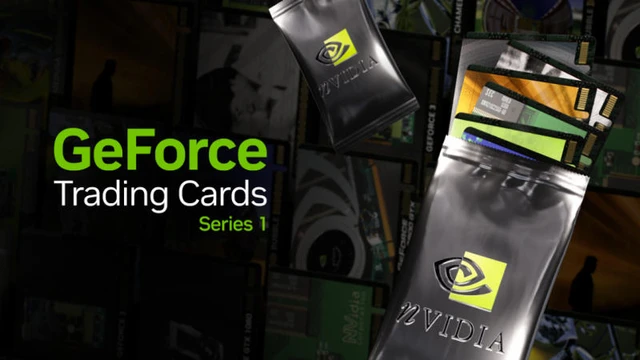
Amidst this strategic reallocation of resources, Nvidia has chosen to lean into nostalgia. The company has unveiled a series of 14 collectible cards chronicling the "greatest moments in GeForce PC gaming history." These are not commercial products intended for sale, but rather a sophisticated marketing instrument designed to sustain an emotional bond with its loyal gaming community while the company's primary engineering horsepower is dedicated to the architecture of neural networks.
For historians of technology, the curation of this inaugural series is particularly noteworthy. It features the NV1—the company's first multimedia processor and the catalyst for its early expansion—and the legendary GeForce 256. The latter warrants special recognition; in 1999, it coined the term "GPU" (Graphics Processing Unit) by offloading complex transform and lighting (T&L) calculations from the CPU to a dedicated silicon die, a move that fundamentally redefined the trajectory of 3D graphics.
The cards will be distributed as complimentary giveaways. Nvidia intends to weave this initiative into its summer social media campaigns and showcase them at the world's premier gaming events. Specifically, dedicated exhibits will be featured at Bilibili World 2026, QuakeCon 2026, and Gamescom 2026. In doing so, the company is leveraging physical artifacts as tangible touchpoints for an audience that exists primarily in the digital realm.
This series marks only the beginning of a long-term archival project. Nvidia aims to continue documenting its evolution through these artifacts, effectively building a material chronicle of its achievements. In an era where software is updated daily and hardware becomes obsolete within a few short years, such simple physical objects serve as a rare means of crystallizing technological progress—a reminder of the humble origins of the journey to the summit of the modern IT landscape.
 Nvidia’s Technological Pragmatism in the Open-Model Race