The contemporary hardware landscape is rapidly converging, blurring the lines between specialized high-performance computing and consumer gaming. The emergence of ultra-powerful, compact AI workstations prompts a critical question for engineers: can a tool designed for neural networks evolve into the ultimate gaming machine? Experiments involving the AMD Ryzen AI Halo running SteamOS reveal unexpected frictions between raw theoretical throughput and actual real-world performance. This case study underscores a fundamental truth: an abundance of resources does not always guarantee absolute dominance within virtual realms.
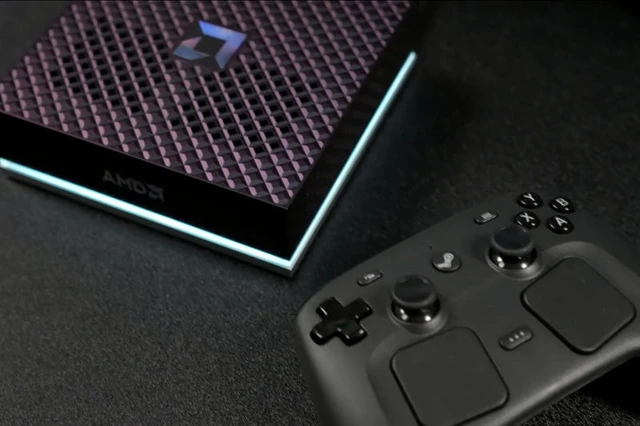
The vision of a compact gaming PC, most notably realized in the Valve Steam Machine, represented a compelling effort to synthesize the seamless ergonomics of a console with the versatility of an open-architecture system. Today, however, new contenders have emerged that dwarf Valve's original ambitions in terms of raw technical specifications. Chief among these is the AMD Ryzen AI Halo—a small-form-factor workstation engineered not for leisure, but for the rigorous demands of artificial intelligence workloads.
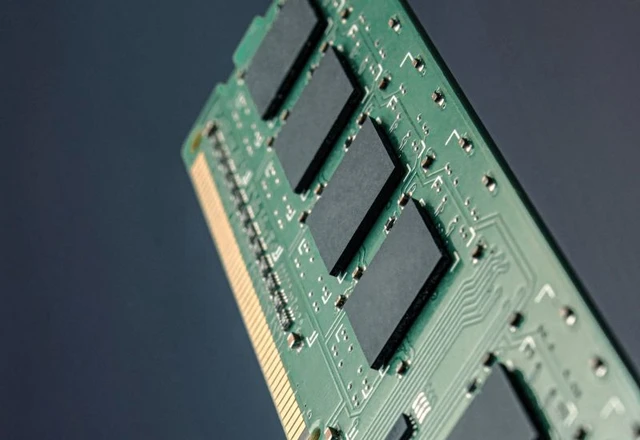
Attempting to repurpose this AI-driven powerhouse as a gaming rig has yielded nuanced results, prompting a re-evaluation of the traditional hardware hierarchy. At first glance, the AMD Ryzen AI Halo appears to be an uncompromising leader; its massive 128GB of RAM suggests an immense overhead of performance. Yet, practical application reveals that in the realm of gaming, sheer volume does not always translate to quality. Despite the abundance of memory, the CPU emerged as the primary bottleneck, leading to surprising performance gaps when compared to the far more modest specifications of the Steam Machine.
The Ryzen AI Halo’s most significant performance gains manifested at 4K resolution. It is here that the system's raw computational throughput finally found its stride, offsetting CPU limitations through sheer bandwidth. This underscores a critical industry truth: optimization for specific gaming workloads is far more vital than the mere accumulation of memory.
It is important to note that the AMD Ryzen AI Halo was never marketed to the gaming community. It is a sophisticated instrument designed for deploying local AI models and processing massive datasets. In its native environment, the workstation delivers staggering results, rivaling the efficiency of professional-grade solutions like the Nvidia DGX Spark. We are looking at a device capable of competing with consoles, but it does so as a secondary function—remaining, first and foremost, a potent compute node.
The current market landscape validates the overarching trend toward the miniaturization of high-performance computing. AMD has demonstrated that mobile-class hardware can be integrated into compact chassis without a catastrophic loss of power. Simultaneously, competition in the Mini-PC segment is intensifying. Solutions like the GMKtec EVO-X2 AI, priced at $1,999, deliver performance comparable to the Ryzen AI Halo despite having only 64GB of RAM. For those willing to trade compactness for graphical dominance, the Asus ROG NUC 2025 arrives equipped with the mobile Nvidia GeForce RTX 5070.
Ultimately, the experiment of integrating SteamOS into the AMD Ryzen AI Halo serves as a pivotal indicator. The boundary between professional data science tools and high-performance gaming PCs is becoming increasingly porous. Today’s "mobile" silicon enables the creation of systems that, only a few years ago, would have required a full server rack, effectively transforming the desktop into a comprehensive hub for both computation and entertainment.
 Nvidia’s Technological Pragmatism in the Open-Model Race