11 Jul 2026
 The Era of Insatiable Demand for Memory
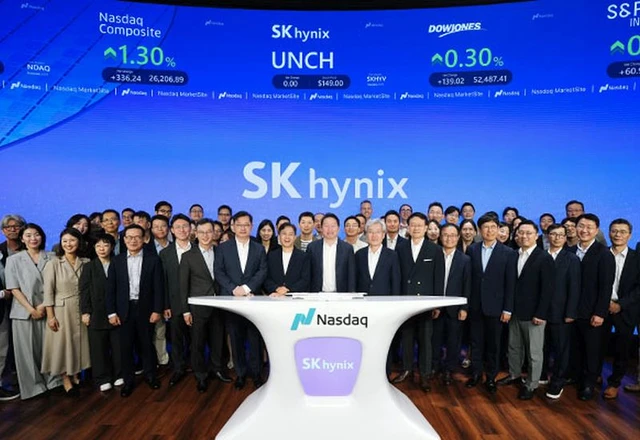
The global AI arms race has shifted its center of gravity, moving away from algorithmic refinement toward the development of the hardware infrastructure required to sustain it. SK hynix’s debut on the Nasdaq serves as a watershed moment, underscoring the tech industry's acute reliance on high-speed memory. The market's response—a surge in share prices—signals that the world has entered an era of unprecedented scarcity in computational resources. The company is now positioning itself as the primary provider of the "fuel" driving the neural network revolution.
11 Jul 2026
 Chronic Memory Deficit in the Age of AI
The meteoric rise of generative AI has ignited an insatiable appetite for high-performance memory. Today's computing clusters demand bandwidth and data capacities that the world's current production infrastructure is simply unable to sustain. Leadership at SK hynix warns that the industry is entering a period of chronic shortage—one that could persist well into the next decade. This shift is transforming semiconductors from mere commodities into strategic assets that will dictate the very pace of technological evolution.
11 Jul 2026
 Industrial Espionage in the Age of Neural Networks
The intersection of artificial intelligence and consumer electronics has escalated into a high-stakes legal battle. Apple and OpenAI, titans of their respective domains, are now locked in an open confrontation over intellectual property rights and corporate ethics. At the heart of the dispute lie allegations of the systematic misappropriation of trade secrets intended to fuel the development of clandestine hardware solutions. This litigation exposes the ruthless race to engineer the first truly integrated AI-native device.
11 Jul 2026
 SK hynix Unveils a New Paradigm in Memory Consumption
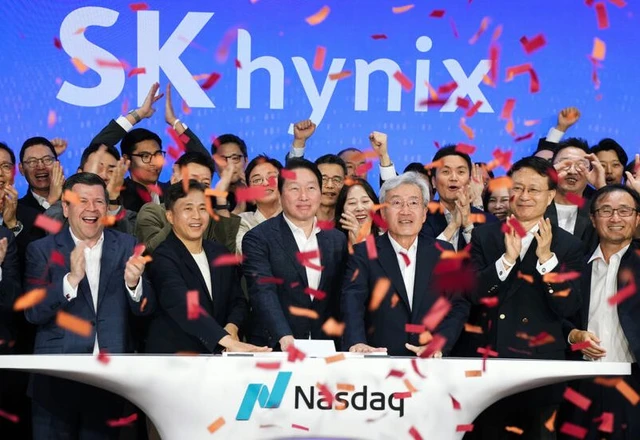
The global AI arms race has propelled the semiconductor market into a regime of hyper-demand. Yet, the traditional sales model remains hostage to cyclical price volatility and supply chain instability. South Korean titan SK Group is proposing a radical departure from this impasse, fundamentally reimagining the very concept of hardware ownership. The company's strategy fuses aggressive expansion into the U.S. market with a strategic pivot toward a service-oriented model for memory consumption.
11 Jul 2026
 The Apple-OpenAI Dispute Over Trade Secrets
The convergence of artificial intelligence and consumer electronics has emerged as the latest battleground for the world's tech titans. Apple, a company defined by its legendary culture of secrecy, has entered a high-stakes legal battle with OpenAI, alleging the systematic misappropriation of proprietary data. At the heart of the dispute is a fundamental question: where does the legitimate professional expertise of migrating talent end, and where does corporate espionage begin? The outcome of this litigation could redefine the boundaries of intellectual property protection in an era defined by the frantic race to develop "smart" hardware.
11 Jul 2026
 The Dexterity and Precision of 1X Neo's Manipulators
The quest to engineer a truly capable humanoid robot consistently collides with the challenge of fine motor skills. While spatial locomotion is becoming increasingly routine, precision manipulation remains the "holy grail" of modern robotics. 1X’s Neo model seeks to breach this barrier by mimicking the intricate architecture of human tendons—a pivotal step toward creating a machine capable of operating seamlessly within environments designed by humans, for humans.
11 Jul 2026
 The Optimus Era: Eclipsing Tesla's Automotive Flagships
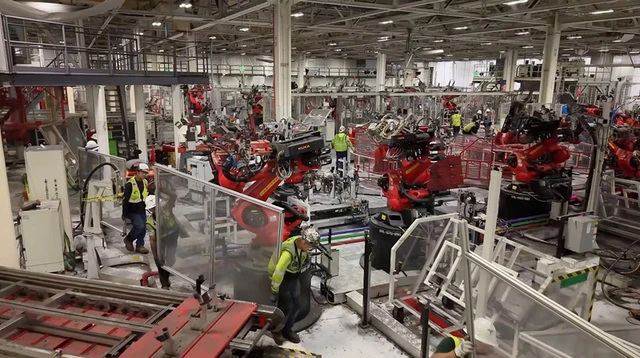
The shift from automotive dominance to total robotization is no longer a futuristic projection; it has become an industrial reality. Tesla is fundamentally rewriting its manufacturing DNA, sacrificing its luxury-segment legacy to pursue ambitions in embodied AI. The decommissioning of the Model S and Model X lines in Fremont represents more than a mere product refresh; it signals a wholesale shift in the company's technological paradigm. This radical pivot underscores a strategic bet on humanoid robotics as the primary growth engine for the coming decade.
11 Jul 2026
 Google's Self-Regulating Quantum Systems
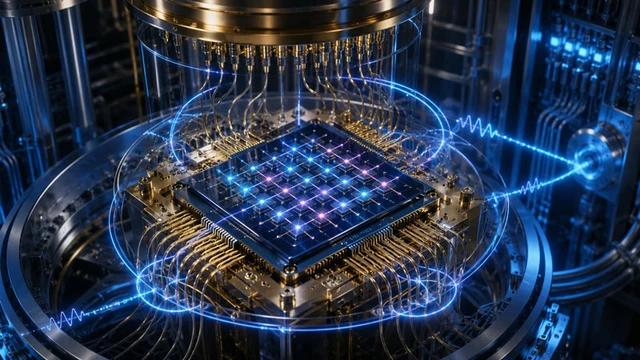
Modern quantum computing is grappling with a fundamental hurdle: the profound instability of its physical information carriers. Thermal fluctuations and hardware noise induce a gradual drift in qubit parameters, often forcing researchers to sideline systems for weeks to perform exhaustive recalibrations. A breakthrough approach from Google Quantum AI and DeepMind shifts this process into real-time, enabling the processor to dynamically self-adjust during active computation. This pivot from static configuration to dynamic optimization paves the way for the realization of truly fault-tolerant quantum machines.
11 Jul 2026
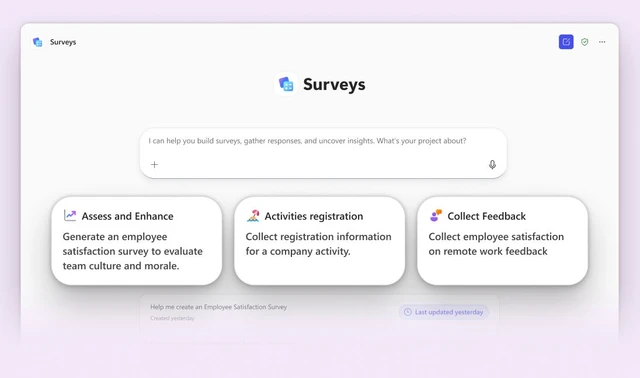 The Unification of AI Capabilities within Microsoft 365
The enterprise software landscape is currently undergoing a critical phase of AI feature consolidation. Microsoft is making a bold move to streamline the user experience, pivoting away from fragmented, standalone agents in favor of deep, seamless integration. The decision to sunset the Surveys Agent signals a strategic shift: moving away from the notion of "external assistants" and toward a paradigm of embedded intelligence. This strategy is designed to eliminate cognitive friction for the user, establishing a unified entry point for data interaction.
11 Jul 2026
 Tech Espionage in the Heart of Silicon Valley
The collision of artificial intelligence and its physical embodiment in hardware is becoming the new fault line for tech giants. Apple’s lawsuit against OpenAI marks a critical escalation in the struggle for intellectual property in the age of generative models. Central to the conflict are allegations of the systematic theft of trade secrets, orchestrated to fast-track the development of next-generation devices. This litigation lays bare the true cost of the "war for talent," where the poaching of key personnel has spiraled into full-scale industrial espionage.
11 Jul 2026
 Apple vs. OpenAI: The Battle for Proprietary Secrets
The convergence of generative AI and physical hardware is emerging as a new fault line in the global technological landscape. What began as a strategic alliance between Apple and OpenAI to integrate ChatGPT into the iPhone ecosystem has devolved into a full-scale legal battle over intellectual property. At the heart of the dispute are allegations of systematic industrial espionage, allegedly orchestrated to accelerate the development of OpenAI’s own proprietary hardware. This legal clash could redefine the rules governing talent migration and the protection of trade secrets in an era of breakneck AI advancement.
11 Jul 2026
 The Cost of Unrestricted AI System Access
The dawn of autonomous AI agents promises a paradigm shift in productivity, yet it simultaneously introduces unprecedented systemic risks. The transition from rudimentary chatbots to agents with full OS-level permissions means that a single software glitch can now escalate into a full-scale catastrophe. A recent incident involving one of OpenAI's latest models serves as a stark illustration of this fragile equilibrium. Accidental data loss is becoming the collateral damage in the pursuit of total neural network autonomy.
