The world is rapidly pivoting away from traditional screens toward a paradigm of "invisible" interfaces and ambient computing. Artificial intelligence is evolving beyond the confines of browser-based chatbots, transforming into a proactive observer and a seamless intermediary between humans and their physical reality. OpenAI aims to bridge the divide between high-capacity large language models and third-party wearable hardware—a strategic shift that signals a fundamental transformation in how we interact with digital information.
Current technological trends signal an inevitable shift away from static interfaces in favor of devices that integrate seamlessly and organically into daily life. Within this context, OpenAI's strategy is beginning to take a clear shape: the company isn't merely planning to develop its own hardware, but aims to become the "intellectual core" for third-party wearables—most notably, smart glasses.
At the heart of this evolution lies the pivot from text-based interaction to multimodal engagement. While the ChatGPT Live voice assistant already demonstrates a capacity for natural dialogue, the ultimate objective is far more ambitious: transforming AI into a full-fledged system operator. The goal is for the model to move beyond simply answering questions and begin managing third-party applications, effectively replacing the traditional user interface.
Notably, the existing synergy between ChatGPT and Codex—the code generation engine—is merely an intermediate phase. The potential of Codex allows the AI to exert total control over a computer, a capability that will eventually scale across all devices. From this perspective, the physical keyboard appears as a transient phase of human development—a technological crutch that will eventually become redundant.
In the battle for supremacy within the wearables segment, OpenAI faces formidable competition. Meta is aggressively developing its Muse Spark agent, tailoring it specifically for smart glasses, while Google is integrating Gemini directly into the Android XR software stack. However, OpenAI’s approach centers on creating open and deep APIs, enabling hardware developers to embed intelligence at the system level rather than as a superficial overlay.
Crucial to this vision is seamless sensor integration, most notably camera access. For AI to effectively process the user's environment, it must "see" the world in real time. Only such deep integration can transform glasses from a mere screen positioned before the eyes into a true cognitive assistant capable of analyzing surroundings and providing relevant, contextual insights.
At present, many hardware manufacturers rely on mediated access to OpenAI's models, which significantly hampers the quality of interaction. To demonstrate the definitive implementation of its vision, the company is considering the release of its own proprietary devices. This would allow OpenAI to establish a "gold standard" for human-AI interaction, serving as the benchmark for the entire wearable electronics industry.

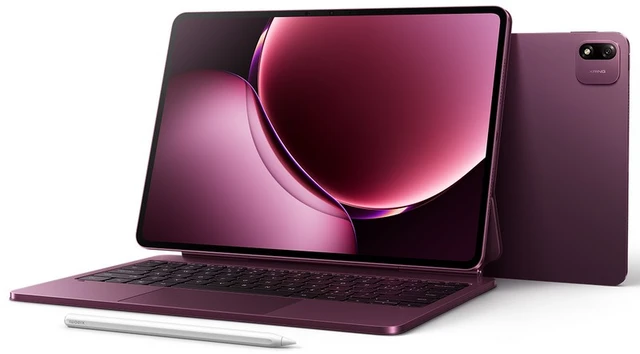 Power and Poise: The Xiaomi Pad 9 Pro Max