The semiconductor industry is currently weathering a period of tectonic shifts, as the traditional hegemony of x86 collides with the rapid ascent of energy-efficient architectures. Intel sits at the epicenter of this storm, attempting to balance urgent financial restructuring with a radical overhaul of its technological cycles. Today, the company is betting on aggressively closing the gap with its rivals while pivoting toward the burgeoning markets for intelligent systems. This trajectory requires more than simple operational optimization; it demands a fundamental reimagining of the philosophy of computing itself.
Intel's second-quarter financial results present a paradoxical landscape: reported losses coexist with revenue and profit growth that outperformed market expectations. This volatility is primarily driven by the accounting complexities surrounding deals with U.S. government entities, which have acquired a significant stake in the company. Despite these external headwinds, Intel’s leadership notes a steady positive trend—actual performance has exceeded forecasts for seven consecutive quarters.
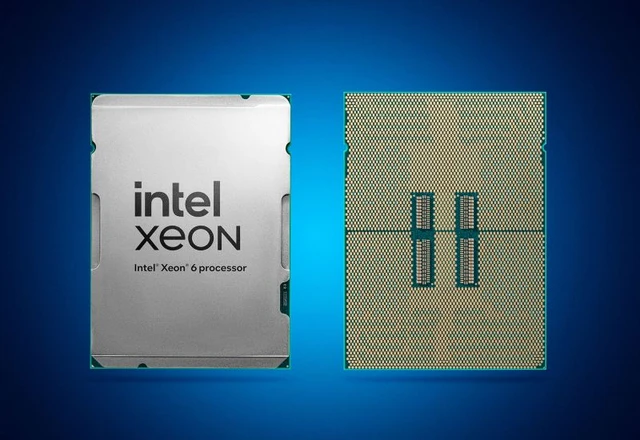
The server product line has emerged as a primary growth driver. While the Xeon 6 family is expanding with unprecedented velocity, this success is unfolding against a backdrop of intense competitive pressure. The market landscape has shifted: the expansion of Arm-based solutions in data centers now accounts for nearly half of all sales. Simultaneously, AMD maintains a firm grip on one-third of the x86 server processor market, effectively ending Intel's long-standing monopoly.
Acknowledging the need to close the competitive gap has become a central theme of the latest reporting period. The strategy for reclaiming leadership hinges on the upcoming releases of Clearwater Forest, Diamond Rapids, and Coral Rapids. These products are designed as a technological response to market challenges, aiming to prove that Intel can do more than just narrow the efficiency and performance gap—it intends to execute a quantum leap, bypassing several generations of competing solutions.
Parallel to chip development, the company is focusing on its foundational infrastructure—the process nodes. Yield rates for mass production lines have already surpassed projections, and the rollout of the Intel 18A node is ahead of schedule. This process is critical to the IDM 2.0 strategy, as it enables Intel to attract external clients as a contract foundry, transforming internal capacity into a full-fledged business asset. While supply shortages in the server segment remain a concern, efforts to resolve these issues are concentrated in the second half of the year.
One of the most ambitious strategic pivots is the transition toward the concept of "Physical AI." The decision to rename the client computing division to the Client Computing and Physical AI Group signals a profound strategic shift. In Intel's vision, Physical AI represents the synergy of robotics and edge computing, where data processing occurs directly on the device rather than in the cloud.
The potential for this market is estimated to be comparable to the entire personal computing segment. Although edge computing currently accounts for only 10% of the division's revenue, long-term forecasts project growth to $8 billion per quarter. Consequently, Intel seeks to evolve from a traditional processor manufacturer into the architect of an intelligent physical systems ecosystem, where its silicon foundation serves as the bedrock for the autonomous and adaptive technologies of tomorrow.
 Power and Poise: The Xiaomi Pad 9 Pro Max