The global AI arms race is pivoting from a battle of algorithms to a struggle over physical infrastructure. Leading research labs have come to realize that software supremacy is unattainable without absolute control over the underlying compute power. Anthropic is now making a strategic move toward developing its own proprietary hardware stack, aiming to decouple itself from the constraints of third-party suppliers. Recent procurement requests for specialized memory signal that the project has evolved beyond conceptual blueprints and is now entering the phase of tangible implementation.
The contemporary landscape of Large Language Models (LLMs) has evolved far beyond mere code synthesis. Today, the battle for AI supremacy is primarily a struggle over computational resources and the efficiency with which they are utilized. In this context, Anthropic's decision to develop its own accelerators is not merely ambitious—it is a strategic imperative. The company's official request to SK hynix for memory chip supplies serves as a definitive signal to the industry: the conceptual planning phase is over, and the project has moved into physical implementation.
The drive toward hardware sovereignty is dictated by harsh market realities. For too long, the industry has been held hostage by a limited number of GPU suppliers, creating critical bottlenecks in model scaling. Transitioning to proprietary Application-Specific Integrated Circuits (ASICs) allows for hardware optimization tailored to specific neural network workloads, radically enhancing energy efficiency and data processing speeds compared to general-purpose graphics processors.
Such a strategy demands colossal resources. Investments required to achieve computational self-sufficiency are estimated at $50 billion. The scale of this ambition is further evidenced by infrastructure plans: a partnership with Fluidstack involves the construction of high-capacity data centers in Texas and New York, which will serve as the foundation for deploying these new chips.
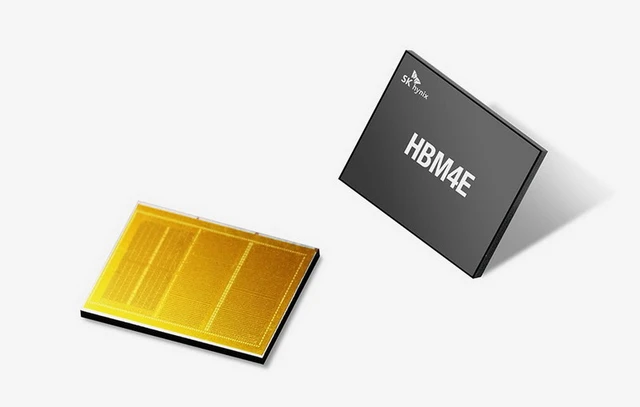
A pivotal element in this architecture is High Bandwidth Memory (HBM). In modern LLMs, the primary constraint is often not the raw power of the compute core, but memory throughput—the so-called "memory wall." This makes the selection of SK hynix, a global leader in HBM production, critical. Without ultra-fast data exchange, even the most sophisticated processor would sit idle, waiting for information to arrive.
It is fascinating to witness the emergence of a new breed of tech giants. Following in the footsteps of Google with its TPUs and Amazon with its Trainium chips, Anthropic is transforming from a software developer into a full-cycle enterprise. The company now controls the entire value chain: from neural network architecture design to silicon engineering and data center management.
This trend underscores the profound interdependence between memory manufacturers and AI creators. SK hynix, alongside Samsung and Micron, is ceasing to be a mere component supplier and is becoming a strategic investor in the development of the AI ecosystem itself. Consequently, the industry is moving toward a state of vertical integration where the boundaries between software and hardware are permanently blurred in the pursuit of maximum performance.

 Power and Poise: The Xiaomi Pad 9 Pro Max