The era of blind faith in the infinite growth of artificial intelligence is giving way to a period of rigorous pragmatism. Investors are no longer swayed by lofty promises; they are now demanding tangible financial returns on multi-billion dollar investments. The current price correction among the leading US tech giants signals a profound crisis of confidence regarding the efficacy of their massive capital expenditures. The market is shifting from a state of euphoria to a phase of critical scrutiny over the actual return on investment.
The euphoria surrounding generative AI, which for so long propelled tech valuations upward, has begun to fracture. Today, even the most stellar quarterly reports offer no guarantee of stability; instead, they are increasingly followed by precipitous corrections. According to Bloomberg data, the seven largest players in the U.S. tech sector have seen a combined loss of $797 billion in market capitalization since April.
The trajectory of the "Magnificent Seven" reveals a troubling trend. Although the index for these companies hit historic highs in late May, the subsequent pullback was 11%, representing a staggering $2 trillion loss in value. The broader market remains equally unstable: the S&P 500 dipped by 1.2%, while the tech-heavy Nasdaq 100 fell by 1.9%. Of particular note is the SOX index; despite an impressive year-to-date gain of over 70%, its recent volatility has spiked. The market has become exceptionally jittery: over the last two months, only five trading sessions ended with a price movement of less than one percentage point.
The primary catalyst for this decline is the widening chasm between capital expenditures (CapEx) and tangible profitability. Leadership at Tesla and Alphabet have openly acknowledged the necessity of ramping up AI infrastructure spending, yet financial results have not always justified these outlays. For the investment community, the core issue is a lack of clarity regarding when—and how—multi-billion dollar investments in server capacity and silicon will translate into meaningful returns. This situation is further exacerbated by macroeconomic instability and geopolitical tensions, which are exerting additional pressure on equity markets.
A particularly alarming signal emerged from Alphabet's reporting: for the first time since the company went public, rising costs in the second quarter led to negative cash flow. For investors, this suggests that a giant long renowned for its financial fortitude is beginning to accumulate debt rather than generating steady cash. Simultaneously, Elon Musk’s strategy of aggressively accelerating capital expenditures triggered a 15% collapse in Tesla shares in a single trading session—the worst performance since March 2025.
Against this backdrop, Alphabet shed 7.1%, while Microsoft, Amazon, and Meta are also seeing share price declines as the market awaits their upcoming reports. Paradoxically, Apple—which has maintained a more measured stance in the AI arms race and avoided aggressive spending—has seen its stock rise by 11% over the month and 18% since the start of the year. This underscores a shift in market sentiment: investors are beginning to prize financial discipline over ambitious but prohibitively expensive technological leaps.
The broader picture points to a systemic crisis of transparency. The debt structures of many U.S. public companies are becoming increasingly opaque, while officially declared liabilities are climbing rapidly. In the absence of a clear understanding of the ROI on AI investments, any financial noise triggers a sharp market reaction, turning price movements into a series of nervous oscillations.
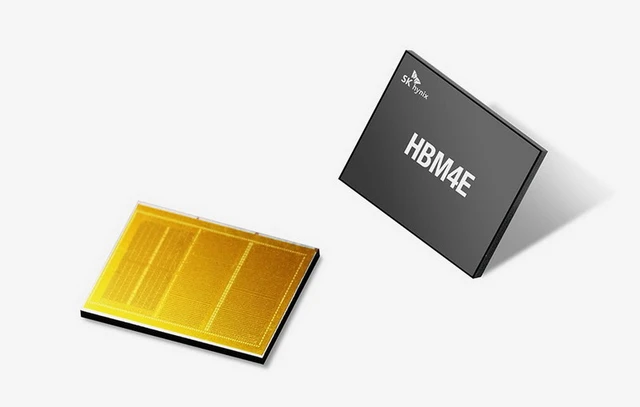 The Expansion of the 1c Process Node in DRAM