The global PC market has entered a phase of structural transformation, where revenue growth is no longer tethered to sales volume. Acute shortages in memory components triggered a systemic chain reaction—ranging from consumer panic at the start of the year to a pronounced slump in second-quarter shipments. In this volatile environment, survival is reserved for either agile players capable of rapid product iteration or corporate behemoths bolstered by resilient B2B segments. The industry is effectively pivoting toward a high-margin product model, with artificial intelligence serving as the primary catalyst and justification for the escalating cost of hardware.
The PC market has encountered a classic economic paradox: demand remains robust, yet the physical capacity to meet it is constrained by the availability of fundamental components. The first quarter of the year was defined by a surge in anticipatory demand, as consumers—foreseeing inevitable price hikes—rushed to upgrade their hardware based on legacy pricing. However, by mid-year, this momentum stalled, and the market began to feel the tangible impact of memory shortages. Consequently, shipment volumes in the second quarter declined by 4% year-over-year, dropping to 65 million units.
In this volatile landscape, the distribution of power among vendors has become increasingly uneven. While market leaders struggled to maintain their footing, some players successfully leveraged the crisis for expansion. Apple serves as a prime example, posting an impressive growth rate of 13% and increasing its market share from 8.9% to 10.5%. This success is largely attributed to the strategic rollout of the MacBook Neo—more accessible models that allowed the brand to broaden its reach without compromising its premium positioning.
Asus followed a similar trajectory. By rapidly integrating the latest generation of processors into its laptop lineup, the company grew shipments by 4%, strengthening its share to 7.4%. This underscores a critical trend: in an era of scarcity, victory belongs to those who can most swiftly update their technological stack and accelerate time-to-market.
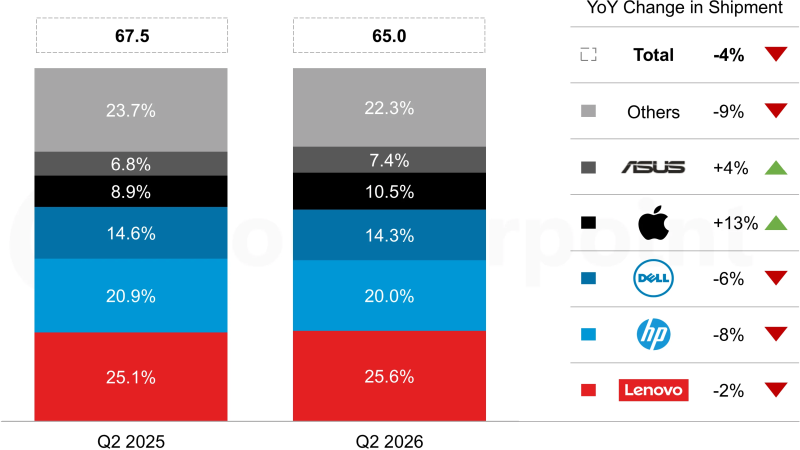
The situation for the industry's traditional incumbents has been more complex. Lenovo, despite a 2% dip in shipment volumes (down to 16.6 million units), managed to marginally increase its overall market share to 25.6%. Meanwhile, HP Inc. and Dell Technologies faced steeper headwinds. HP’s share slid to 20%, with shipments dropping by 8%. Dell managed to soften the blow through deep penetration into the enterprise segment; corporate clients are generally less sensitive to price fluctuations than retail consumers and are often bound by rigid hardware refresh cycles.
The decline beyond the top five vendors was even more pronounced, with volumes plummeting by 9%. This indicates that small and mid-sized players are the first casualties of component shortages, as they lack the supply chain leverage wielded by global corporations.
The primary driver of this instability is the supply crunch affecting memory (RAM and SSDs). Faced with a shortage of low-cost modules, manufacturers are forced to shift their focus toward high-end configurations. The budget segment is effectively being eroded from the offering, as producing entry-level devices becomes economically unviable given the high cost of components.
Against this backdrop, the "AI PC" concept has moved to the forefront. The integration of Neural Processing Units (NPUs) and local AI capabilities allows vendors to justify premium pricing for new models. For the corporate sector, this provides an additional incentive to upgrade, compounding the natural lifecycle of Microsoft Windows operating system refreshes.
Forecasts from Counterpoint Research point toward a gradual stabilization, though not a sharp return to previous price points. DDR4 price growth is expected to slow to 15% this quarter and drop to 5% by year-end. A similar trend is observed with 1TB SSDs, where price increases are projected at approximately 20%.
Ultimately, the industry is transitioning to a new reality: the era of cheap, mass-market hardware is temporarily receding. Over the coming half-year, the primary metric of success will not be the volume of units sold, but rather revenue growth driven by an increase in Average Selling Price (ASP) and the implementation of intelligent features that transform the computer from a simple tool into a high-tech AI hub.
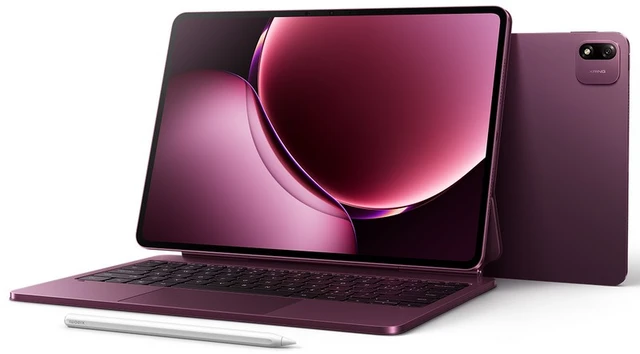 Power and Poise: The Xiaomi Pad 9 Pro Max