7 Aug 2026
 AMD Doubles Down on Hardware-Accelerated Inference
The AI industry is undergoing a fundamental paradigm shift, transitioning from the era of training monolithic models to a phase of large-scale deployment and operationalization. In this landscape, inference—the process of generating outputs from pre-trained networks—has become critical; latency and power efficiency are now the primary determinants of a product's commercial viability. AMD’s acquisition of the Canadian startup Taalas is a key component of a broader strategy to develop specialized accelerators. This move underscores a clear market trajectory: a pivot away from general-purpose hardware in favor of extreme optimization tailored to specific algorithmic workloads.
7 Aug 2026
 Personal AI Companion by OpenAI and LoveFrom
The smartphone era is steadily reaching its zenith, paving the way for a fundamental shift in the paradigm of human-machine interaction. In collaboration with legendary designer Jony Ive, OpenAI aims to reimagine this experience by transitioning artificial intelligence from the confines of screens into the physical realm. This project represents an ambitious endeavor to manifest neural-network intelligence within a tangible object capable of perceiving and responding to its surroundings. The ultimate objective transcends the creation of yet another gadget; it is about pioneering an entirely new category of devices destined to eventually supersede the ubiquitous mobile phone.
7 Aug 2026
 China’s Cislunar Space Surveillance
The Moon is transcending its role as a mere object of astronomical study, evolving into a theater of technological rivalry and strategic dominance. The impact of a spent Falcon 9 rocket stage on the lunar surface provided an ideal testbed for validating space-tracking systems. China's Gande-1 01 spacecraft effectively transformed an accidental debris strike into a precision experiment in deep-space monitoring. This event underscores a pivotal shift from passive observation toward active, autonomous surveillance of objects within cislunar space.
7 Aug 2026
 China's New Trajectory Toward Semiconductor Sovereignty
The global microelectronics rivalry is shifting from a race for scale to a battle of profound technological sophistication. Fueled by massive state capital, Beijing is fundamentally pivoting its strategic priorities within the semiconductor landscape. Having spent a decade establishing its foundational infrastructure, China is now doubling down on highly specialized, cutting-edge niches. The third iteration of the "Big Fund" is designed to dismantle critical dependencies by accelerating the development of AI accelerators and pioneering advanced chip-packaging techniques.
7 Aug 2026
 The Generative Search Trust Trap
The era of generative artificial intelligence has fundamentally reshaped how we interact with information, shifting the paradigm from hunting for links to receiving direct answers. Yet, this convenience masks a critical vulnerability: the propensity of Large Language Models (LLMs) to mistake internet myths for empirical facts. A recent incident involving Google’s AI Overview serves as a stark illustration of how a digital hallucination can trigger actual acts of physical vandalism. The saga of the "golden cameras" exposes a profound disconnect between an AI's ability to synthesize text and its complete lack of basic understanding regarding the laws of physics.
7 Aug 2026
 The Evolution of Embodied Intelligence in China
The global race to develop fully realized humanoid robots is evolving, shifting from a phase of technical demonstrations toward the deep integration of cognitive systems. The primary bottleneck remains the persistent gap between mechanical dexterity and a machine's capacity for sentient interaction with the physical world. China is addressing this challenge by forging strategic alliances between hardware titans and neural network architects. Unitree’s trajectory toward a public offering, coupled with its synergy with DeepSeek, signals the dawn of a new epoch: the era of Embodied AI.
7 Aug 2026
 SK hynix’s Strategic Leap in Semiconductors
The global AI arms race has shifted the industry's center of gravity, pivoting from algorithmic innovation toward the critical provision of hardware infrastructure. High-performance memory and ultra-fast storage have emerged as the new "digital gold," effectively dictating the velocity at which neural networks evolve. Against this backdrop, SK hynix is launching an ambitious expansion strategy designed to cement its market dominance; a massive $38 billion investment in South Korean manufacturing capabilities aims to satiate the surging appetite of data centers worldwide.
7 Aug 2026
 A Standalone Translator Powered by Gemma
The era of absolute cloud dependency is gradually yielding to the Edge AI paradigm, where high-performance neural networks are migrating directly onto endpoint devices. Data privacy and offline resilience have become the primary catalysts driving the evolution of local large language models (LLMs). A recent experiment by Google engineers demonstrates that modern LLMs can operate efficiently even within the hardware constraints of single-board computers. This trajectory paves the way for truly autonomous personal assistants, entirely independent of constant server connectivity.
7 Aug 2026
 The Phenomenon of Chinese Semiconductor Design
The global race for technological sovereignty has shifted from a mere arms race over hardware acquisition to a contest of engineering prowess and executional precision. In an era of stringent sanctions, the capacity to design complex integrated circuits that are "right-first-time" for mass production has become a critical determinant of survival. Against this backdrop, Chinese engineers are demonstrating surprising efficacy, challenging established Western design paradigms. This qualitative leap is precisely what enables them to circumvent constraints on accessing cutting-edge lithography equipment.
7 Aug 2026
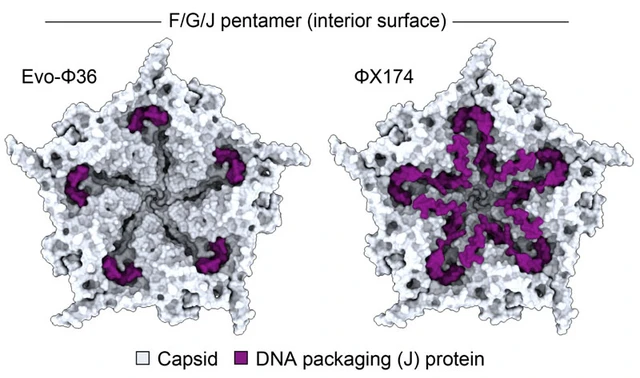 Generative Design of Viable Viral Genomes
The boundary between biological evolution and digital engineering has effectively dissolved. For the first time, generative artificial intelligence has transcended the realms of text and imagery to synthesize functional genetic code capable of infiltrating living organisms. This leap in synthetic biology heralds a new era of precision medicine and targeted antimicrobial therapies; yet, it simultaneously confronts humanity with pressing ethical dilemmas regarding the accessibility of tools for pathogen design.
7 Aug 2026
 Digital Circumvention of US Export Controls
The global race for AI supremacy has evolved from a battle over hardware ownership into a struggle for compute access. Despite stringent US sanctions restricting the supply of cutting-edge GPUs to China, the technological divide between East and West is narrowing rapidly. The emergence of high-performance Chinese models suggests the existence of a sophisticated infrastructure for the remote utilization of overseas data centers. Washington is now grappling with how to seal the digital loopholes that render physical borders obsolete.
7 Aug 2026
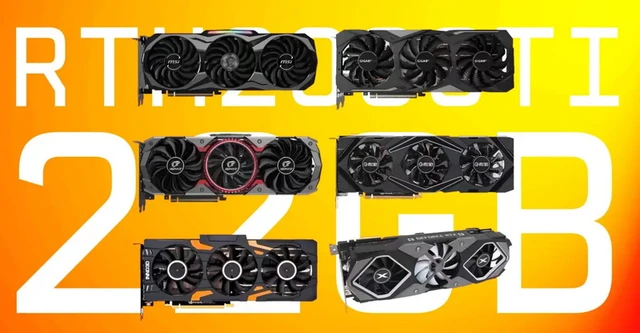 Optimizing VRAM for Local Neural Networks
The era of generative AI's rapid ascent has fundamentally shifted hardware priorities: VRAM capacity is now frequently more critical than raw computational throughput. Faced with the prohibitive cost of modern professional accelerators, enthusiasts are seeking creative workarounds, repurposing legacy flagships into efficient workstations. The resurgence of modified GeForce RTX 2080 Tis exemplifies the surprising resilience of older silicon when confronted with contemporary workloads. This trend underscores a systemic global shortage of affordable, high-VRAM solutions for running LLMs and diffusion models locally.
