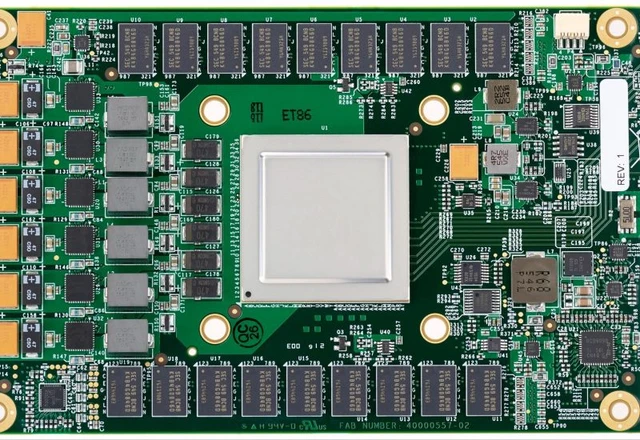
The global microelectronics rivalry is shifting from a race for scale to a battle of profound technological sophistication. Fueled by massive state capital, Beijing is fundamentally pivoting its strategic priorities within the semiconductor landscape. Having spent a decade establishing its foundational infrastructure, China is now doubling down on highly specialized, cutting-edge niches. The third iteration of the "Big Fund" is designed to dismantle critical dependencies by accelerating the development of AI accelerators and pioneering advanced chip-packaging techniques.
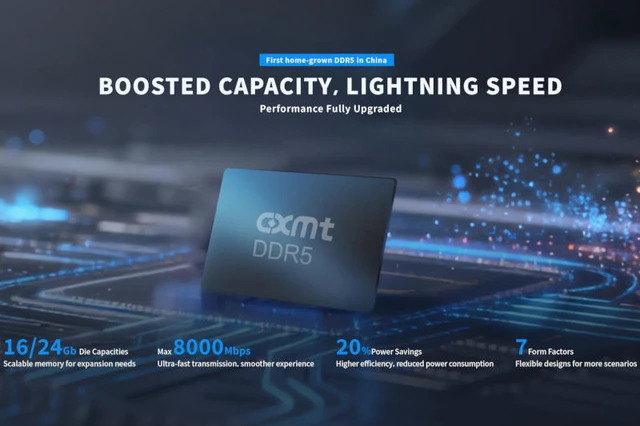
The technological leap seen in Chinese industry in recent years is the result of systemic state planning, with the so-called "Big Fund" serving as its central financial lever. This mechanism allowed the PRC to do more than just create local players; it cultivated true national champions such as SMIC, YMTC, and CXMT. Today, however, Beijing's strategy is evolving: extensive capacity expansion is giving way to the targeted modernization of the most critical links in the value chain.
The fund's trajectory clearly illustrates a transition from general import substitution toward the pursuit of sophisticated technological workarounds. The first phase, launched in 2014 with over $19 billion in capital, was fundamental in nature. During this period, support was distributed across a broad spectrum: from silicon wafer production and lithography equipment to Electronic Design Automation (EDA) software. This era laid the groundwork for companies like Naura Technology and Empyrean Technology, while scaling the capabilities of contract manufacturers SMIC and HuaHong.
By 2019, with the onset of the second funding phase, the vector shifted toward ensuring industry resilience. In the face of stringent US sanctions against Huawei Technologies, China was forced to accelerate its drive toward full autonomy. Investment surged to $30 billion, a significant portion of which was channeled into strengthening SMIC and developing the memory segment. During this period, CXMT and YMTC received a powerful growth impetus, effectively becoming the guarantors of the country's information security and technological independence in data storage.
The current third phase, initiated in 2024, marks a transition to a strategy of "intelligent circumvention" of restrictions. With access to the most advanced lithography machines limited, the only path forward is the development of cutting-edge packaging and integration techniques for semiconductor components. This represents a shift from traditional monolithic dies toward multi-layer structures and chiplets, which allows for significant performance gains even when utilizing lower-density process nodes.
In this context, particular emphasis is placed on the development of High Bandwidth Memory (HBM), a critical component for modern neural networks. Investments are being directed toward Tiansui Xinyuan Technology and Anhui Juhe Microelectronics—firms specializing in innovative packaging—effectively turning this segment into a new front in the technological arms race.
Parallel to these efforts, China is focusing on the creation of general-purpose AI accelerators. The strategy involves more than just replicating Western models; it entails the deep integration of high-speed memory directly into chip architecture and the development of high-performance data interfaces. Consequently, the "Big Fund" is ceasing to be merely a source of capital for building factories, evolving instead into a strategic tool for managing the most complex engineering challenges of the modern era.
 The Price of Acceleration: CXMT’s Rapid Push into Memory