The era of absolute cloud dependency is gradually yielding to the Edge AI paradigm, where high-performance neural networks are migrating directly onto endpoint devices. Data privacy and offline resilience have become the primary catalysts driving the evolution of local large language models (LLMs). A recent experiment by Google engineers demonstrates that modern LLMs can operate efficiently even within the hardware constraints of single-board computers. This trajectory paves the way for truly autonomous personal assistants, entirely independent of constant server connectivity.
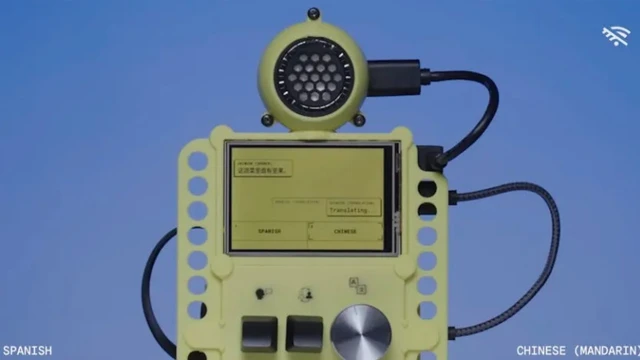
The migration of sophisticated AI cognitive capabilities from remote servers to local silicon represents one of the primary challenges facing today's tech industry. Within the framework of the Google Gravity project, a concept for a handheld translator was realized—one that completely eliminates the need for cloud connectivity. The technological foundation of the device is a Raspberry Pi 5 single-board computer, whose performance proved sufficient to run an optimized neural network from the Gemma family (specifically, the Gemma 4 E4B version).
To ensure a model of this caliber could operate on an ARM processor without catastrophic performance degradation, the developers utilized the LiteRT-LM framework. This specialized solution enables efficient weight quantization and optimizes RAM utilization, which is critical for resource-constrained devices. As a result, the team achieved acceptable latency during response generation, transforming a compact computer into a fully functional linguistic tool.
The physical design of the device was engineered with a focus on ergonomics and functionality. The chassis was produced via 3D printing, allowing for maximum density in the placement of electronic components within a compact housing. The user interface remains minimalist: a small screen for visual translation monitoring is complemented by a microphone and speaker. For operational control, the device features a physical voice-activation button and a mechanical language selector, ensuring intuitive use even in high-stress travel scenarios.
Particular attention was paid to speech synthesis. The Moonshine system handles the conversion of the neural network's text responses into a natural-sounding voice. This integration allows the user to choose their preferred information format: either via an audio channel or by reading the text on the display.
The primary advantage of this approach is absolute autonomy. Following initial setup and the loading of the necessary weights, the model operates entirely offline. This not only resolves data security concerns—as information never leaves the device—but also renders the translator indispensable in regions with unstable or non-existent internet connectivity. Such a case confirms the broader trend toward AI decentralization, evolving complex algorithms from subscription-based services into tangible tools owned by the user.
 Anthropic’s Strategic Push for Hardware Independence