The era of generative AI's rapid ascent has fundamentally shifted hardware priorities: VRAM capacity is now frequently more critical than raw computational throughput. Faced with the prohibitive cost of modern professional accelerators, enthusiasts are seeking creative workarounds, repurposing legacy flagships into efficient workstations. The resurgence of modified GeForce RTX 2080 Tis exemplifies the surprising resilience of older silicon when confronted with contemporary workloads. This trend underscores a systemic global shortage of affordable, high-VRAM solutions for running LLMs and diffusion models locally.
The evolution of graphics accelerators often follows a cyclical pattern: yesterday's gaming flagship becomes today's indispensable tool for specialized workloads. The GeForce RTX 2080 Ti, powered by the TU102 chip, hit the market nearly eight years ago, offering 11 GB of GDDR6 memory in its standard configuration. While this capacity remains sufficient for modern gaming, it has become a critical bottleneck for those working with Large Language Models (LLMs) or generating high-fidelity imagery.
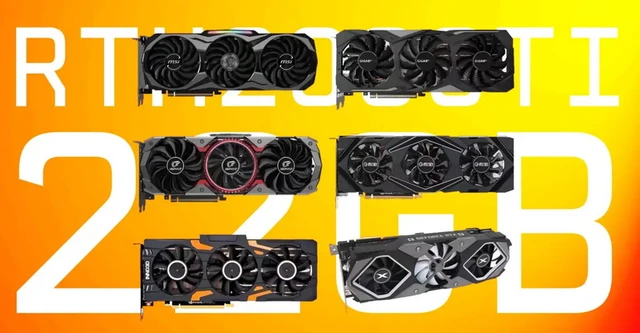
A surprising trend has emerged on the secondary market—particularly on platforms like eBay: the sale of deeply modified versions of this card featuring doubled memory capacity, reaching 22 GB. This is not a software patch, but a comprehensive hardware intervention. Technically, the process involves replacing the standard 1 GB memory chips with 2 GB modules. Since the RTX 2080 Ti utilizes a 352-bit bus with 11 active channels, proportionally increasing the density of each module allows the total VRAM to be expanded exactly twofold.
However, the physical replacement of components is only half the battle. For the GPU to correctly recognize and utilize the expanded memory array, the device's configuration parameters must be modified. This transforms the card from a standard consumer product into a sort of "custom" accelerator—one that remarkably continues to operate on standard Nvidia drivers without requiring third-party or specialized software.
It is important to note that such an upgrade does not grant the graphics card additional computational resources. The CUDA core count (4,352 units) and the overall performance of the TU102 chip remain unchanged. Nevertheless, in the context of local AI, memory capacity is the decisive factor. If neural network weights or datasets exceed the available video memory, the system is forced to rely on significantly slower system RAM, leading to a catastrophic drop in generation speed. 22 GB enables the execution of substantially larger models and higher resolutions without the risk of "out of memory" errors.
Naturally, this solution involves certain compromises. Turing-generation Tensor cores are noticeably inferior to modern architectures in supporting new low-precision formats (such as FP8), which have become the standard in recent RTX series. Nonetheless, at a price point of around $500, these modified cards represent an extremely attractive alternative for those who need accessible memory capacity without paying the premium for the excessive power of contemporary flagships.
Ultimately, we are witnessing a fascinating market phenomenon: legacy hardware is gaining a second life thanks to hardware flexibility and the surging demand for local computation. This transforms the RTX 2080 Ti into a "people's accelerator" for researchers and developers who prioritize practical utility over marketing benchmarks.
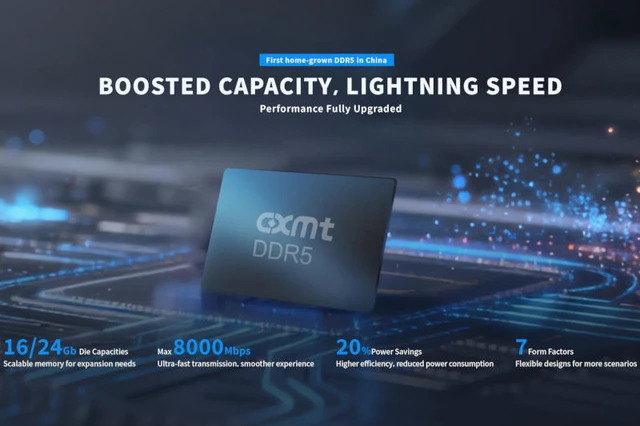 The Price of Acceleration: CXMT’s Rapid Push into Memory