The global race for AI supremacy has evolved from a battle over hardware ownership into a struggle for compute access. Despite stringent US sanctions restricting the supply of cutting-edge GPUs to China, the technological divide between East and West is narrowing rapidly. The emergence of high-performance Chinese models suggests the existence of a sophisticated infrastructure for the remote utilization of overseas data centers. Washington is now grappling with how to seal the digital loopholes that render physical borders obsolete.
The technological standoff between the US and China has reached a critical juncture, with semiconductors serving as the primary instrument of leverage. The Biden administration's strategy was clear: restrict Chinese firms' access to high-end AI accelerators to stifle the development of their Large Language Models (LLMs). However, practice has shown that physical import bans do not automatically equate to a loss of capability. In the era of cloud computing, computational power has evolved into a service—one that can be leased from anywhere in the world.
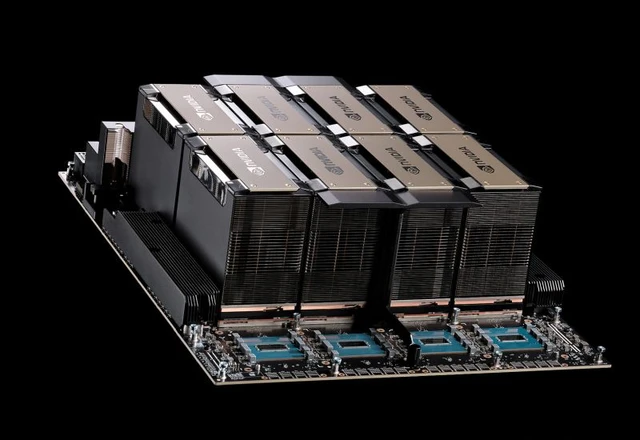
The situation is further complicated by the fact that modern neural networks require staggering amounts of resources for training—resources that cannot be provided by legacy or stripped-down hardware. When the Chinese startup Moonshot unveiled Kimi 3, the global community noticed a troubling trend: across several key performance benchmarks, the new model stood shoulder-to-shoulder with flagships from OpenAI and Anthropic. Achieving such results requires clusters powered by Nvidia's latest solutions—specifically the Blackwell series—the shipment of which to China is strictly prohibited. This served as a clear signal to US regulators: Chinese developers have found a way to circumvent trade barriers via third-country infrastructure.
From a legal standpoint, this scheme represents a complex labyrinth. Traditional export controls regulate the movement of physical goods across borders. However, remote access to a server located in, for example, Malaysia or Singapore, does not formally constitute a violation of current US law. This creates a gray zone where an adversary's technological progress is fueled by legitimate cloud services. The US Department of Commerce is currently attempting to gauge the scale of this issue and compile a detailed list of countries whose data centers have effectively become "proxy servers" for Chinese AI.
Evasion mechanisms often involve multi-layered corporate structures. A prime example is Alibaba, which leases capacity in Malaysia through shell companies registered in Singapore. Such an ownership architecture renders the access chain opaque and makes monitoring by US intelligence agencies and regulators exceedingly difficult.
This is a clash between national security interests and commercial gain. Nvidia, as the primary beneficiary of the AI boom, is deeply invested in maintaining its presence in the Chinese market, even if access to its products is indirect. Any attempt by the Department of Commerce or other US agencies to completely block remote access to accelerators will inevitably face fierce lobbying from tech giants. Nevertheless, China's rapidly closing gap in AI—now estimated at just a few months—may outweigh corporate financial interests, forcing Washington to adopt more radical measures to restrict cloud access.
 The Price of Acceleration: CXMT’s Rapid Push into Memory