The Moon is transcending its role as a mere object of astronomical study, evolving into a theater of technological rivalry and strategic dominance. The impact of a spent Falcon 9 rocket stage on the lunar surface provided an ideal testbed for validating space-tracking systems. China's Gande-1 01 spacecraft effectively transformed an accidental debris strike into a precision experiment in deep-space monitoring. This event underscores a pivotal shift from passive observation toward active, autonomous surveillance of objects within cislunar space.
August 2026 witnessed a rare convergence of astronomical chance and technical prowess: the second stage of a Falcon 9 rocket—left in high orbit following the launches of the Blue Ghost and Resilience lunar missions in early 2025—concluded its journey with an impact on the Moon. While most observers viewed the event as a mere demonstration of orbital mechanics, for Chinese specialists, it served as a large-scale stress test for their space surveillance infrastructure.
Unlike stochastic meteorite impacts, the trajectory and mass of the Falcon 9 stage were known with high precision, effectively turning the collision into a controlled experiment. Analyzing the resulting crater's dimensions and orientation, alongside the dynamics of lunar ejecta, provides invaluable data for refining impact models. Such calculations are critical for ensuring the structural integrity and safety of future crewed lunar bases, where any unplanned kinetic event could prove catastrophic.
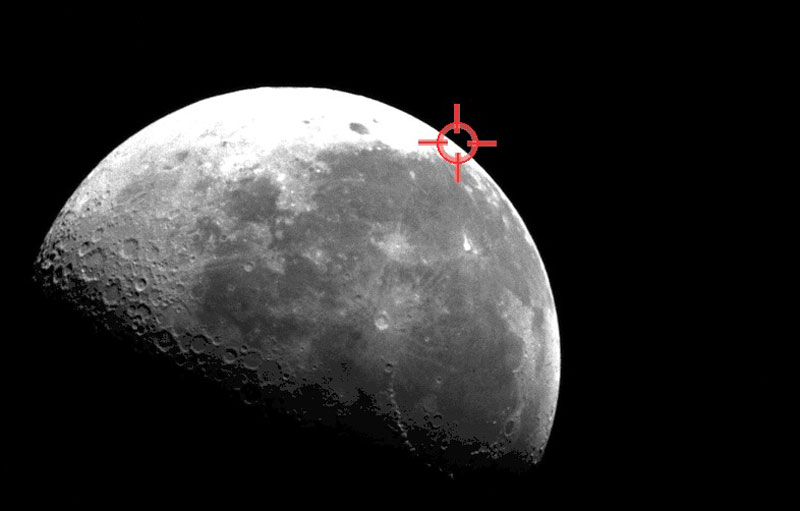
The primary instrument in this operation was the Gande-1 01 satellite, developed by ATmoto Technology. This spacecraft represents the first tier of the ambitious "Gande" system—a commercial space situational awareness (SSA) network slated to expand to 120 units by 2030. The current phase of the project, designated LX630, involves the deployment of 14 satellites equipped with high-sensitivity optics for detecting low-luminosity objects, onboard AI-driven computing modules, and propulsion systems for rapid orbital maneuvering.
Ostensibly, the system is designed for the autonomous cataloging of space debris across low, medium, and high orbits. However, the technical capabilities of these "inspector satellites" inherently imply a dual-use nature. Amidst intensifying competition for influence in cislunar space, the ability to detect and shadow low-observable objects becomes a strategic leverage point, mirroring similar military developments pursued by the United States.
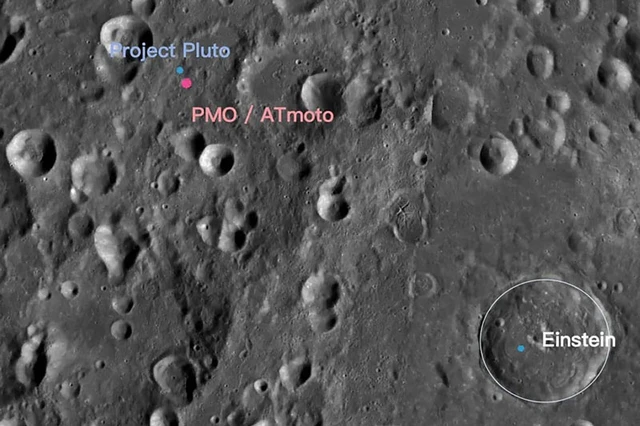
The tracking process for the Falcon 9 stage was executed in three distinct phases. On August 1, utilizing preliminary coordinates, Gande-1 01 detected a faint moving object against the stellar background. By August 3, accumulated data allowed for a significant refinement of the object's orbit. The final impact window was calculated in coordination with the Purple Mountain Observatory, pinpointing the collision at 09:35:35 MSK. Notably, Chinese specialists achieved a level of precision that surpassed the calculations of Bill Gray—the lead of the independent Project Pluto tracking initiative—by approximately 10 kilometers.
At the moment of impact, Gande-1 01 was specifically oriented toward the landing zone to capture changes in the lunar surface. While the resulting imagery cannot be classified as a full video recording due to the challenging observation conditions at the edge of Earth's visibility, the successful tracking of an object in deep space is highly significant. China has demonstrated a functional infrastructure capable of precision surveillance within the cislunar domain, elevating the paradigm of space control to a qualitatively new level.
 Anthropic’s Strategic Push for Hardware Independence