3 Jul 2026
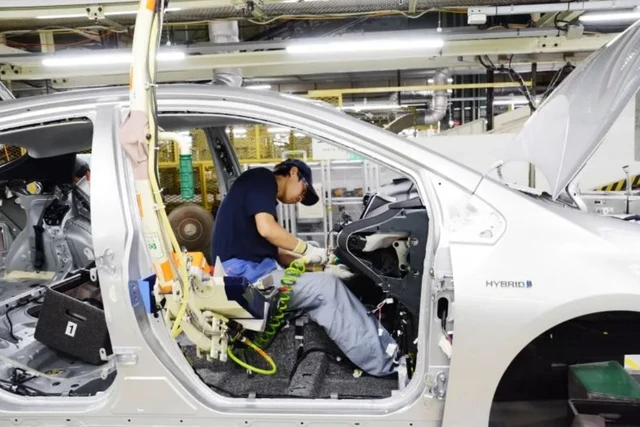 Intelligent Standardization of Toyota's Production Cycles
In an era defined by hyperautomation, the primary bottleneck to operational efficiency is no longer a deficit of technology, but rather data fragmentation and the prevailing semantic gap. For an industrial titan like Toyota, internal linguistic dissonance acts as a "hidden tax" on productivity, creating friction that inevitably slows the pace of vehicle production. The remedy lies in leveraging artificial intelligence to achieve a comprehensive unification of technical terminology across every facet of the organization's business processes. This strategic pivot aims to synchronize the entire product lifecycle—from initial blueprint to final sale—establishing a unified digital governance ecosystem.
3 Jul 2026
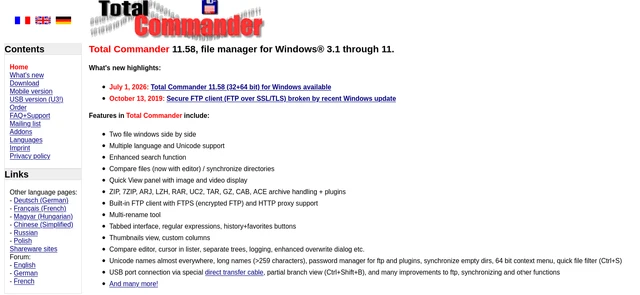 The Evolution of Classical File Management
In an age dominated by cloud storage and streamlined operating system interfaces, professional-grade data management tools remain indispensable for power users who prioritize raw speed and absolute control over their file systems. Dual-pane managers—long considered the gold standard of productivity—continue to evolve, pivoting to meet contemporary demands for enhanced security and seamless cross-platform compatibility. The latest iterations from the sector's primary contenders underscore a commitment to rock-solid stability, even as the broader software landscape undergoes radical transformation. Against this backdrop, Total Commander reaffirms its position as the industry benchmark, delivering profound technical optimization and unmatched efficiency.
3 Jul 2026
 AI Cost Discipline at Tesla
The era of unchecked neural network experimentation within the corporate sector is drawing to a close. Organizations are pivoting from a strategy of blanket adoption toward rigorous financial oversight of compute resource utilization. Tesla’s decision to cap employee AI expenditures serves as a bellwether for a global trend toward operational cost optimization. In this tension between the hunger for innovation and fiscal discipline, the true price of modern intellectual production is finally crystallizing.
3 Jul 2026
 The End of the DVD Era in the Apple Ecosystem
The migration from physical media to streaming and cloud-based storage represents one of the most profound technological pivots of the past decade. For years, Apple has systematically phased out optical drives from its hardware ecosystem, conditioning users toward a purely digital content consumption model. This evolution has now permeated the system code itself; DVD support is no longer a foundational element of the operating system. This move signals a definitive rupture with the era of physical media on the Mac platform.
1 Jul 2026
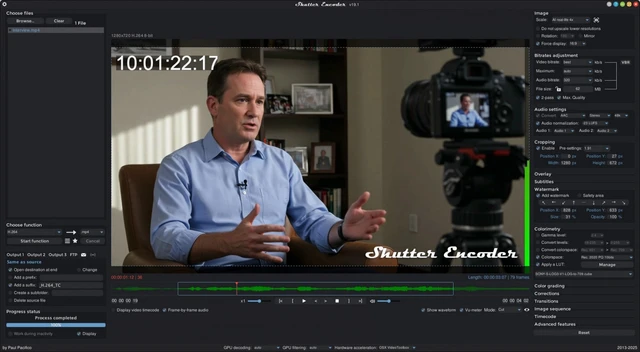 The Evolution of Shutter Encoder: A Cross-Platform Media Conversion Powerhouse
In an era defined by the dominance of proprietary software, access to professional-grade media processing tools has become mission-critical for independent content creators. Contemporary video production necessitates both agility in codec management and rapid conversion speeds—all while maintaining uncompromising visual fidelity. For two decades, Shutter Encoder has served as the essential bridge between the raw power of command-line utilities and the intuitive accessibility of a graphical user interface. With the launch of version 20.2, the tool reaffirms its position as the indispensable "Swiss Army knife" for audio and video stream manipulation.
30 Jun 2026
 The Limits of Digital Mobility Control
Modern smartphones have evolved into silent witnesses, documenting every human movement in real-time. For years, law enforcement agencies exploited this vulnerability through so-called "geofence warrants," effectively weaponizing private databases as instruments of mass surveillance. However, a recent U.S. Supreme Court ruling has recalibrated the balance between national security and the fundamental right to privacy. This precedent signals the end of an era defined by the unchecked collection of location metadata from millions of individuals.
30 Jun 2026
 The Demonopolization of Mobile Ecosystems in the UK
The global struggle against the "walled gardens" of Big Tech is entering a decisive new chapter in the United Kingdom. For years, Apple and Google have maintained an iron grip on digital transactions, leveraging their dominance to extract substantial commissions from developer revenues. Now, British regulators are moving to dismantle these barriers, paving the way for third-party payment gateways and alternative hardware integration. This shift promises to fundamentally reshape the economics of mobile services and redefine the end-user payment experience.
30 Jun 2026
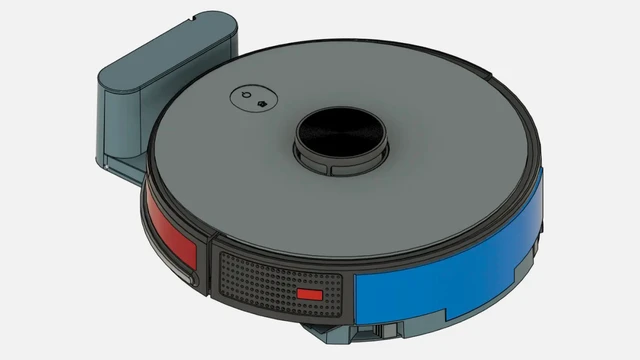 The Open Hardware Manifesto of the oomwoo Project
Modern smart home systems are increasingly evolving into closed ecosystems—walled gardens where users are stripped of control over their personal data and the underlying logic governing their devices. In response to this trend, an open-hardware movement is gaining momentum, striving to restore technological sovereignty to the end consumer. The oomwoo project embodies this philosophy, providing a blueprint for building a fully functional robot vacuum from the ground up. This is far more than a mere technical experiment; it is a fundamental reimagining of domestic automation through the lens of transparency and modularity.
30 Jun 2026
 Pocket Access to Cursor's Autonomous Agents
The boundary between the developer's fixed workstation and true mobility is finally dissolving. The emergence of fully autonomous AI agents on smartphones is transforming the device from a passive monitoring tool into a sophisticated instrument for managing complex engineering workflows. Code oversight is becoming asynchronous, allowing routine tasks to be delegated to cloud-native entities. Cursor is taking an ambitious stride toward creating an ecosystem where development continues uninterrupted, regardless of whether a keyboard is within reach.
30 Jun 2026
 The Boundaries of Automation in the Kubernetes Ecosystem
The meteoric rise of Large Language Models (LLMs) has fundamentally reshaped the landscape of software development, evolving programming into a symbiotic partnership between human intuition and machine efficiency. For massive open-source ecosystems on the scale of Kubernetes, however, this shift introduces significant risks—not only to product stability and code quality but also to the legal integrity of external contributions. In response, the community is establishing rigorous frameworks ensuring that AI remains a supportive utility rather than a primary author. Central to this philosophy is the conviction that technical accountability and a profound architectural understanding of the system are non-delegable assets that no algorithm can replace.
30 Jun 2026
 The Arms Race in the Era of Agentic Systems
The contemporary AI landscape is undergoing a rapid evolution, pivoting away from rudimentary chatbots toward autonomous agents and purpose-built hardware. As tech titans vie for supremacy in model distillation, a fundamental crisis is emerging regarding the methodologies used to evaluate performance. The industry is grappling with a stark paradox: while the tools grow increasingly potent, the metrics used to measure them are losing their reliability. This trajectory is shaped by a complex interplay of geopolitical interests, the global scramble for silicon, and the quest for a new paradigm of human-computer interaction.
30 Jun 2026
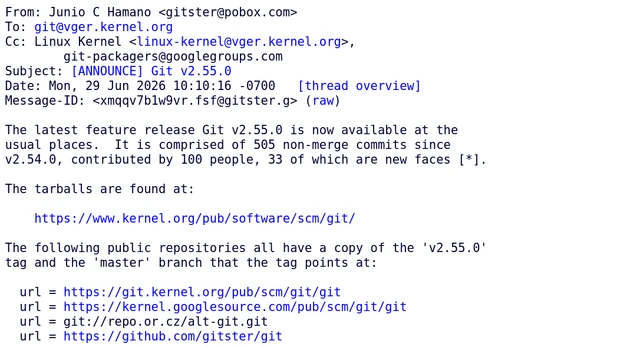 The Evolution of Git: Paving the Way Toward Version 3.0
Version control systems have long since evolved beyond simple change-tracking utilities, becoming the very bedrock of modern software engineering culture. The release of Git 2.55 marks a pivotal milestone—one that not only streamlines day-to-day workflows but strategically paves the way for the eventual transition to version 3.0. Development efforts have centered on scaling performance for massive repositories and the incremental integration of modern systems programming paradigms. This release underscores the project's maturity, with every refinement meticulously designed to reduce friction between the engineer and their codebase.
