In an age dominated by cloud storage and streamlined operating system interfaces, professional-grade data management tools remain indispensable for power users who prioritize raw speed and absolute control over their file systems. Dual-pane managers—long considered the gold standard of productivity—continue to evolve, pivoting to meet contemporary demands for enhanced security and seamless cross-platform compatibility. The latest iterations from the sector's primary contenders underscore a commitment to rock-solid stability, even as the broader software landscape undergoes radical transformation. Against this backdrop, Total Commander reaffirms its position as the industry benchmark, delivering profound technical optimization and unmatched efficiency.
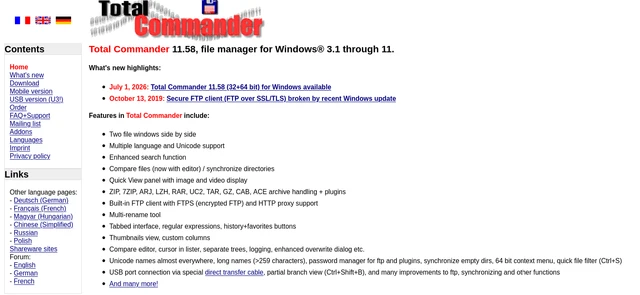
The evolution of Total Commander serves as a living chronicle of the Windows graphical user interface. The release of version 11.58 on July 1, 2026, underscores the product's remarkable longevity: the tool maintains seamless compatibility with systems ranging from the archaic Windows 3.1 to the current iteration of Windows 11. At its core lies a philosophy of maximum utility within a single window—integrating everything from a built-in FTP client with FXP support to advanced disk space analyzers and file synchronizers.
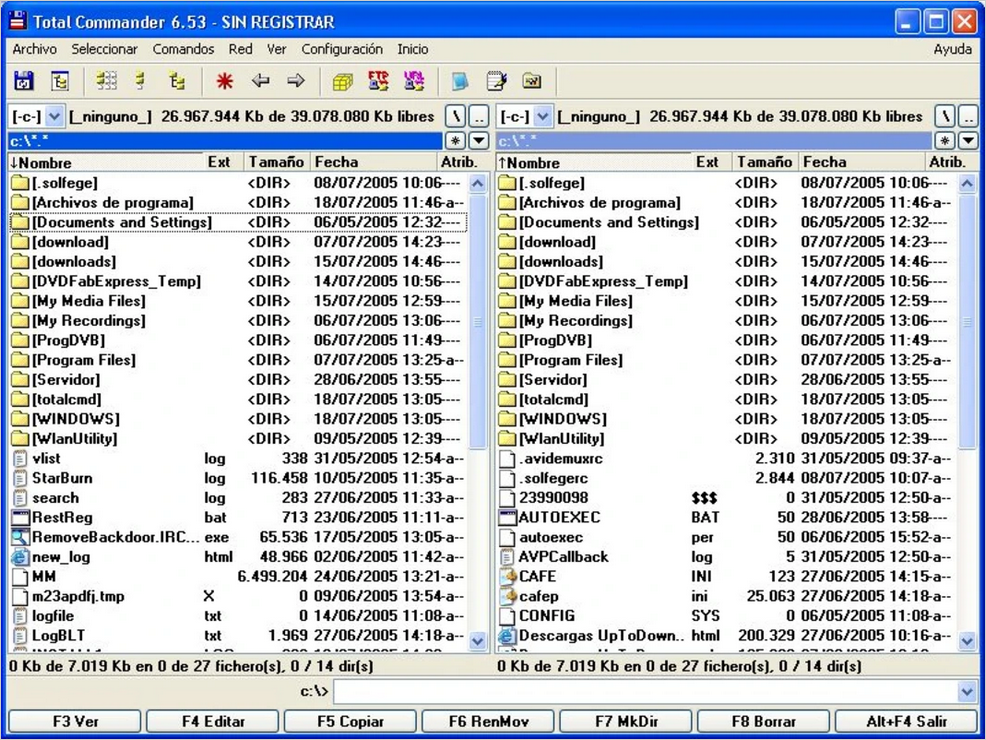
The latest 11.58 update prioritizes internal system health and data security over superficial aesthetic changes. Significant attention has been paid to the handling of encrypted archives; developers have implemented mechanisms to prevent directory names from leaking through interface elements such as tabs or navigation history—a critical enhancement for user privacy. Furthermore, log file management has been optimized: by default, filenames from encrypted headers are no longer recorded in the logs, a behavior now governed by the LogEncryptedNames parameter within the wincmd.ini configuration file.
On the technical front, the update includes critical library refreshes. The integration of the latest versions of unrar (7.23.0) and 7-Zip (26.2.0.0) ensures peak efficiency when handling modern compression algorithms across both 32-bit and 64-bit builds. A notable detail is the version index shift from 11.57a to 11.58—a move driven exclusively by compatibility requirements for the WinGet package manager, demonstrating how a classic shareware product is adapting to modern software distribution methods.
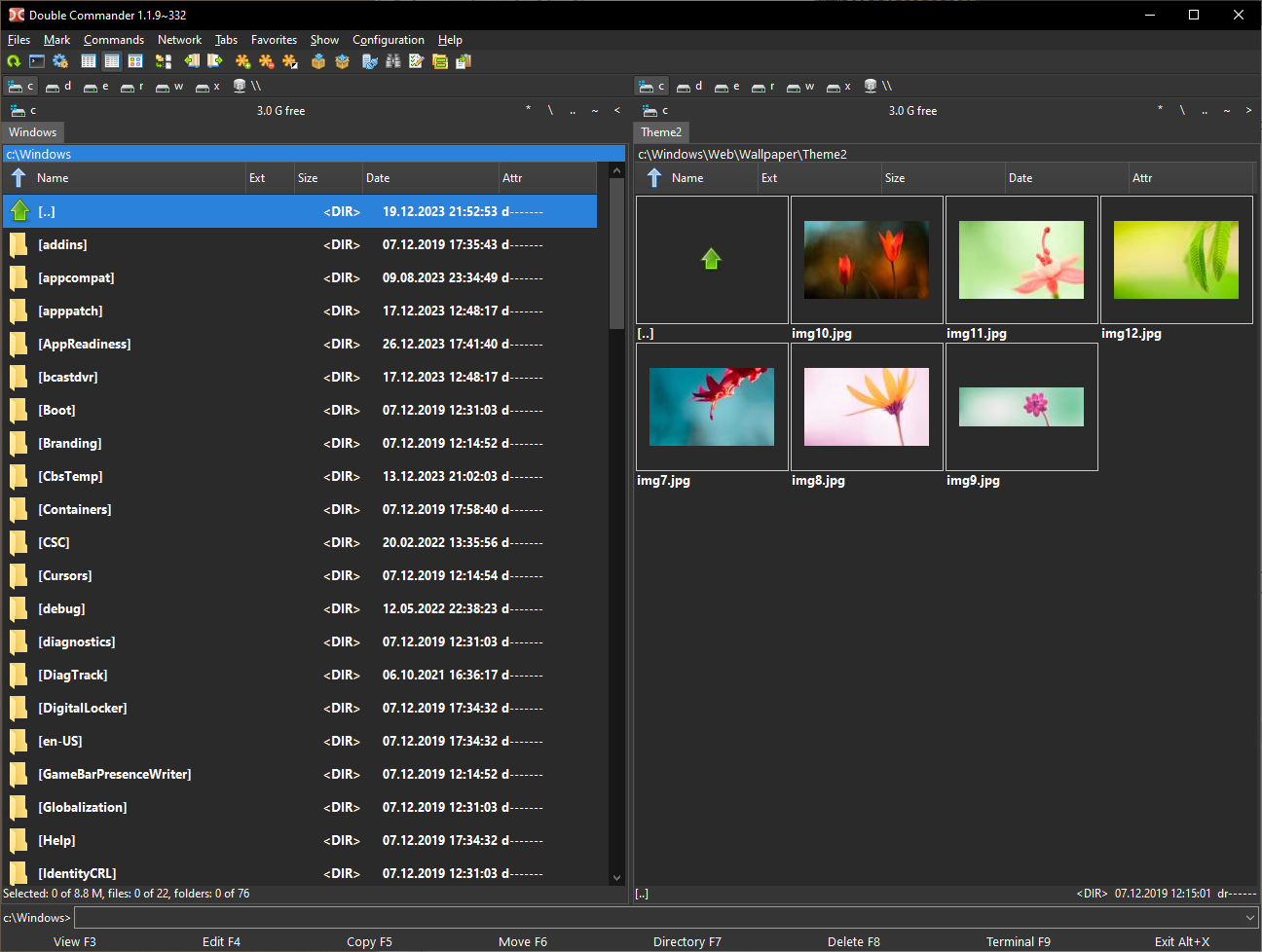
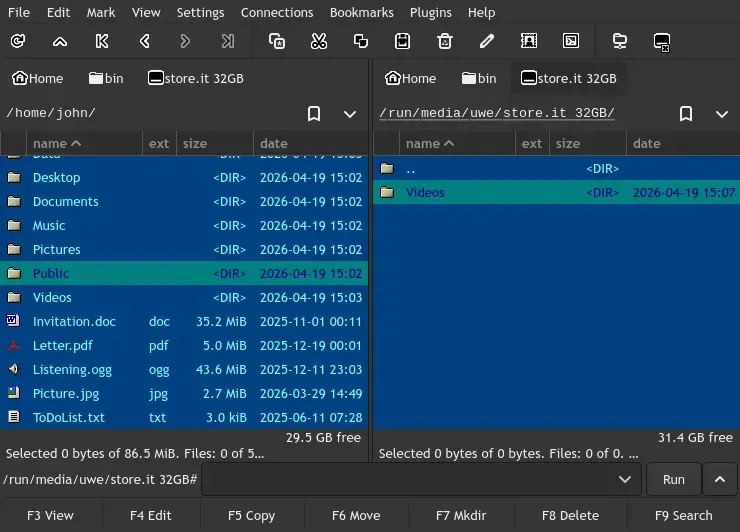
However, Total Commander is not the sole heir to the dual-pane paradigm. Within the open-source ecosystem, Double Commander continues to evolve as a free alternative striving for maximum compatibility with original TC plugins. Written in Pascal and distributed under the GPLv2 license, this project erases OS boundaries by offering full functionality across Linux, FreeBSD, Windows, and macOS. The flexibility of Double Commander extends to its interface layer, providing implementations based on GTK2, Qt5, and Qt6, allowing the tool to integrate organically into any desktop environment.
Parallel to this, we are seeing the rise of highly specialized solutions. In May 2026, GNOME Commander 2.0 was introduced, optimized specifically for the GNOME environment. This tool ports the classic dual-pane management functionality into the Linux ecosystem, offering deep integration with system capabilities—from automatic mounting of external drives to native support for SFTP and SAMBA protocols.
GNOME Commander does more than simply replicate the features of its predecessors; it adapts them to modern interaction patterns. Users have access to expandable context menus, integrated media viewers, and powerful mask-based bulk renaming tools. All implemented under the GPLv3 license, this functionality transforms the file manager from a simple navigation tool into a comprehensive data management hub within the Linux environment.
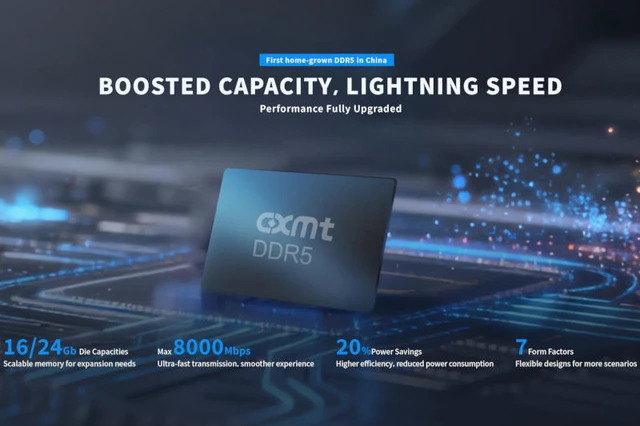 The Price of Acceleration: CXMT’s Rapid Push into Memory