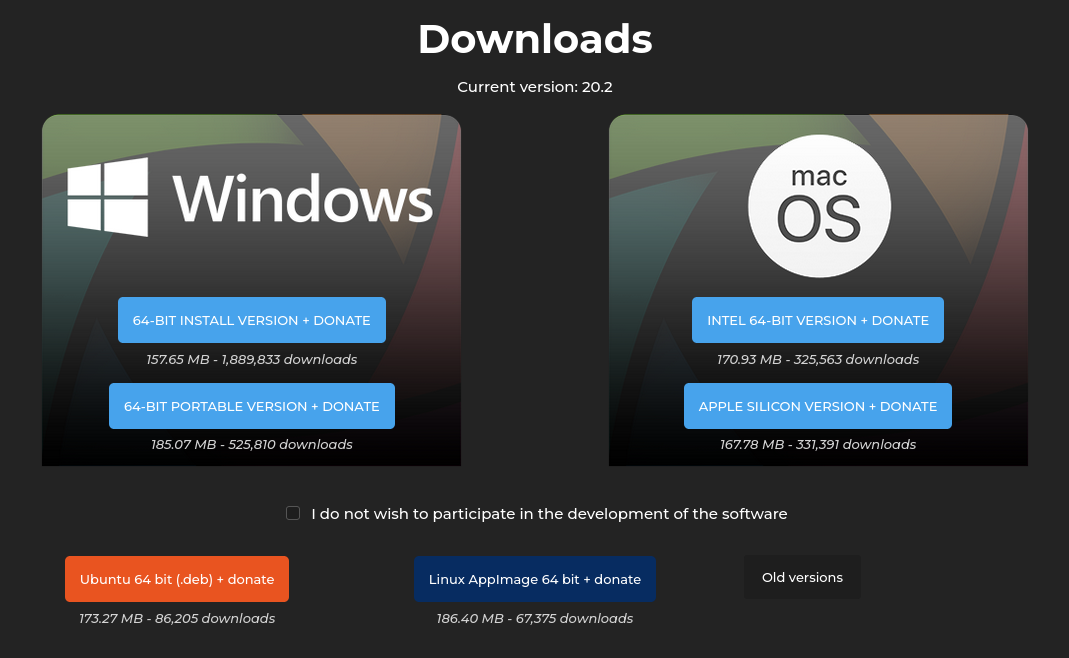
In an era defined by the dominance of proprietary software, access to professional-grade media processing tools has become mission-critical for independent content creators. Contemporary video production necessitates both agility in codec management and rapid conversion speeds—all while maintaining uncompromising visual fidelity. For two decades, Shutter Encoder has served as the essential bridge between the raw power of command-line utilities and the intuitive accessibility of a graphical user interface. With the launch of version 20.2, the tool reaffirms its position as the indispensable "Swiss Army knife" for audio and video stream manipulation.
The trajectory of Shutter Encoder serves as a masterclass in the evolution of open-source software, tracing a twenty-year journey from a rudimentary converter to a comprehensive post-production toolkit. At its core lies FFmpeg—the de facto industry standard for media processing—which grants the application support for virtually every existing format. By leveraging Java, Shutter Encoder achieves true cross-platform parity, providing Windows, macOS, and Linux users with a unified interface while maintaining development transparency under the GNU GPL v3.0 license.
The software's technical arsenal is impressively comprehensive, covering the entire media lifecycle: from archival storage and editing to final content delivery. For professional workflows, it offers high-bitrate intermediate codecs such as Apple ProRes, DNxHD, and GoPro CineForm, which minimize generational loss during repeated transcoding. Simultaneously, it supports the most current compression standards for distribution, including H.265 (HEVC) and AV1, ensuring the tool remains relevant amidst the shifting landscape of streaming standards.
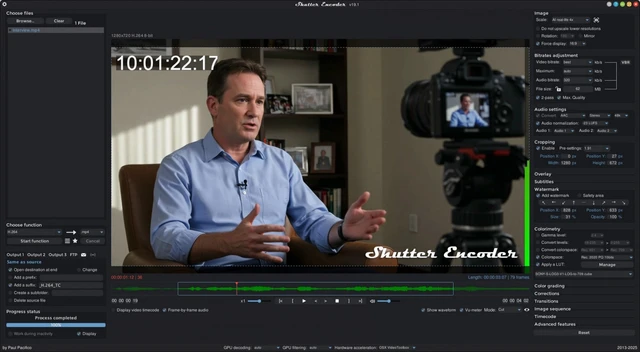
Particular value lies in its "fast" editing capabilities. The ability to trim video without re-encoding allows users to instantly alter clip length without touching the pixel structure or introducing compression artifacts. Tools for rewrapping, stream merging, and subtitle management effectively transform Shutter Encoder into a robust pre-production module, eliminating the need to launch resource-heavy NLEs (non-linear editors) for simple technical tasks.
The latest version 20.2 update focuses on optimizing user experience and expanding hardware capabilities. One of the most significant enhancements is the implementation of Intel Quick Sync hardware acceleration for Linux users, substantially reducing render times by leveraging integrated graphics resources. In tandem, deep work has been done on video player stability: loading speeds for heavy files have been improved and buffering errors resolved, resulting in a much smoother preview experience.
The software's intelligent layer has also evolved. The audio transcription feature now includes speaker identification, shifting the tool from a technical converter into the realm of content assistance. This is especially potent when preparing interviews or multi-voice podcasts, where automating routine tasks becomes a decisive factor in productivity.
Rounding out the update is a series of technical refinements aimed at increasing data precision. Timecode display for video with dropped frames has been corrected, and the file-naming system for multichannel surround sound has been optimized. Even granular changes—such as the return of the XPDF tool for document processing or the removal of legacy binary architectures for Mac—demonstrate the developers' meticulous approach to code hygiene and long-term system stability.
 The Price of Acceleration: CXMT’s Rapid Push into Memory