The boundary between the developer's fixed workstation and true mobility is finally dissolving. The emergence of fully autonomous AI agents on smartphones is transforming the device from a passive monitoring tool into a sophisticated instrument for managing complex engineering workflows. Code oversight is becoming asynchronous, allowing routine tasks to be delegated to cloud-native entities. Cursor is taking an ambitious stride toward creating an ecosystem where development continues uninterrupted, regardless of whether a keyboard is within reach.
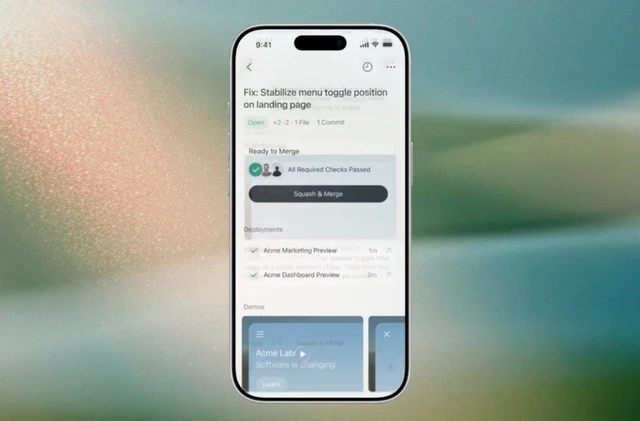
The contemporary landscape of software engineering is undergoing a fundamental paradigm shift: we are moving beyond the era of "intelligent suggestions" into the age of autonomous agents. The latest milestone in this evolution is the release of the native Cursor app for iPhone. Despite its public beta status, the tool is far more than a mere mirror of the desktop editor; it serves as a comprehensive command center for AI agents capable of writing and refactoring code through sophisticated multitasking.
The core value of the mobile client lies in the implementation of two fundamentally different operational modes. The first leverages cloud-native agents deployed within isolated virtual machines. These environments provide a full development stack, allowing the AI to work on complex tasks for hours without human intervention or local hardware overhead. The second mode, Remote Control, effectively transforms the smartphone into a remote interface for a home or office workstation. Specialized configurations prevent the machine from entering sleep mode, ensuring uninterrupted access to local resources even when the developer is far from their desk.
The integration with the iOS ecosystem is both deep and intentional. Rather than forcing the user to keep the app active, Cursor utilizes Live Activities on the lock screen to track task progress in real-time. When an agent completes a task or requires clarification, the system triggers a push notification. This transforms the coding process into a series of lean iterations: defining tasks via voice or slash commands, awaiting results in the background, and performing a final review.
The code review process has also been optimized for mobile workflows. Developers can now analyze generated diffs, preview changes through demo versions, leave comments, and merge pull requests directly from their smartphone screens. Particularly noteworthy is the flexibility of session migration: a task can be initiated in the cloud and subsequently "pulled" to a local machine for final testing prior to deployment.
This release was part of the broader "Cursor Compile" event, which signaled the company's ambition to evolve beyond being a sophisticated interface for existing models. The announcement of a proprietary model trained from scratch, alongside the Origin platform for collaborative development, points toward a strategic goal: creating a closed-loop, high-efficiency software production pipeline.
The scale of these transformations is further reflected in the financial sector: the acquisition of Cursor by SpaceX for $60 billion underscores the strategic importance of development automation tools for tech giants. Currently, these features are available to premium subscribers, with the company incentivizing the transition to mobile through limited-time discounts on the Composer 2.5 model.
 Anthropic’s Strategic Push for Hardware Independence