7 Jul 2026
 Windows Expands the Capabilities of Steam Machines
The ambition to forge a closed gaming ecosystem inevitably collides with the harsh reality of software fragmentation. Valve’s Steam Machine was envisioned as a bridge, merging the seamless experience of a console with the raw power of a PC; however, the reliance on the Linux-based SteamOS introduced significant friction for the end user. The release of official Windows drivers is a game-changer, transforming a niche, specialized device into a versatile workstation. While this move unlocks the industry's most expansive software library, it simultaneously shifts the burden of configuration and optimization onto the user.
7 Jul 2026
 Affordable Minimalism: The Nothing Phone (4b)
The budget smartphone market has long evolved beyond mere cost-cutting and compromise, transforming instead into a fierce battleground for aesthetics and functionality. Nothing is making a bold move in this direction with the introduction of the Phone (4b), the inaugural entry in its new B-series. The device aims to demonstrate that a signature visual identity and a cutting-edge user experience can be brought within reach of a broader audience. This is more than a mere line extension; it is an attempt to redefine the very notion of the "budget segment" through the lens of technological minimalism.
7 Jul 2026
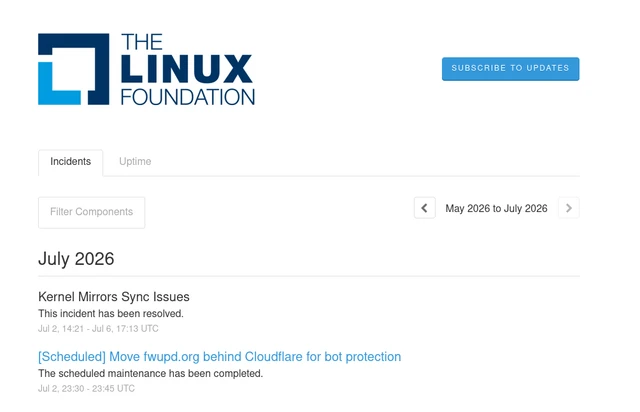 Linux Kernel Code Mirroring Failure
The Linux kernel serves as the bedrock for the vast majority of modern servers and embedded systems worldwide. When access to its official archives is severed, it triggers a domino effect that reverberates across the entire open-source ecosystem. A recent technical failure within the Linux Foundation's infrastructure has exposed the fragility of even the most resilient distribution nodes. The ensuing four-day data recovery effort served as a stark reminder of how a single configuration error can paralyze global update and testing pipelines.
6 Jul 2026
 The Crisis of Trust in the Era of Generative Models
The modern literary landscape is grappling with a profound paradox: human creativity has become subject to algorithmic censorship. The controversy surrounding the Commonwealth Prize has laid bare a systemic crisis of confidence, as winning entries were branded as products of neural networks. This clash underscores the inherent fallibility of current detection tools and their inability to differentiate a distinct authorial voice from mere statistical patterns. At the heart of this debate lies a fundamental question: where does technical optimization end, and true art begin?
6 Jul 2026
 The Cost of Resisting Digital Surveillance
Modern urban centers are evolving into domains of pervasive digital surveillance, where the demarcation between security and privacy grows increasingly opaque. The rollout of Automatic License Plate Recognition (ALPR) systems has sparked a profound societal divide, pitting state imperatives against the fundamental rights of the individual. The account of a Virginia-based engineer who took it upon himself to physically dismantle these tools of surveillance has ignited a sweeping debate over the legitimacy of mass monitoring. This incident underscores a pivotal shift: resistance to data infrastructure is transitioning from isolated acts of defiance into a structured movement for digital liberty.
6 Jul 2026
 A Digital Snapshot of an Era for Posterity
Any attempt to encapsulate a specific moment in history and project it across centuries is, by its very nature, a philosophical experiment. In anticipation of the United States' semiquincentennial, a monumental time capsule has been conceived as a bridge between our contemporary era and the world to come. The project synthesizes tangible artifacts, frontier technologies, and nascent attempts by artificial intelligence to conceptualize the future. By the year 2276, future generations will inherit a definitive cultural and scientific snapshot of the early 21st century.
5 Jul 2026
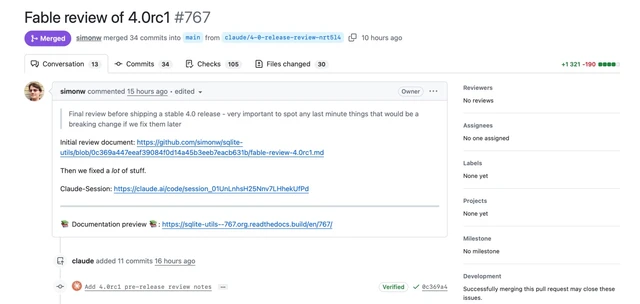 An Analytical Audit of the sqlite-utils Library
The boundary between manual coding and AI orchestration is rapidly dissolving. Modern software engineering is evolving beyond basic code completion, shifting toward the comprehensive intellectual auditing of complex systems. The release preparation for the sqlite-utils library serves as a prime example of the efficacy of cross-verifying code across multiple models—a methodology that enables the detection of critical flaws that might otherwise elude even the tool's own architects.
5 Jul 2026
 Command & Conquer Generals: A New Lease on Life
The divide between legacy code and modern platforms is rapidly dissolving, driven by the evolution of Large Language Models. A recent experiment—porting an iconic early-2000s strategy title to iOS—highlights AI's transition from a mere assistant to a fully autonomous engineering agent. At the center of this breakthrough was Claude Fable 5, which successfully navigated technical hurdles that had stymied previous iterations of neural networks. This case marks the beginning of a new chapter in digital preservation and the automation of sophisticated systems programming.
4 Jul 2026
 The Collapse of Tokenomics and the Battle for Data
The contemporary generative AI market is grappling with a profound crisis of confidence between enterprise clients and the tech giants. While the industry was acclimating to token-based pricing models, a fundamental conflict emerged over data privacy and the ownership of intellectual capital. Palantir CEO Alex Karp has openly accused industry leaders of covertly harvesting unique client business processes to train their proprietary models. This clash signals a pivotal shift: moving away from unbridled enthusiasm for neural networks toward a rigorous struggle for digital sovereignty.
4 Jul 2026
 The Realities of Automated Legacy System Migration
The modern software development industry is currently striving to strike a delicate balance between AI autonomy and expert oversight. Migrating massive legacy codebases to contemporary stacks often becomes an arduous undertaking, fraught with the risk of functional regression. The experience of migrating 60,000 lines of PHP to TypeScript demonstrates that the intrinsic value of AI lies not in replacing the developer entirely, but in enabling a hyper-accelerated iteration loop. This case study redefines the paradigm for planning automated refactoring and underscores the indispensable nature of human supervision.
4 Jul 2026
 The Sunset of the GSM Standard in North America
The global shift toward high-speed connectivity inevitably necessitates the decommissioning of legacy infrastructure—the very bedrock upon which the mobile era was built. For decades, second-generation standards ensured basic access to voice calls and text messaging, remaining an indispensable lifeline for millions of devices. However, in the age of 5G, maintaining such networks has become both economically unsustainable and technically obsolete. T-Mobile’s decision to permanently sunset its 2G networks marks the final chapter of one of the most pivotal technological eras in U.S. history.
4 Jul 2026
 Critical Security Breach in the Steam Ecosystem
Today's digital ecosystems are increasingly targeted by highly sophisticated social engineering tactics and technical exploits. The uncovering of a critical vulnerability within one of the world’s preeminent gaming hubs underscores the inherent fragility of current session management and authorization frameworks. A single lapse in judgment—one misplaced click—can now trigger a total account takeover, sparking a cascading effect that compromises the user’s entire social network. This incident serves as a stark reminder of how seamlessly contemporary attacks can be woven into the fabric of the standard user experience.
