20 Jul 2026
 The Hardware Bedrock of Gemini’s Evolution
The global AI arms race has shifted its center of gravity, moving beyond the realm of algorithms into the physical constraints of silicon. Computational scarcity has emerged as a critical bottleneck, impacting not only the pace of innovation but also the commercial viability of cloud titans. In response, Google is doubling down on deep hardware-software co-design through project Frozen v2—a strategic pivot designed to alleviate this "compute crunch" and unlock unprecedented efficiency for Gemini.
20 Jul 2026
 Secure Remote Management Standard
In an era of pervasive digital surveillance, data privacy has emerged as the pivotal criterion for selecting enterprise software. For too long, the remote access market has been dominated by proprietary behemoths—closed-source incumbents that stifle customizability and obscure operational transparency. The rise of open alternatives is disrupting this paradigm, granting organizations total infrastructural sovereignty and guaranteed confidentiality. The latest release of HopToDesk (version 1.46.6) solidifies this trajectory, seamlessly blending the security of end-to-end encryption with comprehensive cross-platform flexibility.
20 Jul 2026
 The Open Artificial Intelligence Manifesto
The contemporary AI landscape is increasingly consolidated within a handful of private corporations, precipitating a perilous digital divide. In this paradigm, language and culture are subordinated to commercial profitability, while indigenous data is frequently exploited without consent. Countering this challenge requires the development of an open infrastructure comparable in scale and accessibility to the early internet. Current AI has set itself an ambitious mission: to transform AI from a tool of corporate control into a global public good.
20 Jul 2026
 Intelligent Capture of the Apple Customer Experience
Modern retail is undergoing a profound transformation, one where the boundaries between human-centric service and algorithmic precision are increasingly blurring. Apple is taking a decisive step toward automating customer interactions within its flagship stores; by integrating intelligent speech analytics, the company aims to liberate its specialists from the drudgery of manual documentation and the cognitive overhead associated with reporting. This represents more than a mere technical upgrade—it is a fundamental reimagining of the philosophy of customer service in the era of generative AI.
20 Jul 2026
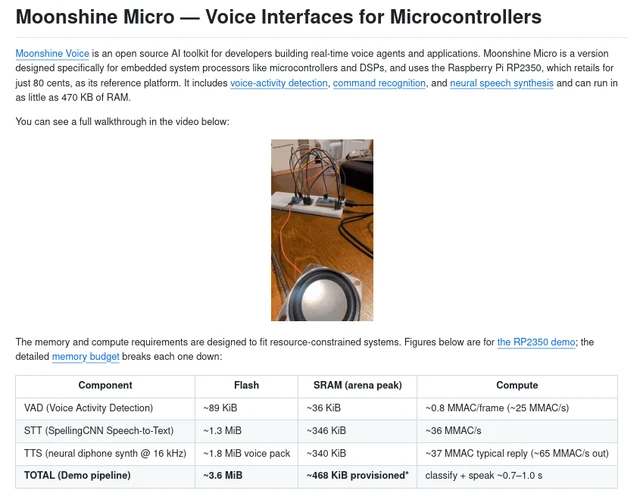 Voice Interfaces for Ultra-Compact Systems
The contemporary electronics industry is driving a strategic shift toward migrating complex computations from cloud servers directly to edge devices. This paradigm shift drastically reduces data processing latency and ensures absolute user privacy. The Moonshine Micro project serves as a compelling proof of concept, demonstrating that a fully functional voice interface can operate even under extreme resource constraints. Ultimately, the solution validates the technical feasibility of deploying neural speech synthesis and recognition on affordable, low-cost hardware.
20 Jul 2026
 The Evolution of Meeting Context within the Microsoft Ecosystem
The corporate landscape is pivoting rapidly toward a paradigm of intelligent productivity, where the drudgery of manual information retrieval is being supplanted by generative models. Microsoft continues its aggressive push to integrate AI into every facet of its ecosystem, fundamentally transforming familiar interaction tools. Yet, the transition from basic algorithms to sophisticated large language models inevitably necessitates a shift in access and pricing structures. The latest overhaul of Outlook’s functionality exemplifies this trend: core capabilities are increasingly yielding to premium, Copilot-powered services.
20 Jul 2026
 The Trap of Proprietary Office Software Standards
The global productivity software market has long been a battleground where the ethos of open access clashes with strategies of corporate hegemony. At the heart of this conflict stand The Document Foundation and Microsoft—two entities with fundamentally divergent philosophies regarding data sovereignty. This is not merely a question of file interoperability; it is about the fundamental right of the user to maintain absolute control over their own information. The friction surrounding proprietary formats exposes a systemic issue of vendor lock-in, creating a technological dependency that stifles the digital autonomy of millions of organizations worldwide.
20 Jul 2026
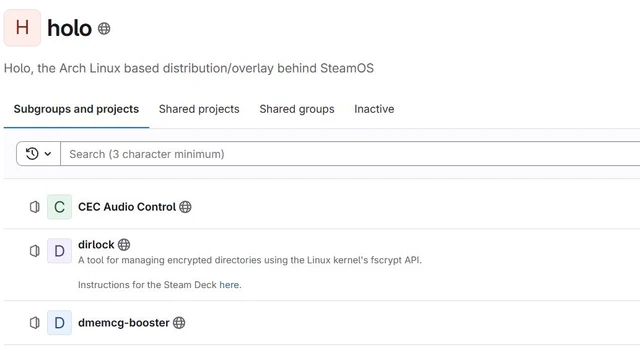 Deploying Arch Linux on Arm
The migration of high-performance computing toward ARM architectures is no longer the exclusive domain of the mobile sector. Valve’s ambitions for wireless virtual reality necessitate a software foundation capable of delivering the agility and raw power characteristic of contemporary gaming systems. The introduction of Collabora’s Holo Core serves as the critical nexus, bridging the open-source philosophy of Arch Linux with the specialized hardware requirements of the Steam Frame. This move signals the emergence of a new ecosystem—one where ARM's performance converges with the seamless nature of continuous, rolling updates.
20 Jul 2026
 The Evolution of the Pebble Wearables Ecosystem
The wearables market has long since evolved beyond its experimental phase, maturing into a fierce competition centered on battery autonomy and functional utility. Against this backdrop, Core Devices' strategic approach to evolving the Pebble platform serves as a compelling case study in how an open ecosystem can catalyze technological advancement. By pairing aggressive manufacturing scalability with rigorous software optimization, they are establishing a new benchmark for human-device interaction. The industry's focus is now pivoting away from mere notifications toward a comprehensive ecosystem of applications and robust developer tooling.
20 Jul 2026
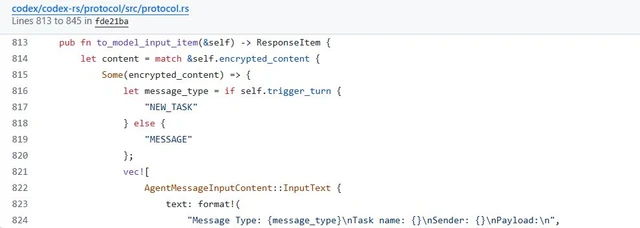 The Cryptographic Barrier within the Codex Ecosystem
The contemporary AI landscape is evolving beyond rudimentary chatbots toward sophisticated multi-agent architectures, where a primary orchestrator manages an ecosystem of specialized sub-agents. Within this paradigm, interaction transparency has emerged as a mission-critical requirement for both system debugging and robust security. Yet, in a surprising pivot toward opacity, OpenAI is implementing the encryption of internal instructions within Codex. This strategic move signals a new epoch in the protection of intellectual property and data privacy, specifically targeting the layer of inter-model communication.
20 Jul 2026
 The Singularity: A New Epoch for Human Civilization
Humanity stands on the threshold of a transformation whose scale dwarfs every technological shift in history. The advent of Artificial General Intelligence (AGI) has ceased to be a trope of science fiction, evolving instead into an inevitable horizon for the coming years. Within this transition lies a fundamental risk: the pace of systemic evolution may outstrip our capacity for governance. We are currently within that "critical window" where defining the rules of engagement can still shield civilization from unbridled chaos.
20 Jul 2026
 Credit Risks in the Age of Generative AI
The global AI arms race is pivoting from a phase of unbridled optimism to one of rigorous financial scrutiny. S&P’s decision to downgrade Oracle’s credit rating serves as a watershed moment, laying bare the systemic risks inherent in tech giants tethering their fortunes to the ambitions of startups. The market is now confronting a sobering reality: massive infrastructure investments risk becoming a liability if the business models of AI consumers fail to prove viable. This establishes a precarious precedent, where the financial resilience of a corporate titan becomes contingent upon the solvency of some of the industry's most volatile players.
