Global high-tech supply chains are increasingly entangled in geopolitical friction, forcing industry titans to rethink their optimization strategies. Against this backdrop, Apple is executing a measured yet pivotal strategic pivot, exploring the potential integration of memory modules from the Chinese manufacturer CXMT. The objective is a delicate balancing act: weighing economic efficiency against the stringent regulatory constraints imposed by the United States. This maneuver could fundamentally shape the architecture of future iPhone and MacBook generations tailored for Eastern markets.
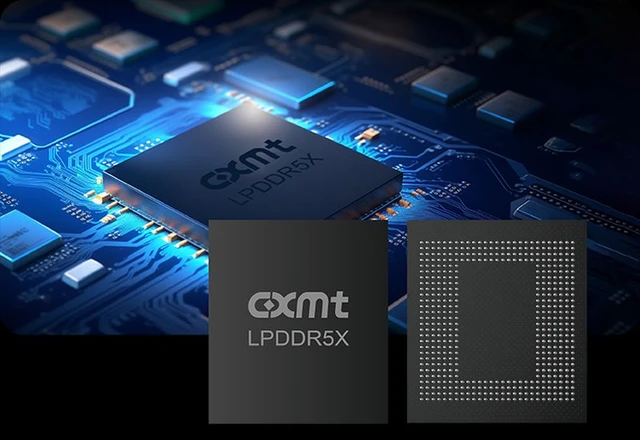
The semiconductor industry is currently witnessing a high-stakes strategic play where more than just profit margins are on the line—technological sovereignty is at stake. According to reports from The Wall Street Journal, Apple has begun testing LPDDR5X memory modules from ChangXin Memory Technologies (CXMT). These components are being evaluated as a potential foundation for iPhones and MacBooks targeting the Chinese market.
The shift toward CXMT solutions is driven primarily by a pragmatic drive to reduce production costs. In an environment of fierce competition, even marginal savings on RAM can yield significant results when scaled across millions of devices. However, this path is fraught with substantial legal risks. Apple is acutely aware that any procurement from a Chinese supplier requires either the tacit or explicit approval of U.S. authorities. While current legislation does not prohibit the acquisition of off-the-shelf chips—those requiring no deep customization for a specific client—the company still requires "political insurance" against sudden shifts in Washington's policy.
The technical hurdles are equally daunting. In their base configuration, CXMT's products still trail industry leaders like Samsung and Micron. For Apple, this necessitates hardware adaptations and rigorous firmware optimization to ensure that discrepancies in memory performance do not degrade the user experience. Engineers must strike a delicate balance between component cost and power efficiency—a critical metric for mobile devices and M-series powered laptops.
The situation is further complicated by acute capacity constraints at the supplier level. Despite its rapid ascent, CXMT cannot yet provide Apple with the volumes necessary for full-scale deployment this year. Experience from other industry players, such as HP Inc. and Acer, suggests that even they are receiving limited memory quotas, with increases not expected until next year. Consequently, even if a pricing agreement is reached, physical supply capacity remains the primary bottleneck of the entire strategy.
Nevertheless, CXMT's growth trajectory is impressive. The company already ranks fourth globally by revenue in the RAM segment, controlling approximately 7% of the global market. The first quarter saw explosive revenue growth—increasing more than eightfold year-over-year. Currently, priority is given to the domestic Chinese market, with new fabrication plants intended to expand its reach not expected to come online until 2028. Analysts are confident that CXMT will inevitably break into the top three global leaders in the near term, making its influence on the memory industry decisive.
 The Price of Acceleration: CXMT’s Rapid Push into Memory