The global race to develop general-purpose humanoid robots is evolving from a conceptual pursuit into a full-scale industrial rivalry. While many players remain focused on niche automation tasks, the true tech titans are aiming for something more ambitious: the seamless integration of artificial intelligence and physical embodiment into a unified autonomous system. Samsung, for its part, is leveraging the synergy between its massive manufacturing infrastructure and cutting-edge computational power. This strategic pivot signals the dawn of an era in which the boundary between consumer electronics and robotics is irrevocably blurred.
In today’s high-tech landscape, product success is defined less by isolated breakthroughs and more by a company's ability to synthesize disparate competencies into a unified ecosystem. Samsung Electronics, leveraging its vast expertise in developing complex electronic devices, is applying this philosophy to the humanoid robotics sector. While many national players are still finding their footing, the South Korean giant is launching a large-scale expansion powered by deep vertical integration.
Samsung’s primary edge lies in years of clandestine development in androidics, conducted alongside the public activities of specialized units like Rainbow Robotics. The company's strategy treats data as its primary fuel. By leveraging a global network of factories and millions of active smart devices, Samsung aggregates telemetry and behavioral patterns on a scale inaccessible to most competitors—creating an ideal environment for training control software.
The intellectual core of these developments is Samsung Gauss, the company's proprietary AI model. Moving beyond simple control algorithms, modern LLMs and VLMs (Vision-Language Models) enable robots to do more than just execute pre-programmed tasks; they allow them to perceive environmental context and interact with their surroundings on a natural level.
To catalyze this technological leap, the company is restructuring its internal hierarchy. The creation of the Robotics eXperience (RX) division, reporting directly to the CEO, underscores the strategic priority of this direction. The infrastructural backbone will be a new data center at the Gumi campus. This facility is designed to process massive streams of information from the company's actual industrial sites, allowing robots to be trained on real-world production scenarios rather than in sterile laboratory settings.
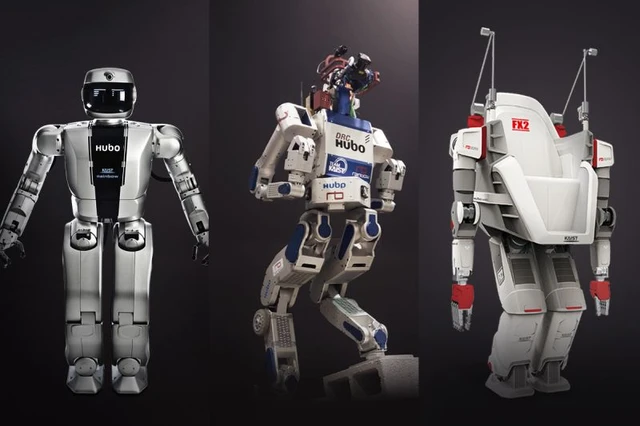
Samsung’s human capital is also undergoing a qualitative transformation. The recruitment of experts from the US and China, coupled with strategic hiring of specialists experienced with Boston Dynamics (via Hyundai Motor), signals an intent to adopt global best practices in kinematics and dynamic balance.
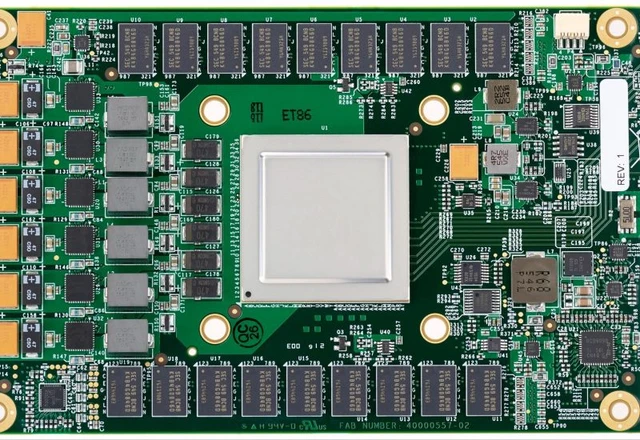
However, Samsung’s ultimate trump card remains its mastery over hardware. In robotics, energy efficiency and computational power are the critical bottlenecks. The ability to produce high-density batteries and specialized semiconductor components gives the company a decisive advantage in cost optimization and device performance. Consequently, Samsung is building a closed loop: from the silicon wafer and lithium-ion cell to the sophisticated cognitive AI layer, all embodied in the metal and plastic of a humanoid machine.
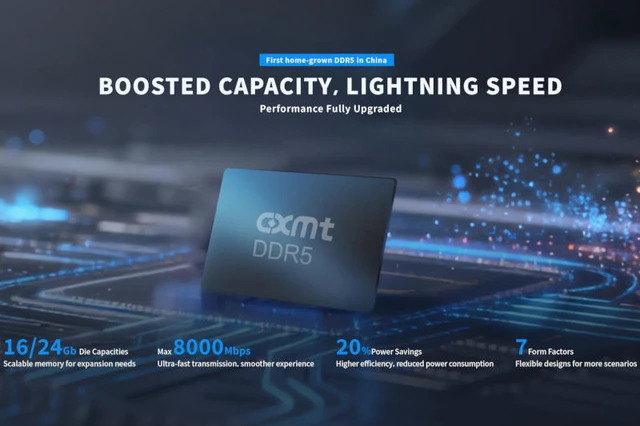 The Price of Acceleration: CXMT’s Rapid Push into Memory