21 Jul 2026
 The System Requirements Crisis of Modern Windows
Modern operating systems have evolved into intricate ecosystems, demanding immense resources to maintain stability. For years, Microsoft has clung to a nominal baseline of 4GB of RAM for Windows 11, creating a perilous disconnect between official documentation and real-world performance. However, recent benchmarks conducted on the company's own hardware have laid bare a critical discrepancy between stated specifications and actual memory consumption. This situation calls into question the very notion of "minimum requirements" in an era defined by software bloat and the aggressive integration of AI.
21 Jul 2026
 The Software Challenge to Nvidia’s Ecosystem
The contemporary AI arms race has evolved far beyond a mere contest of transistor counts and memory bandwidth. Today, the primary bottleneck hindering industry growth is software lock-in driven by proprietary standards, which has effectively turned a single vendor's hardware into the sole viable roadmap for progress. Alibaba’s introduction of the SAIL open stack signals a new chapter in the quest for technological sovereignty and interoperability. This initiative seeks to dismantle the hegemony of CUDA, which has dominated the market for decades through the tight coupling of software and silicon.
21 Jul 2026
 The Technological Response to Extreme Heat
Global warming has evolved from a distant projection into an immediate threat to human health and productivity. Extreme temperature spikes are compelling industries to overhaul occupational safety standards and refine strategies for combating heat stress. In Japan, where temperatures increasingly breach the critical 40-degree threshold, conventional air conditioning systems have proven too rigid for field environments. The introduction of specialized rapid-cooling capsules signals a paradigm shift toward targeted, high-intensity restoration of physiological thermoregulation.
21 Jul 2026
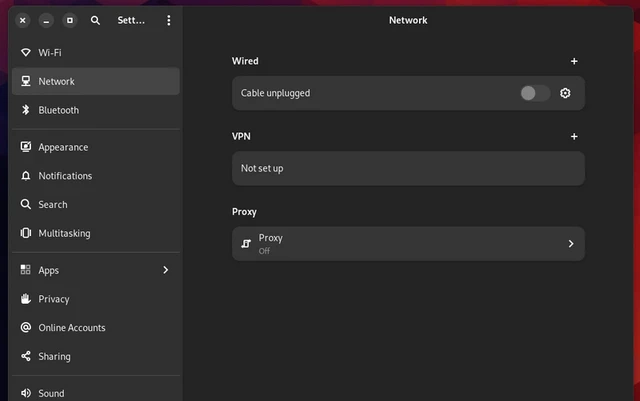 New Network Management Standards in NetworkManager 1.58
Modern operating systems demand impeccable network interface management as connectivity infrastructures grow increasingly complex. The launch of NetworkManager 1.58 marks a pivotal milestone in the evolution of Linux administration tools, blending support for the latest hardware standards with deep system-level optimizations. This update focuses on expanding wireless networking capabilities and implementing advanced tunneling protocols, underscoring the developers' commitment to creating a flexible, transparent, and highly automated traffic management ecosystem.
21 Jul 2026
 The US Campaign Against Chinese Drone Masking
The global unmanned systems market has evolved into a flashpoint of intense geopolitical friction. DJI’s long-standing industry dominance is now colliding with a systematic campaign to purge Chinese technology from the American landscape. The U.S. Federal Communications Commission (FCC) is shifting its strategy beyond outright bans, moving toward dismantling "white-labeling" schemes and stealth hardware rebranding. This pivot signals the dawn of an era of aggressive technological protectionism, where a product's provenance has become more critical than its technical specifications.
21 Jul 2026
 The Global Scale of the New Qwen3.8 System
The AI arms race is ascending to a new echelon of scale and accessibility. By unveiling Qwen3.8—a behemoth of a model with parameters numbering in the trillions—Alibaba is taking direct aim at the industry's walled gardens. The commitment to open-source weights for a system of this magnitude could fundamentally reshape the global trajectory of neural network development. This is far more than a mere technical release; it is a strategic gambit to democratize high-performance computing.
21 Jul 2026
 Samsung’s Ecosystem Leap: Scaling Up in the US Market
Modern tech giants have long since transcended their roles as mere hardware manufacturers, evolving into full-fledged financial operators. Apple and Amazon have already pioneered proprietary payment instruments designed to seamlessly integrate consumers into their digital ecosystems. Samsung is now aligning with this global trajectory by launching a specialized credit product in the US market. This strategy is less about generating banking revenue and more about radically enhancing user retention and driving the sales of premium, high-ticket hardware.
21 Jul 2026
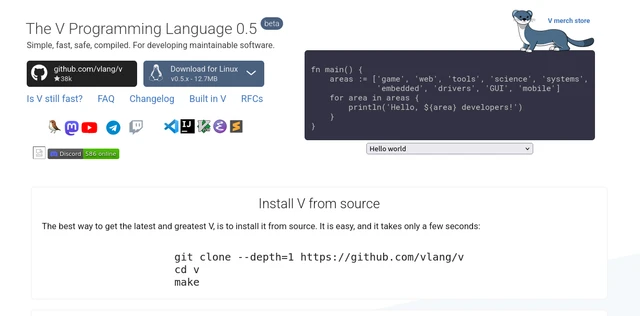 The Technological Leap of the V Programming Language
Modern systems programming is defined by an ongoing quest for equilibrium—balancing memory safety, compilation speed, and syntactic simplicity. As the industry oscillates between the rigorous constraints of Rust and the agility of Go, V seeks to bridge this divide, positioning itself as a pragmatic toolkit for building sustainable, maintainable software. The latest release, version 0.5.2, marks a significant evolutionary leap for a project that has been in development for over seven years. With this update, V takes a decisive stride toward maturity, introducing refined memory management mechanisms and broadening the scope of its standard library.
21 Jul 2026
 Sony’s Battle Against Generative Music AI
The ascent of generative AI has ignited a fundamental clash between traditional copyright frameworks and the relentless pace of technological evolution. Record labels now face a systemic crisis as decades of artistic legacy are repurposed as mere raw material for training neural networks. Sony’s latest litigation against Udio marks a watershed moment in this global legal battle over intellectual property; its resolution will define the ground rules for the synthetic content industry for years to come.
21 Jul 2026
 China’s AI Power Surge: The Gigawatt Leap
The global AI arms race has shifted decisively; it is no longer a battle of algorithms, but a contest of raw computational power. Stringent U.S. sanctions on high-end chip exports have pushed China toward a path of absolute hardware sovereignty. The emergence of massive compute clusters—entirely decoupled from Western technology—has become the critical flashpoint of this geopolitical standoff. Z.ai’s new gigawatt-scale facility now serves as the primary litmus test for the viability of China's overarching national semiconductor strategy.
21 Jul 2026
 Ephemeral Content within the MAX Ecosystem
Modern communication platforms have long since transcended static messaging, pivoting toward a paradigm of dynamic, ephemeral content. This trajectory, spearheaded by global industry leaders, is evolving messengers from simple data-transfer utilities into comprehensive social ecosystems. The introduction of "Stories" to MAX is a natural progression in this evolution, aimed at weaving spontaneity and visual storytelling into the fabric of the user experience. The platform is now testing mechanisms designed to fundamentally reshape interaction patterns within the app.
21 Jul 2026
 The Evolution of Intelligent Analysis in Gemini Notebook
The boundary between static knowledge repositories and active computational environments is effectively dissolving. Google is making a strategic pivot toward a unified cognitive ecosystem, where research tools are no longer treated as isolated services. The rebranding of NotebookLM to Gemini Notebook signals a fundamental shift: moving beyond mere note management toward comprehensive, intelligent data synthesis. Information processing is evolving into a seamless, continuous workflow that integrates search, analysis, and programming into a single fluid experience.
