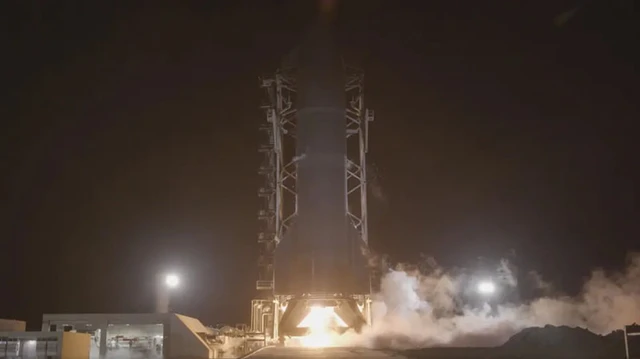
The modern race for space supremacy demands more than just ambition; it requires absolute technical reliability. The failure of the Long March 7A rocket at the Wenchang Space Launch Site serves as a stark reminder of the inherent fragility within complex engineering systems. This incident transcends the loss of a single satellite, exposing systemic risks embedded across China's entire national space program. At the heart of the issue lies a precarious balance: the tension between the drive for rapid scaling and the imperative of resilience against critical failure.
The ascent of the Long March 7A launch vehicle began nominally, but disaster struck just 80 seconds after lift-off from the Wenchang Spacecraft Launch Site. The first stage disintegrated during one of the most critical phases of flight: Max Q (maximum dynamic pressure). At this juncture, aerodynamic loads peak, pushing the airframe's structural integrity and propulsion systems to their absolute limits.
The vehicle was carrying a classified payload, believed to be a military communications satellite. Despite the gravity of the incident, China’s state space agency and CASC—the corporation responsible for the launcher's development—have remained silent. However, technical analysis points toward two likely culprits: a critical engine failure or the activation of the Flight Termination System (FTS), which triggers the self-destruction of the rocket if it deviates from its flight path to prevent debris from falling on populated areas.
The primary suspect in the failure is the YF-100 engine, which utilizes a conventional liquid oxygen and kerosene propellant combination. Delivering approximately 270,000 pounds of thrust at sea level, this powerplant has served as the workhorse of Chinese astronautics over the last decade, powering both the baseline Long March 7 and its upgraded 7A variant.
This highlights a fundamental systemic vulnerability. While component unification allows China to maintain high launch cadences and reduce production costs, it simultaneously creates dangerous single points of failure. Should the investigation confirm a design or manufacturing flaw within the YF-100 series, a significant portion of the state's entire launch program could be jeopardized. A single faulty component could trigger a cascading paralysis across multiple independent projects.
The most immediate fallout may be the postponement of the Chang’e 7 mission, which was slated for launch via a Long March 5 just two weeks after the incident. This lunar expedition is of strategic importance, targeting the Shackleton crater at the Moon's South Pole. The mission architecture comprises an orbiter, a landing platform, and a specialized robotic explorer. Success would have established China as the first nation to conduct a detailed study of this region—widely considered the most promising site for water ice deposits. Now, a technical hiatus to verify engine reliability could cost China its temporary lead in the race to conquer the lunar poles.
 The Phenomenon of the Supermassive Galaxy IC 1101