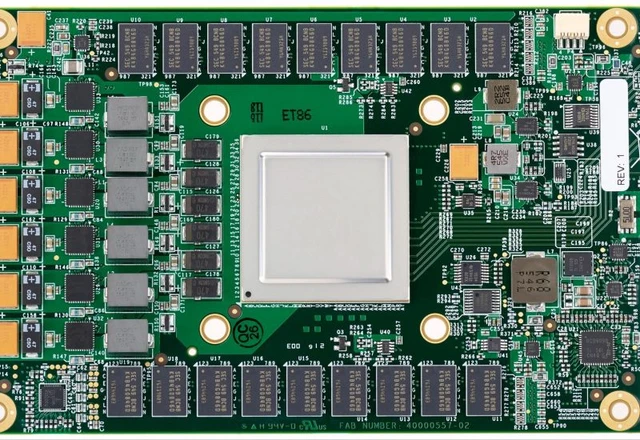
The global AI arms race has fundamentally shifted from the realm of algorithms to the domain of silicon. For too long, the world's leading cloud providers have been beholden to Nvidia’s pricing strategies and supply chain bottlenecks. Microsoft now intends to break this cycle by developing a comprehensive, proprietary hardware stack. The upcoming release of Maia 300 marks a pivotal milestone in the corporation's pursuit of strategic technological autonomy.
The drive toward vertical integration among tech giants has reached a critical juncture. Microsoft is gearing up to unveil the next generation of its proprietary AI accelerators—the Maia 300—with an announcement expected as early as September. This move is far more than a routine product refresh; it represents a strategic effort to curb reliance on prohibitively expensive Nvidia solutions, which currently hold a virtual monopoly over the compute power essential for the training and inference of large language models (LLMs).
The strategic scale of the project is underscored by production agreements with TSMC. Reports indicate that Microsoft is already discussing the manufacture of over 300,000 Maia 300 chips, with a delivery window extending through 2027. In the long term, Microsoft's ambitions are even more aggressive, potentially aiming to secure capacity for up to a million accelerators. Such an expansion would not only optimize internal Azure expenditures but also allow Microsoft to offer high-efficiency compute resources to external partners, including Anthropic, thereby gaining significant leverage within the cloud computing market.
However, the road to hardware autonomy is fraught with the challenge of playing catch-up. While Google has long been monetizing its Tensor Processing Units (TPUs) and Amazon has successfully deployed its Trainium family, Microsoft entered the fray much later. The first Maia accelerator only debuted in late 2023; consequently, the corporation must now accelerate its development cycle to close the gap in efficiency and scalability.
The technological evolution of the Maia series reveals a clear strategic trajectory. The previous generation, the Maia 200—built on TSMC’s cutting-edge 3nm process—focused heavily on expanding SRAM capacity. In the context of modern neural networks, this is a critical metric: increasing high-speed data access significantly minimizes latency when processing massive arrays of user requests and boosts overall system throughput.
Scaling the Maia 300 program will serve as a litmus test for Microsoft’s ability to manage complex supply chains and design silicon capable of rivaling the H100 and Blackwell in terms of energy efficiency and performance-per-watt. Ultimately, the success of this initiative will determine whether Microsoft remains a mere consumer of third-party technology or evolves into a true architect of the physical layer powering modern artificial intelligence.

 The Price of Acceleration: CXMT’s Rapid Push into Memory