Developing a general-purpose humanoid robot hinges on overcoming a fundamental challenge: adapting to the inherent unpredictability of the physical environment. For years, vertical obstacles have represented a critical bottleneck for most autonomous systems, primarily due to the immense complexities involved in dynamic balancing and motor coordination. The latest breakthroughs from Figure 03 signal a quantum leap in motion control, elevating humanoid mobility to an entirely new echelon. We are no longer discussing mere mechanical locomotion; we are witnessing the emergence of comprehensive spatial awareness and environmental perception.
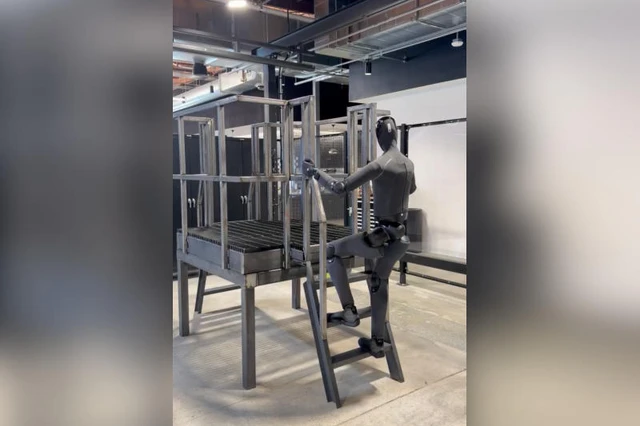
The ability to autonomously navigate stairs is widely regarded as one of the most formidable challenges for humanoid robotics. It is a task that demands a precise orchestration of balance, synchronized limb movement, and instantaneous environmental analysis. Recent demonstrations of Figure 03 showcase its capacity to overcome such obstacles entirely autonomously, eschewing remote control or pre-programmed scripts. The slow, deliberate pace of its ascent underscores the current stage of development: while the system has mastered body control, it is still adapting to environments where the cost of failure is prohibitively high.
This technological leap was driven by an update to the Helix System 0 AI. Previously, robot control relied primarily on proprioception—the internal sense of limb positioning and surface interaction. However, the latest iteration of the AI integrates data from onboard stereo cameras, enabling the system to generate a comprehensive real-time 3D map of its surroundings. Consequently, the robot has evolved beyond "blind" movement based solely on pressure and tilt sensors; it now perceives the actual geometry of obstacles, aligning them with its own physical orientation.
Deep Reinforcement Learning (RL), conducted within simulated environments featuring procedurally generated landscapes, played a pivotal role in this process. This approach allowed the model to accumulate thousands of hours of experience in virtual space before the algorithms were deployed onto the physical hardware. Notably, the integration occurred without additional calibration, demonstrating a high degree of skill generalization: the robot can navigate uneven surfaces and stairs based on universal principles of balance rather than the specific parameters of a single staircase.
The scaling of this technology has already moved beyond laboratory testing. Production rates for Figure 03 have reached one unit per hour, with total deliveries exceeding 350 units. This production density signals a transition from prototyping to industrial deployment. Potential applications span logistics centers, factories, and construction sites—environments where stairs and technical platforms are intrinsic to the infrastructure. A robot capable of confident navigation in such settings gains a massive competitive edge over wheeled or less adaptive platforms.
Nevertheless, current success is tempered by cautious optimism. Despite these impressive results, questions regarding reliability and safety in truly chaotic scenarios remain. For androids to be fully integrated into the real economy, the system must prove its ability to operate flawlessly and consistently in environments where external conditions shift every second.
 The Price of Acceleration: CXMT’s Rapid Push into Memory