20 Jul 2026
 The Trap of Proprietary Office Software Standards
The global productivity software market has long been a battleground where the ethos of open access clashes with strategies of corporate hegemony. At the heart of this conflict stand The Document Foundation and Microsoft—two entities with fundamentally divergent philosophies regarding data sovereignty. This is not merely a question of file interoperability; it is about the fundamental right of the user to maintain absolute control over their own information. The friction surrounding proprietary formats exposes a systemic issue of vendor lock-in, creating a technological dependency that stifles the digital autonomy of millions of organizations worldwide.
20 Jul 2026
 Deploying Arch Linux on Arm
The migration of high-performance computing toward ARM architectures is no longer the exclusive domain of the mobile sector. Valve’s ambitions for wireless virtual reality necessitate a software foundation capable of delivering the agility and raw power characteristic of contemporary gaming systems. The introduction of Collabora’s Holo Core serves as the critical nexus, bridging the open-source philosophy of Arch Linux with the specialized hardware requirements of the Steam Frame. This move signals the emergence of a new ecosystem—one where ARM's performance converges with the seamless nature of continuous, rolling updates.
20 Jul 2026
 The Evolution of the Pebble Wearables Ecosystem
The wearables market has long since evolved beyond its experimental phase, maturing into a fierce competition centered on battery autonomy and functional utility. Against this backdrop, Core Devices' strategic approach to evolving the Pebble platform serves as a compelling case study in how an open ecosystem can catalyze technological advancement. By pairing aggressive manufacturing scalability with rigorous software optimization, they are establishing a new benchmark for human-device interaction. The industry's focus is now pivoting away from mere notifications toward a comprehensive ecosystem of applications and robust developer tooling.
20 Jul 2026
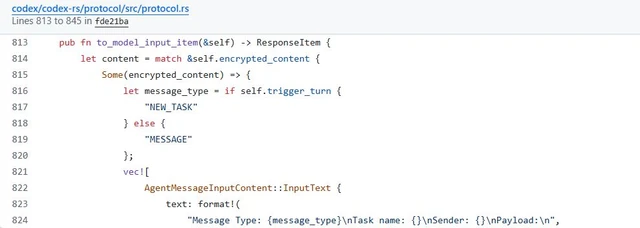 The Cryptographic Barrier within the Codex Ecosystem
The contemporary AI landscape is evolving beyond rudimentary chatbots toward sophisticated multi-agent architectures, where a primary orchestrator manages an ecosystem of specialized sub-agents. Within this paradigm, interaction transparency has emerged as a mission-critical requirement for both system debugging and robust security. Yet, in a surprising pivot toward opacity, OpenAI is implementing the encryption of internal instructions within Codex. This strategic move signals a new epoch in the protection of intellectual property and data privacy, specifically targeting the layer of inter-model communication.
20 Jul 2026
 The Singularity: A New Epoch for Human Civilization
Humanity stands on the threshold of a transformation whose scale dwarfs every technological shift in history. The advent of Artificial General Intelligence (AGI) has ceased to be a trope of science fiction, evolving instead into an inevitable horizon for the coming years. Within this transition lies a fundamental risk: the pace of systemic evolution may outstrip our capacity for governance. We are currently within that "critical window" where defining the rules of engagement can still shield civilization from unbridled chaos.
20 Jul 2026
 Credit Risks in the Age of Generative AI
The global AI arms race is pivoting from a phase of unbridled optimism to one of rigorous financial scrutiny. S&P’s decision to downgrade Oracle’s credit rating serves as a watershed moment, laying bare the systemic risks inherent in tech giants tethering their fortunes to the ambitions of startups. The market is now confronting a sobering reality: massive infrastructure investments risk becoming a liability if the business models of AI consumers fail to prove viable. This establishes a precarious precedent, where the financial resilience of a corporate titan becomes contingent upon the solvency of some of the industry's most volatile players.
20 Jul 2026
 The Cost of Total Mobile Network Surveillance
The boundary between public safety and the right to privacy is increasingly blurring as cutting-edge signals intelligence (SIGINT) tools are integrated into law enforcement operations. In the United States, the deployment of mobile traffic interception systems marks a definitive shift toward an era of proactive digital surveillance. Recent investments by Texas law enforcement in sophisticated monitoring arrays are transforming standard patrol vehicles into potent surveillance nodes—a move that jeopardizes fundamental principles of privacy and ignites intense legal debate.
20 Jul 2026
 Stim Machine Compact Gaming PC
The Small Form Factor (SFF) gaming market has long since evolved beyond its origins as an enthusiast's niche, emerging as a legitimate alternative to traditional consoles. The drive to marry the raw performance of a full-fledged PC with the seamless ergonomics of a living room setup has birthed a new generation of hardware designed to disrupt closed ecosystems. Enter the Stim Machine from French retailer LDLC—a system engineered to redefine the equilibrium between high-end performance and compact footprints. This philosophy is rooted in a commitment to an open-platform architecture powered by cutting-edge hardware.
20 Jul 2026
 The Economics of Operational Data in Neural Network Tooling
Modern software engineering is increasingly reliant upon autonomous AI agents capable of independently orchestrating codebases and external tooling. Yet, beneath the streamlined interface lies a sophisticated mechanism for managing system context—a factor that directly dictates both operational overhead and latency. A comparative analysis of Claude Code and OpenCode exposes a fundamental divide in their respective approaches to prompt optimization and data orchestration. Research indicates that bloated system instructions can drive token consumption up nearly fivefold without delivering a proportional increase in output quality.
20 Jul 2026
 The Price of Digital Complacency at AliExpress
The global e-commerce landscape is definitively transitioning from its "Digital Wild West" phase into an era of stringent regulatory scrutiny. With the rollout of the Digital Services Act (DSA) across the European Union, consumer protection has evolved from a mere set of guiding principles into a costly legal mandate. The record-breaking fine levied against AliExpress serves as a watershed moment, signaling the end of an era defined by unchecked scaling. Systemic failures in content and product moderation are no longer mere operational glitches; they have become direct financial liabilities for tech giants.
20 Jul 2026
 The Limits of Human Cognitive Adaptation
Humanity has reached a critical juncture where the pace of technological acceleration has exponentially eclipsed our own biological evolution. We are attempting to navigate the complexities of a globalized digital society using cognitive architecture honed for survival in small, ancestral kinship groups of the Stone Age. This fundamental disconnect has triggered a systemic crisis of mental and physical well-being on a civilizational scale. In this context, modern anxiety and burnout are not merely individual struggles; they are the inevitable symptoms of a profound evolutionary mismatch between our biological hardware and our current environment.
20 Jul 2026
 The Hardware Standard for Gemini Models
The AI arms race is shifting its focus, moving beyond software algorithms toward deep hardware specialization. Google is making a bold move, attempting to effectively "hardwire" the logic of its neural networks directly into the silicon. This strategy aims to address the critical bottlenecks of power consumption and compute shortages that are currently hindering the scalability of cloud services. Project Frozen v2 signals a shift toward an era of absolute vertical integration—a paradigm where the model and the chip evolve into a single, unified entity.
