7 Jul 2026
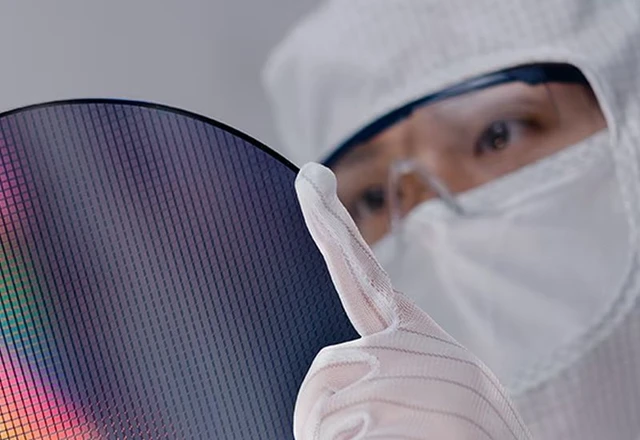 Samsung: The Strategic Reserve of the Tech Titans
The modern semiconductor market has become a hostage to its own success, as the demand for AI compute power vastly outstrips production capacity. TSMC’s overwhelming dominance has created a perilous single point of failure for the global tech ecosystem, compelling the industry's heavyweights to seek viable alternatives. In this climate, South Korea’s Samsung is evolving from a mere competitor into a critical insurance policy for the market's vanguard. Transitioning to a multi-vendor strategy has emerged as the sole path to survival in an era of systemic chip scarcity.
7 Jul 2026
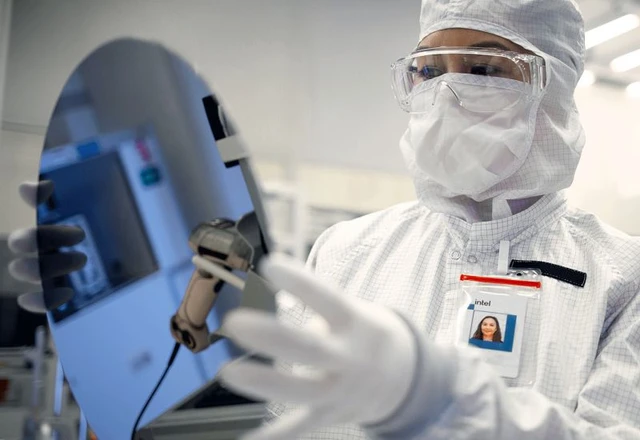 Intel's Progress in Mastering the 14A Process Node
In the semiconductor industry, the success of a new process node is dictated less by theoretical potential than by the cold, hard mathematics of wafer yield. Every migration to a more advanced node is fraught with initial yield instability—a period of high defect rates that can prove fatal to a product's commercial viability. Intel is currently navigating this critical phase with its 14A process, aiming to cement its dominance in chip manufacturing by the end of the decade. Current metrics suggest that the company is resolving these manufacturing hurdles far more rapidly than industry benchmarks would typically dictate.
7 Jul 2026
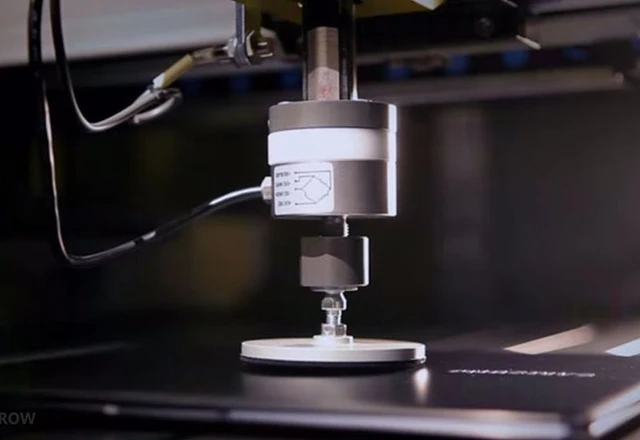 Digital Twins Accelerate Samsung's Development Cycles
Modern industry is undergoing a fundamental paradigm shift toward the comprehensive digitalization of production cycles. Amidst the cutthroat competition of the electronics market, time-to-market has evolved into a critical determinant of survival. South Korean titan Samsung is doubling down on the deep integration of artificial intelligence and the implementation of digital twins. This strategic pivot enables the company to drastically compress product testing timelines by migrating grueling physical trials into the realm of high-fidelity simulations.
7 Jul 2026
 The Intelligent Leap of Wear OS 7
The wearable ecosystem is undergoing a fundamental metamorphosis, evolving from mere notification hubs into sophisticated, autonomous assistants. The launch of Wear OS 7, timed to coincide with the rollout of Android 17, represents Google's latest endeavor to resolve the perennial tension between feature-rich functionality and power efficiency. The focus has shifted beyond the user interface toward the deep integration of generative AI into the fabric of daily routines—a decisive step toward forging a seamless bridge between the user's wrist and the vast capabilities of cloud computing.
7 Jul 2026
 The Physical Limits of Transistor Scaling
The relentless pursuit of semiconductor miniaturization has reached a critical threshold where the laws of classical physics no longer apply. As component dimensions shrink toward the atomic scale, the industry is colliding with fundamental quantum constraints. Today's "nanometer" process nodes are increasingly becoming marketing shorthand, masking the profound physical complexities beneath the surface. However, a novel methodology for calculating the quantum limit is now empowering engineers to design devices with precision, effectively overcoming the persistent barrier of current leakage.
7 Jul 2026
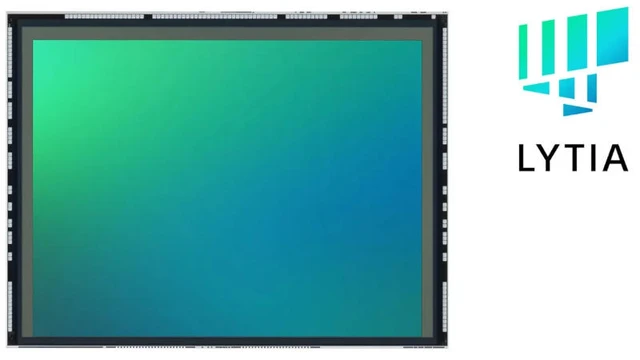 Sony LYTIA L910: Redefining Mobile Dynamic Range
For years, mobile photography has been locked in a struggle against a fundamental hardware constraint: the inability to simultaneously capture deep shadows and brilliant highlights without sacrificing image quality. Conventional HDR techniques, which rely on rapid-fire bursts of frames, inevitably introduce ghosting artifacts and motion blur when capturing dynamic scenes. Sony is introducing a radical departure from this norm with the new LYTIA L910 sensor, a component that fundamentally reimagines the process of light collection. By implementing the innovative LOFIC architecture, Sony is rewriting the rules of exposure, bridging the gap between smartphone capabilities and professional-grade cameras.
7 Jul 2026
 The Evolution of Samsung’s Microdisplays for Augmented Reality
The quest for the definitive wearable interface has shifted decisively from the realm of software optimization to the frontier of hardware innovation. The industry's primary challenge remains the pursuit of a delicate equilibrium: minimizing device weight without compromising visual fidelity. Samsung Display proposes a solution to this dilemma through its new RGB OLEDoS technology—microdisplays capable of fundamentally redefining how humans interact with digital data within a physical environment.
7 Jul 2026
 Streamlining Extreme Ultraviolet (EUV) Optics
The relentless pursuit of smaller process nodes in the semiconductor industry has collided with a formidable barrier: the exponential surge in equipment costs. Modern Extreme Ultraviolet (EUV) lithography, which enables the fabrication of chips with staggering transistor densities, demands optical systems of unprecedented complexity. A groundbreaking study from the Okinawa Institute of Science and Technology proposes a radical reimagining of the fundamental geometry underlying these systems. Shifting toward a linear architecture could do more than just streamline the production of nanometer-scale structures; it could drastically lower the financial barrier to entry for the next generation of high-performance computing.
7 Jul 2026
 The End of x86 Dominance in Data Centers
The global server hardware market is undergoing a tectonic shift, one that is fundamentally rewriting the industry's rulebook. For decades, the absolute dominance of x86 architectures seemed immutable; however, the rise of artificial intelligence has catalyzed a demand for a new breed of efficiency. Today, alternative computing solutions are rapidly seizing nearly half the market, systematically displacing the traditional incumbents. This transition signals a fundamental paradigm shift in the very architecture of global digital infrastructure.
7 Jul 2026
 Restoring Speech via Neural Decoding
The boundary between human consciousness and machine execution is becoming increasingly porous. For those living with amyotrophic lateral sclerosis (ALS), the loss of speech is among the most devastating dimensions of the disease. However, recent breakthroughs in brain-computer interfaces (BCIs) and artificial intelligence are reframing these clinical challenges as solvable engineering problems. A new system developed at the University of California, Davis, demonstrates that neural interfaces can transcend the confines of sterile laboratories to integrate into the cadence of a full professional life. This represents more than a medical milestone; it is a fundamental paradigm shift in the synergy between humanity and technology.
7 Jul 2026
 Discerning Threats in US Airspace
The geopolitical rivalry between the United States and China has decisively shifted toward a battle for technological sovereignty and dominance over the skies. The U.S. Federal Communications Commission (FCC) is currently revisiting stringent restrictions on the import of Chinese drones, attempting to draw a fine line between professional-grade hardware and consumer-grade toys. This move underscores Washington's struggle to strike a delicate balance between market dynamics and the imperatives of national security. At the heart of the debate lies a critical question: at what precise point does a consumer gadget evolve into a potential tool for espionage?
7 Jul 2026
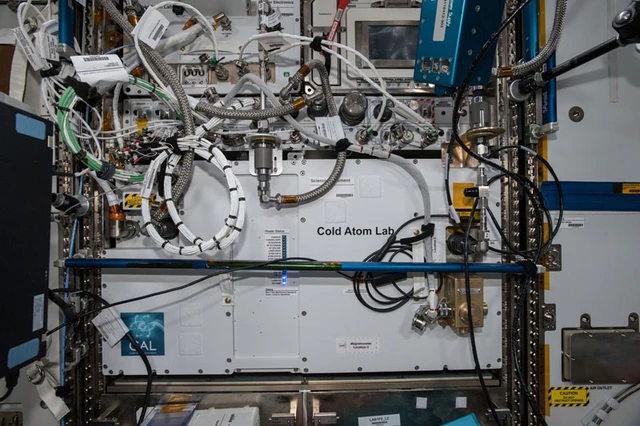 Quantum Research in the Microgravity of the ISS
The boundary between classical physics and the quantum realm is often blurred by the relentless pull of Earth's gravity. To transcend this barrier, NASA leverages the unique environment of the International Space Station, where the laws governing the motion of matter are fundamentally altered. The recent upgrade of the Cold Atom Lab marks a new era in the manipulation of matter at temperatures approaching absolute zero. This facility transforms the vacuum of space into a precision instrument for exploring the fifth state of matter and seeking answers to the most fundamental mysteries of the universe.
