The global AI arms race is pivoting from a phase of unbridled optimism to one of rigorous financial scrutiny. S&P’s decision to downgrade Oracle’s credit rating serves as a watershed moment, laying bare the systemic risks inherent in tech giants tethering their fortunes to the ambitions of startups. The market is now confronting a sobering reality: massive infrastructure investments risk becoming a liability if the business models of AI consumers fail to prove viable. This establishes a precarious precedent, where the financial resilience of a corporate titan becomes contingent upon the solvency of some of the industry's most volatile players.
S&P Global Ratings' decision to downgrade Oracle's credit rating to BBB-/A-3 may appear, at first glance, to be a mere technical adjustment. In reality, however, it signals a fundamental shift in how risk is assessed across the technology sector. For institutional investors, the BBB- mark represents a critical precipice; any further decline could trigger a mass exodus of investment funds and pension plans, which are legally prohibited from holding securities that fall below investment grade. Consequently, Oracle's financial stability has been jeopardized by the very factors previously hailed as primary drivers of growth.
The nuance of this case lies in S&P's underlying motivation. For the first time, a leading rating agency has acknowledged that while a company's core business remains healthy, its investments in artificial intelligence constitute a critical risk. OpenAI has emerged as the central figure in this vulnerability. The phrasing "OpenAI remains a key credit risk" effectively shifts the discourse surrounding the viability of generative AI from the realm of technological debate into the domain of rigorous financial analysis.
The paradox of the situation is that it was precisely the deal with OpenAI that briefly propelled Oracle's chairman, Larry Ellison, to the top of the world's wealthiest individuals list. Yet S&P highlights the flip side of this coin: OpenAI's obligations to Oracle over the coming years exceed $300 billion. Should the startup fail to meet these payments, Oracle would face a catastrophic scenario, burdened by massive data center lease liabilities that would be nearly impossible to offload to other tenants on favorable terms.
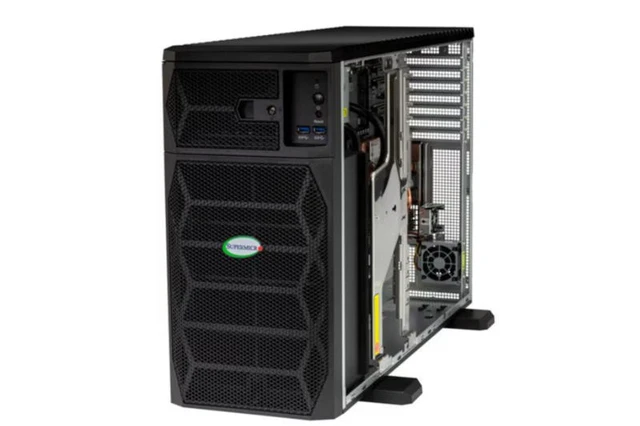
This underscores the unique nature of modern AI infrastructure. Unlike traditional cloud storage, data centers designed for training and deploying Large Language Models (LLMs) are highly specialized facilities with exacting requirements for power consumption, cooling, and GPU density. The market of companies capable of effectively utilizing such capacity is extremely narrow. Consequently, constructing these facilities has become a high-stakes gamble: if the anchor client departs, the asset instantly transforms into a liability.
Compounding this risk is the systemic underestimation of capital expenditures (CapEx). Experience in building specialized AI hubs has shown that actual costs frequently overshoot initial projections. Rising component prices and implementation complexities are exerting additional pressure on a business model that already appears fragile.
S&P's skepticism echoes concerns previously raised by private investors—most notably, the staggering chasm between OpenAI's annual revenue (approximately $13 billion) and its total obligations, which are approaching the trillion-dollar mark. Management's responses to these inquiries have often been evasive, leaning on the opacity of private company financial reporting and a steadfast confidence in the product's future success.
However, arguments rooted in "visionary leadership" and "imminent breakthroughs" lose their potency when applied to credit ratings. While independent bloggers or venture capitalists may afford to ignore the mathematics of debt, for S&P, the numbers are primary. The market's attention now turns to the remaining agencies—Moody’s and Fitch. Their verdicts will determine whether Oracle's downgrade is an isolated incident or the beginning of a wholesale re-evaluation of the entire AI infrastructure industry.

 Nvidia N1X and the New Era of Arm PCs