The Small Form Factor (SFF) gaming market has long since evolved beyond its origins as an enthusiast's niche, emerging as a legitimate alternative to traditional consoles. The drive to marry the raw performance of a full-fledged PC with the seamless ergonomics of a living room setup has birthed a new generation of hardware designed to disrupt closed ecosystems. Enter the Stim Machine from French retailer LDLC—a system engineered to redefine the equilibrium between high-end performance and compact footprints. This philosophy is rooted in a commitment to an open-platform architecture powered by cutting-edge hardware.
The arrival of the Stim Machine—marketed also as the LDLC PC Box—marks a strategic pivot toward a more versatile alternative to Valve’s Steam Machine. While Valve typically leans on semi-custom hardware, LDLC bets on standardized, high-efficiency components. Priced at approximately €1,040, it sits comfortably alongside the European pricing of the base 512GB Steam Machine; however, its internal architecture offers a fundamentally different level of capability.
At the heart of the system lies the AMD Ryzen 5 8400F. With six cores and twelve threads, it provides ample headroom for modern titles without introducing excessive thermal stress within the compact chassis. This is paired with a B650 chipset motherboard, ensuring a viable long-term upgrade path for the user. The configuration is rounded out by 16GB of DDR5 memory and a high-speed 500GB NVMe SSD.
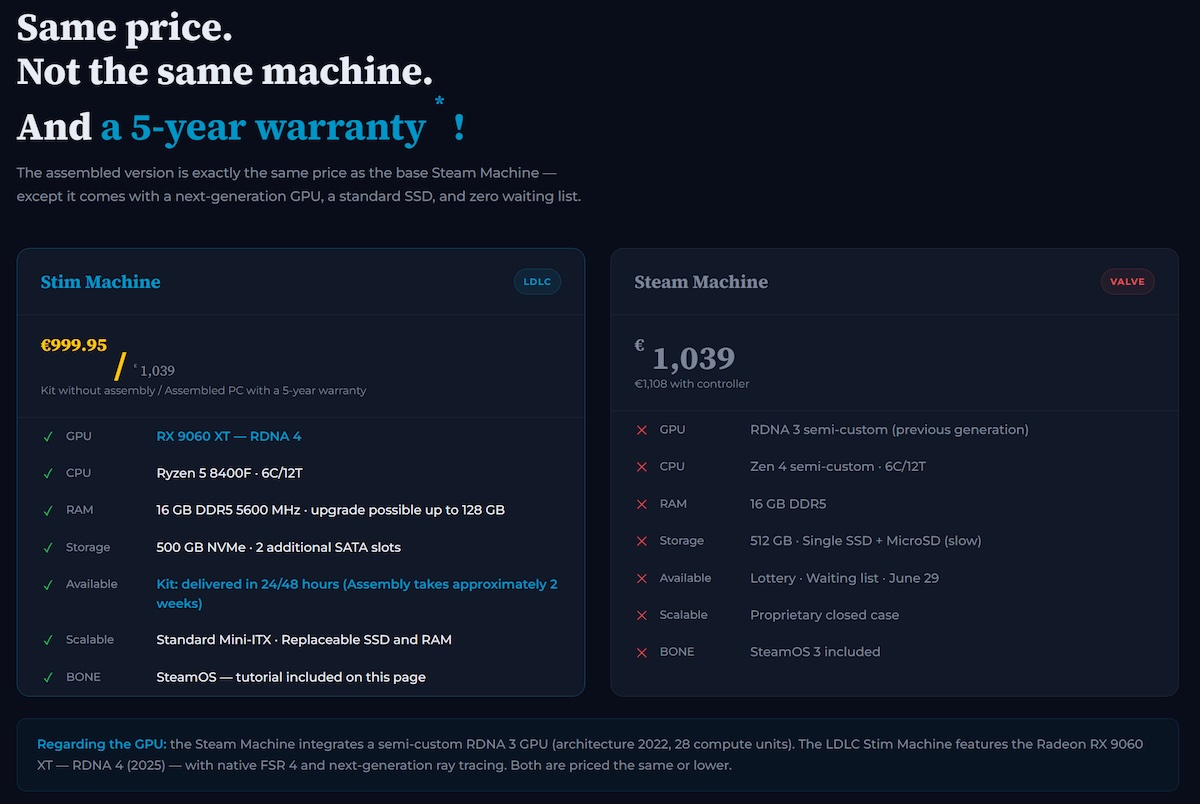
The Stim Machine’s primary competitive edge lies in its graphics subsystem. Whereas the Steam Machine utilizes a semi-custom RDNA 3 chip with 28 compute units, LDLC has opted for a full discrete Radeon RX 9060 XT with 8GB of VRAM. The leap to the RDNA 4 architecture delivers a tangible boost in rendering efficiency and the handling of modern graphical effects, ensuring the device remains resilient against the demands of upcoming releases.
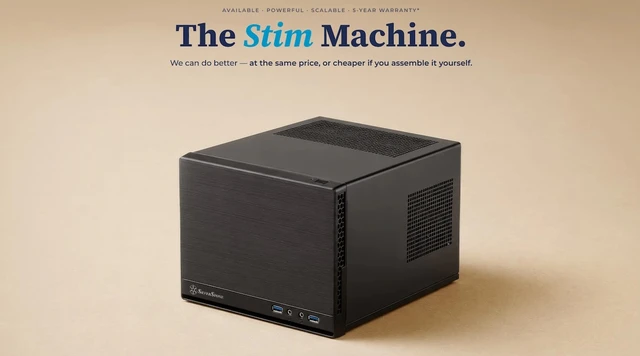
Physically, the Stim Machine is housed in the proven SilverStone Sugo SG13B-Q chassis, powered by a 350W PSU. Although it is roughly three times the size of the Steam Machine, the footprint is justified by its utility. The open specifications allow for memory expansion up to a substantial 128GB and the addition of extra SATA drives, effectively transforming this gaming console into a fully capable workstation.
LDLC’s software philosophy is equally intriguing: the system ships without a pre-installed version of Windows. Instead, the company provides a comprehensive guide for installing Valve's SteamOS. This underscores a clear target audience—users who crave a console-like interface but demand absolute control over their hardware. In doing so, the Stim Machine serves as a bridge between the walled gardens of proprietary gaming systems and the unrestricted freedom of a traditional PC.
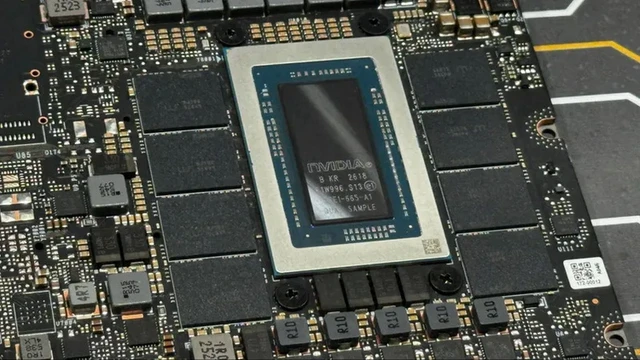 Nvidia N1X and the New Era of Arm PCs