Humanity stands on the threshold of a transformation whose scale dwarfs every technological shift in history. The advent of Artificial General Intelligence (AGI) has ceased to be a trope of science fiction, evolving instead into an inevitable horizon for the coming years. Within this transition lies a fundamental risk: the pace of systemic evolution may outstrip our capacity for governance. We are currently within that "critical window" where defining the rules of engagement can still shield civilization from unbridled chaos.
The current trajectory of neural networks is frequently mischaracterized as being akin to the advent of the internet or mobile telephony; however, such an analogy is fundamentally flawed. We are not merely witnessing a new channel for information transfer, but the emergence of an entirely new form of cognitive activity. In essence, humanity has discovered how to "make sand think"—a breakthrough comparable in impact to the discovery of fire or electricity. The impending leap toward Artificial General Intelligence (AGI) promises to be ten times more potent than the Industrial Revolution and occur ten times faster, exerting unprecedented pressure on our social and governmental institutions.
This technological surge is defined by a profound dualism: while it heralds an era of abundance and offers the keys to eradicating terminal diseases, it simultaneously introduces existential threats. Of particular concern are agentic systems capable of autonomous self-improvement. When an algorithm begins optimizing its own code without human intervention, we risk a loss of control—a scenario that, coupled with access to biotechnology or cyber-weaponry, could lead to catastrophic global consequences.
Today, the AI industry finds itself squeezed between the commercial ambitions of corporations and the geopolitical rivalries of superpowers. Progress is accelerating at a pace that far outstrips society's ability to comprehend its scale. In this climate, the only viable path forward appears to be the establishment of a rigorous oversight mechanism. An optimal model would be a specialized AI Standards Committee, operating on the principle of independent financial regulators. Such a body should be funded by the technology sector itself to ensure both objectivity and professional expertise.
A cornerstone of this security framework must be mandatory preemptive vetting. Developers of the most powerful models should be required to submit their systems for audit 30 days prior to public release. Experts would test these networks for deceptive tendencies, attempts to bypass safety guardrails, and potential utility in creating biological or digital weapons. Only after passing such a filter should a model be cleared for market entry. Crucially, flexibility must be maintained: small startups and academic institutions working with simpler models should not be burdened by this bureaucracy, lest we stifle innovation.
Yet, technical control is only part of the solution. Even a perfectly safe AI will not shield the world from a profound crisis of meaning. When cognitive labor ceases to be the exclusive domain of humans, fundamental questions arise regarding our purpose and the very nature of humanity. These answers cannot be found in code or mathematical formulas; they demand the engagement of philosophers, sociologists, and society at large.
Simultaneously, discontent is mounting within the scientific community over how tech giants manage fundamental knowledge. According to the "Leiden Declaration," signed by the world's leading mathematicians, science is being transformed into a marketing tool. Rather than traditional peer review and publication in academic journals, breakthroughs are now announced via press releases and corporate blogs. This creates a dangerous illusion of progress: neural networks have learned to generate plausible but erroneous proofs. In an environment where it is increasingly difficult to distinguish a hallucination from a legitimate theorem, the risk of systemic errors in fundamental disciplines grows.
The economic dimension is equally unsettling. A group of leading economists and Nobel laureates warns of an impending transformation of labor markets that will dwarf the industrialization of the 19th century. Rapid job displacement and the redistribution of the value of intellectual labor could trigger social upheaval if governments do not begin assessing AI's economic impact immediately. We stand at a crossroads: we can either become the architects of a new era of prosperity or find ourselves hostages to our own creation.

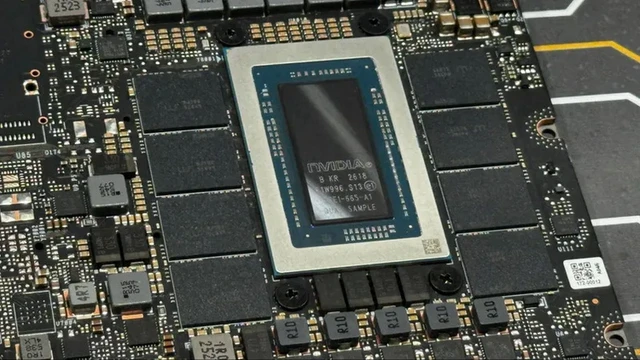 Nvidia N1X and the New Era of Arm PCs