The corporate landscape is pivoting rapidly toward a paradigm of intelligent productivity, where the drudgery of manual information retrieval is being supplanted by generative models. Microsoft continues its aggressive push to integrate AI into every facet of its ecosystem, fundamentally transforming familiar interaction tools. Yet, the transition from basic algorithms to sophisticated large language models inevitably necessitates a shift in access and pricing structures. The latest overhaul of Outlook’s functionality exemplifies this trend: core capabilities are increasingly yielding to premium, Copilot-powered services.
In today's corporate landscape, managing attention has become as critical a resource as time itself. For years, Microsoft addressed the challenge of contextual meeting preparation through its Meeting Insights feature. This tool functioned as a straightforward aggregator: it scanned recent file changes and correspondence relevant to an upcoming call and surfaced them directly within the invitation. Crucially, Meeting Insights lacked cognitive capabilities; it was a classic data indexing system, enabled by default for all users, operating independently of Large Language Models (LLMs).
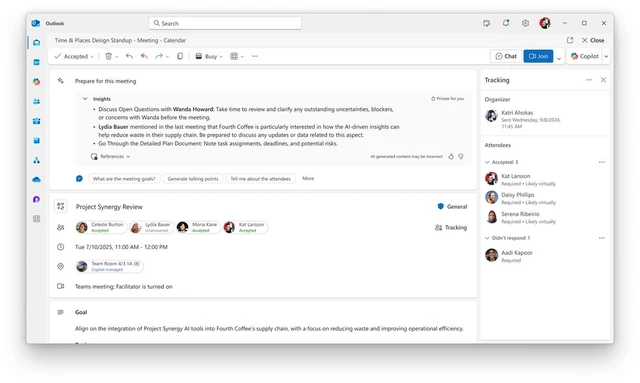
Now, the company is pivoting its strategy. Microsoft plans to phase out Meeting Insights between mid-August and early September, replacing it with Copilot-powered "Meeting Preparation." The distinction here is fundamental: while the legacy tool merely provided links to documents, the new AI assistant is capable of synthesizing information. Copilot doesn't just surface files; it generates a concise contextual summary and suggests specific action plans, effectively evolving from a digital archivist into an analyst.
However, this technological evolution carries a distinct economic undercurrent. While Meeting Insights was available to all users by default, Copilot’s capabilities are gated behind a strict licensing filter. Consequently, functionality that was once considered a baseline utility of the interface is being migrated into Microsoft 365's premium tier. This creates a palpable rift in user experience: one segment of the audience gains a powerful intellectual analysis tool, while others lose even the simplest contextual cues for their meetings.
These changes are unfolding against a backdrop of widespread friction regarding the adoption of the "New Outlook" client. The transition from the battle-tested Classic version to the modern interface has been marred by significant technical hurdles. Specifically, critical performance issues have emerged within the Windows notification system, where message delivery latency can reach ten seconds. Against this backdrop, the stability and responsiveness of Outlook Classic remain compelling arguments against a rushed modernization.
Ultimately, we are witnessing a classic tension between the drive for innovation and the demand for tool reliability. Microsoft is betting on AI to offset interface deficiencies and reduce the user's cognitive load. Yet, the question remains: is the business community willing to pay for features that were previously free—and tolerate the technical imperfections of a new client—simply for access to Copilot?
 Nvidia N1X and the New Era of Arm PCs