The contemporary AI landscape is increasingly consolidated within a handful of private corporations, precipitating a perilous digital divide. In this paradigm, language and culture are subordinated to commercial profitability, while indigenous data is frequently exploited without consent. Countering this challenge requires the development of an open infrastructure comparable in scale and accessibility to the early internet. Current AI has set itself an ambitious mission: to transform AI from a tool of corporate control into a global public good.
The contemporary landscape of Large Language Models (LLMs) increasingly mirrors a closed ecosystem, where access to cutting-edge technology is dictated by capital and infrastructure ownership. When a technology becomes a transformative force capable of reshaping every facet of human existence, its concentration within a narrow circle of Silicon Valley firms evolves into a systemic risk. This reality creates an urgent necessity for an alternative: an open AI network operating on the principles of the open internet, where innovation serves the collective good rather than merely augmenting shareholder value.
At the heart of this struggle lies linguistic and cultural hegemony. Because the majority of leading models are rooted in English, vast repositories of human knowledge, tradition, and identity are being sidelined in the digital evolution. For big tech giants, multilingualism is often little more than a tool for market expansion; in practice, data from indigenous populations is frequently harvested without consent, reducing cultural heritage to raw material for training commercial algorithms.
In opposition to this paradigm, Current AI is pioneering a "public-private partnership" model. The organization unites governments, philanthropic foundations, and tech companies to fund projects of genuine public interest. Total funding has already reached $400 million, including significant contributions from the French government and support from entities such as the Ford Foundation, the MacArthur Foundation, DeepMind, and Salesforce. Crucially, these organizations are not acting as investors in the traditional venture capital sense, but as sponsors of essential public infrastructure.
The practical application of this vision is exemplified by Suno Sutra, a project developed in collaboration with Bhashini's Indian division. This autonomous, handheld device operates across 22 Indian languages entirely offline. In regions characterized by extreme linguistic diversity and erratic connectivity, such offline solutions are the only viable path toward achieving true AI inclusivity.
The organization’s strategy is anchored in decentralization and digital sovereignty. Rather than aggregating data into a monolithic cloud repository, Current AI advocates for the local hosting of models and data, allowing communities to maintain absolute control over their information. Initial grants totaling $3.2 million have already been deployed toward critical initiatives:
- In Kenya, specialized datasets are being developed across 50 African languages tailored for the healthcare and agricultural sectors.
- In Lebanon, Arabic cultural history is being digitized into machine-readable databases managed by the communities themselves.
- In the Brazilian Amazon, offline AI tools are being engineered to help indigenous peoples preserve ecological knowledge in their native tongues without surrendering that data to external corporations.
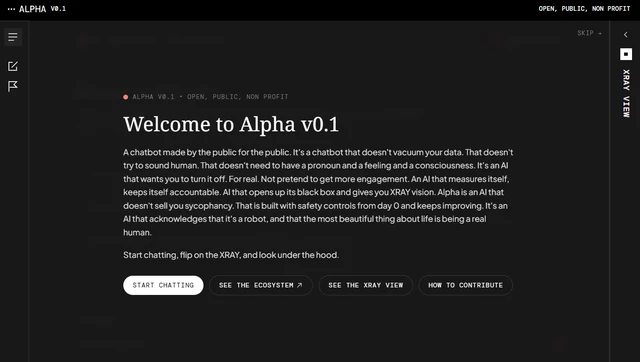
The technical stack of this ecosystem is forged through open collaboration. The launch of Alpha Chat—an open-source chatbot—was the result of a synergy between Hugging Face, Mozilla, and the MIT Media Lab. Each participant contributed a piece of the infrastructure, from the underlying language models to computational power and security frameworks. Simultaneously, a partnership with Tokyo-based startup Sakana AI aims to advance "Sovereign AI," which respects the nuances of Japanese culture and the specific needs of the Global South.
This trend toward the nationalization and democratization of technology is also manifesting at the state level. For instance, the South Korean government has initiated the creation of a universal, free AI agent to facilitate citizen interaction with government services. This signals a global shift: a transition from perceiving AI as a commercial product to recognizing it as a basic public utility, accessible to every individual regardless of their social or geographic standing.
 Nvidia N1X and the New Era of Arm PCs