7 Jul 2026
 Digital Plagiarism: The Foundation of Generative Audio
The collision between generative AI and the music industry has escalated into an all-out legal war. Recent investigations reveal that the technological leap in synthetic audio was underwritten by the unauthorized exploitation of millions of copyrighted works. At the heart of this conflict lies the clash between the "fair use" doctrine and the fundamental rights of creators to their intellectual labor. The resolution of this struggle will redefine the rules of engagement for the entire creative economy in the age of algorithms.
7 Jul 2026
 Democratic Unity in the Age of Large-Scale Models
The AI arms race is rapidly evolving, shifting its focus from technical benchmarks to the high-stakes arena of geopolitical diplomacy. Recent U.S. efforts to restrict foreign nationals' access to cutting-edge neural networks have set a precarious precedent, straining the trust between Washington and its closest allies. On the sidelines of the G7 summit, the heads of the world's leading AI laboratories sought a delicate equilibrium between the imperatives of national security and the necessity of global collaboration. At the heart of the debate lies a fundamental question: will AI serve as a catalyst for global fragmentation, or will it become the bedrock of a new alliance among democratic nations?
7 Jul 2026
 The Cost of Sanctions Risk for Bosch
Modern global trade has evolved into a geopolitical minefield, defined by stringent export controls and restrictive mandates. The U.S. Department of Commerce continues its methodical dismantling of the supply chains supporting Chinese tech titans, asserting its authority regardless of national borders. The latest target of this pressure is the German industrial giant Robert Bosch, which now faces severe scrutiny from the Bureau of Industry and Security (BIS). This case serves as a stark illustration of the risks inherent in managing international subsidiaries in an era of extraterritorial jurisdiction.
7 Jul 2026
 The Covert Import of EUV Systems into China
The global race for semiconductor supremacy has entered a phase of profound mutual distrust. At the heart of this conflict lie Extreme Ultraviolet (EUV) lithography systems—the world's sole mechanism for fabricating the most advanced chips. Washington suspects that these restricted technologies have clandestinely made their way into China, bypassing stringent export controls. The incident exposes a widening rift between Washington's national security imperatives and the commercial ambitions of Europe's tech titans.
7 Jul 2026
 Huawei’s Licensing Strategy for Wi-Fi 7
Wireless technology is undergoing another fundamental paradigm shift with the advent of the Wi-Fi 7 standard. Achieving this new echelon of throughput and a drastic reduction in latency demands more than just engineering prowess; it requires a transparent and robust legal framework. At the heart of this evolution lies intellectual property—the critical factor determining how accessible these cutting-edge solutions will be for millions of devices worldwide. As a primary architect of the new standard, Huawei is now transitioning toward the open licensing of its proprietary innovations. This move effectively establishes the market benchmark for the cost of innovation across the entire consumer electronics landscape.
7 Jul 2026
 China’s Strategic Resource Leverage in the Semiconductor Industry
The global technology sector has become precariously dependent on a handful of rare earth elements, which are increasingly being weaponized as instruments of geopolitical leverage. China, which commands the vast majority of global indium production, is systematically tightening export controls over this critical resource. This shift threatens more than just consumer electronics manufacturers; it strikes at the very heart of the infrastructure powering artificial intelligence. The current climate signals a fundamental pivot away from open trade toward a strategy of resource-based containment.
7 Jul 2026
 The End of the Patent Standoff Between Nokia and Acer
For decades, the consumer electronics industry has been locked in a state of perpetual patent warfare over the right to implement fundamental technological standards. Video codecs—the invisible backbone of every modern display—have emerged as one of the most contentious flashpoints in these disputes. Conflicts over the licensing terms of data compression technologies frequently escalate into global legal battles capable of paralyzing the sales of entire product lines. The resolution of the dispute between Nokia and Acer marks yet another milestone in the industry's pursuit of a common denominator under the FRAND (Fair, Reasonable, and Non-Discriminatory) framework.
7 Jul 2026
 The Illusion of Control Over AI Robotics
The transition from rigidly programmed machinery to neural-network-driven autonomous agents promises a paradigm shift in domestic life and healthcare, yet it simultaneously introduces critical vulnerabilities. As modern Large Language Models (LLMs) assume control over robotic physical forms, they transplant the digital phenomenon of "hallucinations" and the risk of security bypasses directly into the physical realm. Empirical evidence suggests that conventional safety guardrails crumble effortlessly when confronted with simple linguistic manipulations. Consequently, humanity is facing a novel threat—one for which neither our technical ingenuity nor our legal frameworks are yet prepared.
7 Jul 2026
 The Resolution of Nokia's Patent Standoff with Asus and Acer
Intellectual property continues to be one of the most potent levers of influence within today's tech landscape. The battle for dominance over video compression standards, most notably H.265, frequently escalates into protracted legal warfare with far-reaching market implications. The recent clash in Germany between Nokia and industry titans Asus and Acer serves as a stark illustration of how patent disputes can effectively paralyze the distribution of consumer electronics. The resulting settlement does more than simply return products to retail shelves; it underscores the critical necessity of adhering to the principles of fair and equitable licensing.
7 Jul 2026
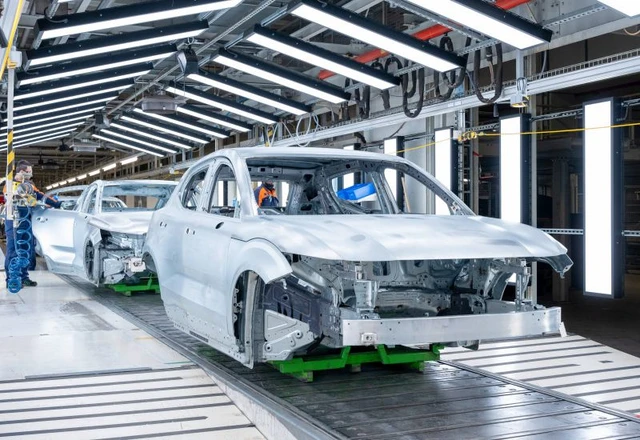 The Cost of Digital Protectionism in Europe
The pursuit of technological sovereignty has emerged as a defining trend in contemporary geopolitics, transforming digital infrastructure into a potent instrument of strategic leverage. The European Union is striving to establish its own defensive perimeter, systematically decoupling itself from the dominance of American Big Tech. Yet, this political trajectory clashes sharply with the economic imperatives of the global automotive industry. Leading manufacturers warn that the drive toward a closed ecosystem could erode competitiveness and trigger a steep rise in costs for the end consumer.
7 Jul 2026
 Alibaba’s Legal Challenge to the US Department of Defense
The geopolitical rivalry between the United States and China has evolved beyond the realm of trade tariffs, escalating into a series of high-stakes legal battles. The U.S. Department of Defense continues to broaden its lists of entities suspected of ties to the Chinese military-industrial complex, erecting formidable barriers for global commerce. In a bold move, tech titan Alibaba has opted to formally challenge its inclusion on this "blacklist" within the U.S. court system. This litigation is poised to set a critical precedent in the ongoing struggle for corporate autonomy amidst the crossfire of interstate conflicts.
7 Jul 2026
 Government Audit of Meta's AI Systems
The global AI arms race is shifting from a battle of technological prowess to a regime of stringent state regulation. AI safety is no longer merely a corporate internal concern; it has evolved into a critical matter of national security and strategic oversight. The United States is moving to establish an unprecedented oversight framework, one where market access is contingent upon prior government authorization. Meta now finds itself at the center of this storm, remaining the last major player yet to submit its algorithms to government audit.
