The geopolitical rivalry between the United States and China has evolved beyond the realm of trade tariffs, escalating into a series of high-stakes legal battles. The U.S. Department of Defense continues to broaden its lists of entities suspected of ties to the Chinese military-industrial complex, erecting formidable barriers for global commerce. In a bold move, tech titan Alibaba has opted to formally challenge its inclusion on this "blacklist" within the U.S. court system. This litigation is poised to set a critical precedent in the ongoing struggle for corporate autonomy amidst the crossfire of interstate conflicts.
In recent years, the friction between Washington and Beijing has evolved into a "Technological Cold War," where pressure is exerted not only through sanctions but via administrative blacklists. The inclusion of Alibaba in the registry of companies allegedly linked to the Chinese People's Liberation Army (PLA) marks the latest escalation in this confrontation. For the e-commerce titan, such a designation is far from a mere formality; it is a direct path toward substantial financial losses and a reputational crisis across Western markets.
Alibaba's legal counsel responded to the Pentagon's move by filing a lawsuit in a federal court in San Jose, California. The plaintiff's position is unequivocal: the allegations of ties to China's state defense apparatus are devoid of factual basis. The core of their argument rests on the principle of corporate autonomy. Alibaba emphasizes that the holding company is managed by an independent board of directors whose members maintain no affiliations with the PRC's military establishment.
From an operational standpoint, Alibaba's business model is centered on retail, logistics, and the provision of enterprise-grade cloud IT services. The lawsuit explicitly states that these activities have no intersection with weapons manufacturing, the development of defense technologies, or intelligence operations. Consequently, the company is demanding its immediate removal from the list, asserting that the designation was either erroneous or biased.
It is crucial to understand the mechanics of such lists. While being listed does not trigger an automatic, total sanction regime, it effectively bars access to U.S. government contracts. In a modern economy where state contracts often serve as a catalyst for high-tech advancement, such isolation can be fatal. Alibaba contends that its mere presence on the list has already caused irreparable harm, creating a toxic environment for international partners and investors.
This situation is by no means an isolated incident. The scale of the systematic crackdown on Chinese businesses in the U.S. is evident in the list of other affected entities. For instance, the biotech firm WuXi AppTec has also sued the U.S. government. Recent iterations of the list have seen the addition of names such as Baidu, BYD, and Nio. Notably, the latter two are automotive manufacturers, making their alleged links to the defense sector appear even more tenuous than those of the IT giants.
Nevertheless, legal precedent suggests that such Pentagon decisions can be challenged and overturned. In May 2021, Xiaomi successfully secured a victory in a U.S. court, proving that its inclusion on the "blacklist" was the result of an error. This precedent provides Alibaba with hope that legal arguments and evidence of governance transparency can outweigh the prevailing geopolitical headwinds.
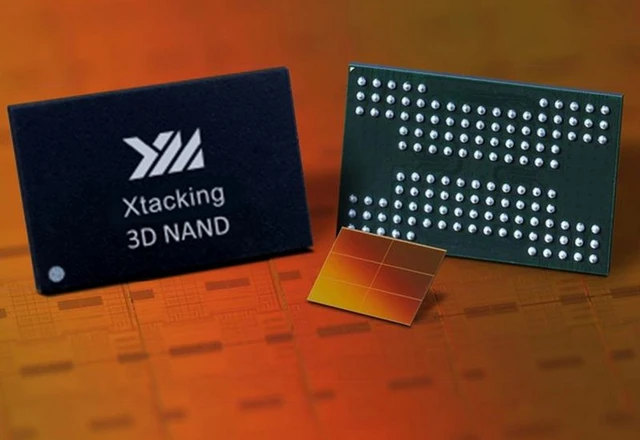 The Expansion of China's 3D NAND Memory Giant