Intellectual property continues to be one of the most potent levers of influence within today's tech landscape. The battle for dominance over video compression standards, most notably H.265, frequently escalates into protracted legal warfare with far-reaching market implications. The recent clash in Germany between Nokia and industry titans Asus and Acer serves as a stark illustration of how patent disputes can effectively paralyze the distribution of consumer electronics. The resulting settlement does more than simply return products to retail shelves; it underscores the critical necessity of adhering to the principles of fair and equitable licensing.
At the heart of this protracted conflict lies H.265 technology, more commonly known as HEVC (High Efficiency Video Coding). This compression standard became a cornerstone of the industry with the advent of the 4K and HDR era, enabling the transmission of high-fidelity content with significantly lower data overhead than its predecessor, H.264. However, beneath this technical sophistication lies a complex web of patents, the ownership of which grants corporations the power to dictate the terms of the standard's implementation.
Leveraging its extensive portfolio of data transmission and video encoding patents, Nokia initiated proceedings in the Munich Regional Court. This particular jurisdiction has long earned a reputation as one of the most patent-friendly venues, making it a strategic choice for companies seeking swift and stringent injunctions against competitors' products. The primary bone of contention was patent EP 2 661 892, which pertains to the hardware acceleration of H.265 decoding.
The court's ruling was drastic: Asus and Acer were effectively severed from the German market. The injunction extended beyond the direct sale of new devices to encompass all promotional activities. The situation took an unexpected turn when these restrictions began to bleed into the companies' digital infrastructure. Specifically, the German segment of the Asus website became virtually non-functional, and users in Germany lost access to motherboard support pages, creating significant reputational risks.
In a desperate bid to mitigate losses and bypass the legal blockade, some manufacturers resorted to extreme measures, disabling H.265 hardware acceleration via software updates. While this allowed them to technically comply with the law, it severely degraded system performance, spiked CPU utilization, and slashed laptop battery life—effectively stripping consumers of the technical advantages they had paid for.
Central to these disputes is the concept of FRAND (Fair, Reasonable, and Non-Discriminatory). Under this principle, patent holders whose technologies are integrated into widely adopted industry standards are obligated to license them on "fair, reasonable, and non-discriminatory terms." The crux of the problem is that the definition of a "reasonable" royalty fee is highly subjective, transforming the financial aspect of these agreements into a separate, years-long legal battleground.
The deadlock was finally broken once a licensing fee agreement was reached. Asus and Acer are now resuming full operations in the German market, restoring the sale of laptops and mini-PCs equipped with H.265 hardware acceleration.
This incident underscores the precarious nature of today's tech ecosystem, where access to fundamental device features can hinge on opaque arbitration agreements between corporate giants. The shift from judicial injunctions to a mutually acceptable framework for cooperation allows companies to pivot back to innovation, and ensures that users receive devices with full functionality, unencumbered by legal collisions.

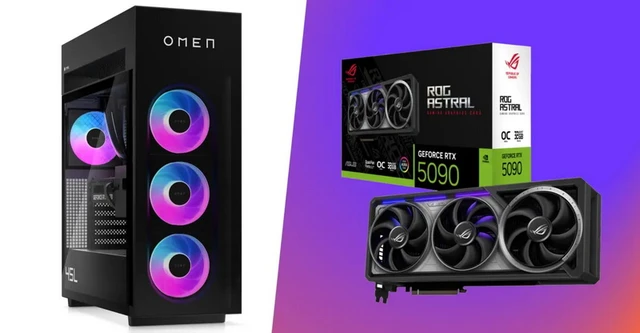 The Economic Paradox of the GeForce RTX 5090