The pursuit of technological sovereignty has emerged as a defining trend in contemporary geopolitics, transforming digital infrastructure into a potent instrument of strategic leverage. The European Union is striving to establish its own defensive perimeter, systematically decoupling itself from the dominance of American Big Tech. Yet, this political trajectory clashes sharply with the economic imperatives of the global automotive industry. Leading manufacturers warn that the drive toward a closed ecosystem could erode competitiveness and trigger a steep rise in costs for the end consumer.
European regulators have begun spearheading a legislative framework designed to bolster the region's technological sovereignty. At the heart of this strategy is the concept of a strategic decoupling from the United States, aimed at mitigating the risks of external dependency and catalyzing domestic innovation. From Brussels' perspective, establishing a proprietary technological stack should trigger an influx of investment, scale local enterprises, and enhance the overall resilience of the economy. While officials maintain that Europe remains open to "trusted partners," the practical boundary between strategic cooperation and protectionism is becoming increasingly blurred.
The industrial sector, and automotive manufacturers in particular, have met these initiatives with profound skepticism. Leadership at Volvo Cars and Stellantis have openly warned that the pursuit of total autonomy risks regressing a high-tech market into a form of "technological autarky." The industry's core argument is that any viable alternatives to American solutions must emerge through natural market competition, rather than via regulatory mandates or prohibitions. Artificially restricting access to cutting-edge technology will inevitably drive up costs—expenses that will ultimately be passed on to the consumer.
The Achilles' heel of the European auto industry lies in its deep integration with the American ecosystem. The modern vehicle has evolved beyond a mere mechanical device, transforming into a "computer on wheels"—the Software-Defined Vehicle (SDV). To realize this vision, the industry is critically dependent on semiconductor components, cloud computing, and artificial intelligence systems, all of which are currently dominated by U.S. firms.
The stakes are particularly high regarding the development of autonomous driving. Creating a reliable autopilot requires massive computational resources and access to global datasets, making intercontinental cooperation vital. Mandated localization in this sphere could stifle the pace of development and leave European vehicles technologically inferior.
This situation is further complicated by fierce price competition from Chinese electric vehicle manufacturers, who are aggressively penetrating global markets. In an environment where efficiency and cost are the deciding factors, any additional expenditure on superfluous local infrastructure could prove fatal for European brands. For transcontinental conglomerates like Stellantis, maintaining separate technological stacks for different regions would mean fragmented management and the erosion of economies of scale, inevitably leading to a contraction of their market reach.
The paradox of the current landscape is epitomized by Volvo Cars. Despite its Swedish roots, the company is owned by the Chinese conglomerate Geely and is deeply integrated into the Google and Nvidia ecosystems. Such hybrid operational models demonstrate that modern technological supply chains are far too complex to be partitioned along national or regional lines without catastrophic losses.
Even those who acknowledge the importance of sovereignty regarding data protection and governance are urging caution. The position of Volkswagen's leadership is that digital security must coexist with the freedom to choose the most effective technological tools. A consensus is growing within the expert community: in the era of global digitalization, attempting to operate in total isolation from American technology is not merely difficult—it is virtually impossible without forfeiting industry leadership.
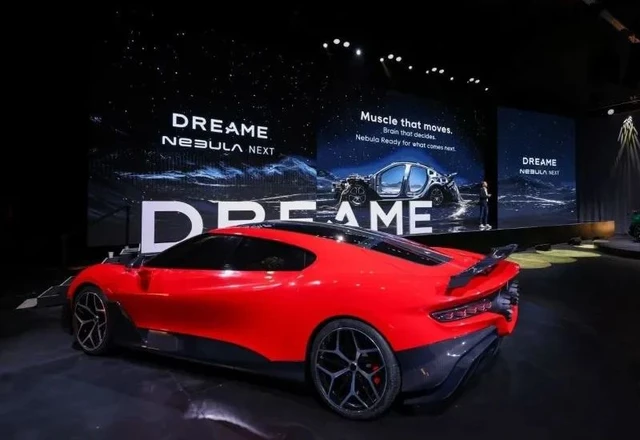 The Shattered Illusion of the Dreame Jet Hypercar