The AI arms race is rapidly evolving, shifting its focus from technical benchmarks to the high-stakes arena of geopolitical diplomacy. Recent U.S. efforts to restrict foreign nationals' access to cutting-edge neural networks have set a precarious precedent, straining the trust between Washington and its closest allies. On the sidelines of the G7 summit, the heads of the world's leading AI laboratories sought a delicate equilibrium between the imperatives of national security and the necessity of global collaboration. At the heart of the debate lies a fundamental question: will AI serve as a catalyst for global fragmentation, or will it become the bedrock of a new alliance among democratic nations?
The friction between state regulation and technological expansion reached a breaking point when the U.S. administration demanded that Anthropic restrict access to its latest models, Mythos 5 and Fable 5, for foreign users. The technical impossibility of implementing granular access control led to an ironic outcome: the company was forced to shut down access to these tools entirely, including for U.S. citizens. This incident served as a catalyst for mounting tension with European partners, who viewed Washington's actions as a direct threat to their own technological sovereignty.
Speaking at the G7 summit in France, Anthropic CEO Dario Amodei urged world leaders to resist the temptation to weaponize the distribution of AI tools. His position reflects a fundamental tension within the industry: while acknowledging the necessity of preventing advanced technology from falling into the hands of adversarial regimes, he emphasized that AI isolationism is ultimately detrimental to the creators themselves. This sentiment was echoed by OpenAI's Sam Altman, who stressed that AI-driven cyber-defense capabilities must be accessible to all democratic nations without exception.
Demis Hassabis, head of DeepMind, also lent his voice to the debate, effectively forming a unified front among the leaders of the world's premier AI startups. Their collective goal is to shift the security paradigm from one of "prohibitions and blocks" toward a framework of coordinated technical cooperation.
French President Emmanuel Macron, acting as the summit's host, pivoted the discussion toward strategic risks. In his view, the reliance of allies on American models creates a critical vulnerability: a sudden decision by Washington to "shut off the valve" of AI access could inflict colossal economic and technological damage on all participants in the AI race. Macron called for the creation of a unified platform to establish common standards, enabling democratic nations to act in concert and avoid a fragmented regulatory landscape.
Indian Prime Minister Narendra Modi shared these concerns, offering a pragmatic rationale: access to cutting-edge models is now a matter of protecting critical infrastructure. In an era of increasingly sophisticated cyberattacks, depriving allies of AI-powered defense tools is a counterproductive move.
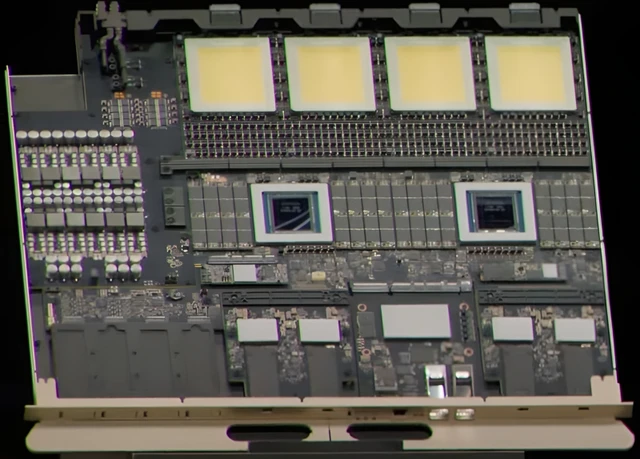
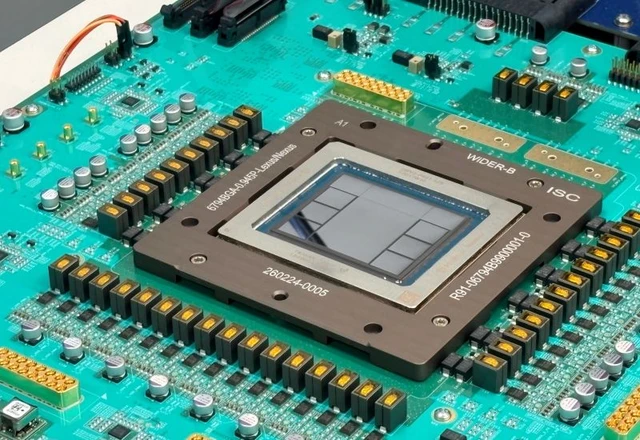
Arthur Mensch, head of the French startup Mistral, added further depth to the discussion by addressing the physical layer of the tech stack. He highlighted the extreme vulnerability of AI infrastructure supply chains—ranging from chip production to server capacity. Given that these chains are deeply intertwined and dependent on a multitude of global players, any hostile actions by adversarial states could effectively paralyze the industry's growth.
The culmination of these discussions was a proposal to establish a US-led expert panel tasked with managing the global distribution and oversight of AI. This represents an attempt to replace unilateral bans with a transparent governance mechanism—one where security is not sacrificed for political expediency, and technological progress remains a shared asset of the democratic world.
 The Evolution of Rendering in DLSS 4.5