The global race for semiconductor supremacy has entered a phase of profound mutual distrust. At the heart of this conflict lie Extreme Ultraviolet (EUV) lithography systems—the world's sole mechanism for fabricating the most advanced chips. Washington suspects that these restricted technologies have clandestinely made their way into China, bypassing stringent export controls. The incident exposes a widening rift between Washington's national security imperatives and the commercial ambitions of Europe's tech titans.
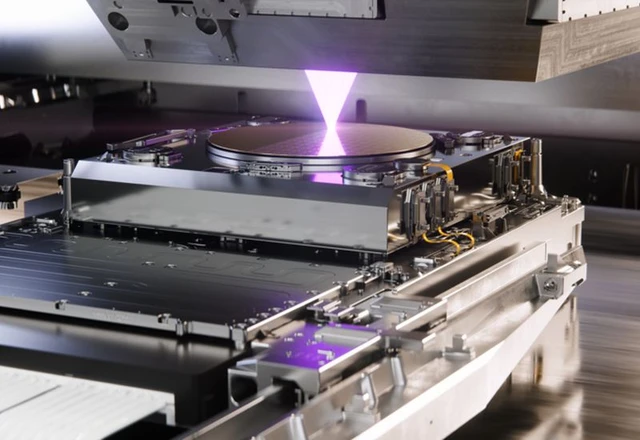
In the modern hierarchy of microelectronics production, ASML stands as an unrivaled monopolist. Its lithography scanners are the "holy grail" for any chipmaker aiming for process nodes below 7 nanometers. However, since 2019, shipments of advanced EUV systems to China have been blocked. Technically, this means no such machine should have crossed the PRC border, yet U.S. intelligence and the Department of Commerce have reached the opposite conclusion.
The conflict hinges on a specific legal lever: while ASML is a Dutch company, its equipment is built using American technology and components. This grants Washington the authority to dictate export terms even to a European manufacturer. During closed-door consultations, officials from the U.S. Department of Commerce explicitly stated that one of the EUV scanners may have reached China by bypassing established sanctions.
ASML’s position remains unwavering. The company not only denies the shipment but provides compelling technical arguments. An EUV system is not merely a piece of machinery; it is a highly sophisticated ecosystem requiring constant oversight by staff engineers and deep integration into the manufacturer's service infrastructure. Attempting to operate such equipment in "stealth mode" is virtually impossible: any unauthorized disconnection from ASML's service network triggers an immediate alert at the company's headquarters.
Nevertheless, the U.S. persists in its suspicions. According to sources close to the U.S. government, shipments of specialized transport equipment for EUV scanners, as well as accompanying components used for assembly or maintenance, have been detected in China. While concrete evidence remains undisclosed, the mere movement of logistics infrastructure for such ultra-complex machinery has raised serious alarms within U.S. intelligence.
The situation is further complicated by economic factors. China remains one of ASML's largest markets, and even under stringent restrictions, the company expects up to 20% of its revenue to originate from the region. Washington believes that profit motives may outweigh security concerns, leading to a perceived "hesitancy" on the part of the Netherlands and Japan in tightening export controls.
U.S. regulators are paying particular attention to intermediaries. In 2024, the firm SwaySure was sanctioned under suspicion of aiding Huawei. There are allegations that ASML may have continued providing technical support to this entity, effectively creating a loophole to circumvent restrictions.
The political climate surrounding this issue is growing increasingly tense. The Trump administration initially sought the total isolation of China from ASML equipment supplies. In practice, however, the strategy has shifted toward curtailing the maintenance of already delivered systems and gradually narrowing the range of available lithographic solutions.
Currently, ASML is attempting to rebuild trust with Washington by providing detailed reports. According to the company's internal data, there are 314 EUV systems in operation worldwide, none of which are located in China. Yet, in the midst of an all-out technological war, figures in a report carry less weight than the circumstantial evidence that U.S. intelligence continues to gather.
 The Economic Paradox of the GeForce RTX 5090