26 Jul 2026
 Setting a New Standard for iPad mini Protection
Apple is set to redefine the operational boundaries of its tablet lineup by introducing full waterproofing to its most compact model. For too long, the iPad has remained a vulnerable device, requiring cautious handling in moisture-prone environments—a limitation that created a stark functional disparity between the iPhone and the iPad. The upcoming iPad mini aims to bridge this gap through a fundamental reimagining of its chassis design. This evolution transforms the device from a fragile gadget into a versatile, resilient tool engineered for any environment.
25 Jul 2026
 Qualcomm’s New Pricing Strategy
The global semiconductor market is currently navigating a period of significant volatility, driven by persistent component shortages and a fundamental shift in technological priorities. Escalating memory costs have already triggered price hikes for flagship devices and contributed to the steady attrition of the budget smartphone segment. Against this backdrop, Qualcomm—one of the industry's dominant players—is implementing a radical overhaul of its pricing strategy. This move is a logical response to shifting cost structures in an era defined by the breakneck pace of artificial intelligence development.
25 Jul 2026
 Nothing’s Strategy for Adaptation and Transformation
The contemporary smartphone market is navigating a period of profound turbulence, where the ambitions of emerging challengers are colliding with the brutal economics of component procurement. For Nothing, this phase has become a critical crucible—a moment where rumors of strategic withdrawal intersect with the pressing necessity for internal optimization. Faced with escalating hardware costs and shifting consumer demand, the brand is being forced to overhaul its operational framework. This current reorganization represents a calculated attempt to strike a delicate equilibrium between aggressive expansion and long-term financial sustainability.
25 Jul 2026
 Memory Shortages Reshape the Economics of the Pixel Series
The global semiconductor market is grappling with unprecedented volatility, sending direct shockwaves through the pricing of premium consumer electronics. A sharp surge in memory chip costs is exerting critical pressure on manufacturers, compelling them to re-evaluate not only their pricing strategies but the very technical specifications of their flagship devices. Google finds itself at the epicenter of this turmoil—a situation that will inevitably ripple through the development of the upcoming Pixel 11 series. Market realities are now dictating the terms, shifting the focus from pure engineering ambition to the cold calculus of economic viability.
25 Jul 2026
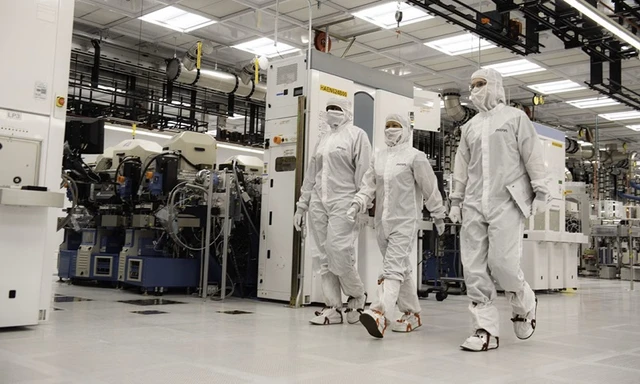 The Technological Rift Between Apple and Micron
The global semiconductor market has evolved into a high-stakes arena of confrontation, where economic imperatives clash with national security mandates. At the epicenter of this struggle are two American titans—Apple and Micron—whose interests have diverged over the fundamental issue of memory procurement. This friction presents the U.S. administration with a precarious balancing act: weighing the accessibility of consumer electronics against the imperative of technological sovereignty. Ultimately, this dispute exposes systemic contradictions within the broader U.S. strategy to curtail China's influence.
24 Jul 2026
 Apple’s Strategic Foray into the Foldable Device Market
For years, the foldable smartphone market has served as a proving ground for Samsung and China's tech titans. However, the entry of a new dominant force is poised to fundamentally shift consumer behavior paradigms across the industry. Analysts anticipate that Apple’s foray into this category will transcend a mere product launch, acting instead as a potent catalyst for global demand. The arrival of a foldable iPhone is expected to redefine the benchmarks of the premium segment and accelerate the mass migration toward large-format displays.
24 Jul 2026
 The Lumia Aesthetic in the Age of Artificial Intelligence
The contemporary mobile landscape has reached an impasse of monotonous glass rectangles, forcing users to choose between redundant processing power and primitive functionality. HMD is attempting to strike a sophisticated balance, fusing nostalgic visual identity with the frontier of generative AI. With the HMD Touch AI, the company aims to reimagine the "secondary phone" for those embracing digital minimalism without severing their ties to the modern era. It effectively pivots a restrictive form factor into a tool for intentional content consumption.
24 Jul 2026
 The Economics of OLED Panels for the iPhone 18
The high-tech component landscape is currently defined by a striking paradox: technical advancement is increasingly at odds with harsh economic realities. Escalating memory costs and systemic "chip inflation" are forcing Apple to pivot, renegotiating financial frameworks with its core partners. Caught in the crossfire are the industry's leading display manufacturers, who must navigate intense pressure to reduce pricing even as production processes become more complex. This aggressive cost-optimization strategy is now dictating the trajectory for the company’s next generation of flagship hardware.
24 Jul 2026
 Nothing’s Ambitions Face the Ultimate Market Test
The contemporary smartphone market is weathering a period of intense volatility, where even the most ambitious concepts are colliding with stark economic realities. Rising component costs coupled with cooling consumer demand have placed niche challengers—those daring to disrupt industry titans—in a precarious position. Nothing, a brand that set out to reimagine the intersection of mobile aesthetics and functionality, now finds itself at the epicenter of this crisis. Consequently, the company is being forced to pivot its global strategy to avert a catastrophic outcome.
24 Jul 2026
 The Geography of Samsung Flagship Pricing
The foldable device market is gradually shedding its status as a high-tech novelty, transitioning instead into a mature industry standard—a shift that inevitably triggers a fundamental reassessment of pricing models. While the latest Galaxy Unpacked event served as the debut for the Z Fold8 and Flip8 series, it was not the devices' feature sets that captured the industry's attention, but rather the stark regional price divergence. As Western markets faced yet another round of inflationary hikes, consumers in South Korea were granted access to these devices at far more aggressive price points. This strategic pivot highlights the brand's deep-seated connection to its domestic roots and provides a window into the intricacies of global cost management.
24 Jul 2026
 Balancing Capacity and Degradation in the Galaxy Z Series
Modern foldable devices are grappling with a fundamental tension: the physical constraints of their chassis versus the escalating power demands of high-performance components. In its quest for extended endurance, Samsung is pivoting toward novel battery chemistries—a move that inevitably necessitates a significant technical trade-off. While the shift to silicon-carbon anodes boosts energy density, it comes at a cost: a marked reduction in the battery's overall lifespan. This strategy effectively prioritizes immediate runtime benchmarks over long-term durability, casting doubt on the enduring reliability of these flagship devices.
24 Jul 2026
 Stealth Software Imposition in LG Monitors
The boundary between essential hardware drivers and intrusive adware is becoming increasingly porous. A recent incident involving LG monitors has laid bare a systemic crisis of trust between peripheral manufacturers, operating systems, and the end user. At the heart of the controversy lies the stealthy deployment of applications that effectively transform professional-grade tools into marketing vehicles for third-party services. This situation raises a fundamental question regarding the right of corporations to maintain silent access to user system resources.
