The contemporary mobile landscape has reached an impasse of monotonous glass rectangles, forcing users to choose between redundant processing power and primitive functionality. HMD is attempting to strike a sophisticated balance, fusing nostalgic visual identity with the frontier of generative AI. With the HMD Touch AI, the company aims to reimagine the "secondary phone" for those embracing digital minimalism without severing their ties to the modern era. It effectively pivots a restrictive form factor into a tool for intentional content consumption.
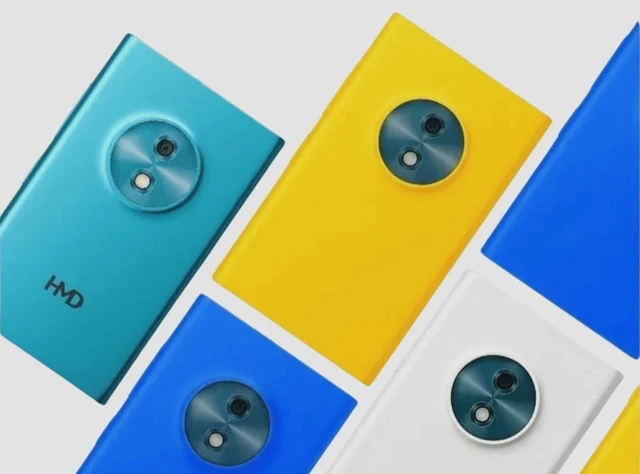
The debut of the HMD Touch AI in the Chinese market is less a product launch and more a manifesto—a calculated return to form. The device's visual language is an overt homage to the legendary Nokia Lumia line, which once challenged the hegemony of Android and iOS through bold aesthetics and the unique interface of Windows Phone. HMD is betting on brand recognition and tactility; the compact chassis is paired with interchangeable back panels in vibrant yellow, blue, and white, allowing users to tailor the device to their personal style.
The hardware specifications underscore a philosophy of pragmatism. At the center is a 3.2-inch touchscreen that provides essential interface interaction without overwhelming the user with an endless stream of notifications. Imaging capabilities are handled by two 2MP cameras (front and rear), housed in a minimalist circular module on the back. This design choice clearly signals that the device is not intended for mobile photography, but rather serves as a tool for basic documentation or capturing essential visual information.
Battery endurance is powered by a 1950 mAh cell, which is quite substantial given the modest screen size. The adoption of the modern USB Type-C standard for charging eliminates the need for proprietary cables, aligning the device with global accessory ecosystems.
In terms of functionality, the HMD Touch AI remains a fully capable communication tool: dual SIM support and 4G connectivity allow it to serve as either a primary phone or a reliable backup. The inclusion of a Wi-Fi module with hotspot capabilities transforms the gadget into a compact access point, while a customizable physical button—programmable for SOS signals—adds significant value in terms of safety and emergency communication.
However, the true technological pivot is the integration of artificial intelligence. The device features the Doubao model from ByteDance, one of China's dominant AI players. This transforms what would be a simple "feature phone" with a touchscreen into an intelligent assistant. Users have access to instant Chinese-to-English translation and text-to-image generation—capabilities that seem almost paradoxical given the humble hardware specifications. Furthermore, integrated support for Alipay turns the device into a fully functional financial tool for everyday transactions.
Launching at a price point of approximately $69, the HMD Touch AI reveals an intriguing strategy: the creation of affordable "smart minimalism." In an era where digital addiction has become a global crisis, such devices offer a viable exit—providing functionality sufficient for life and work, while stripping away the elements that trigger the infinite scroll of social media feeds.
 The Triumph of 3nm Chip Manufacturing