17 Jul 2026
 The Cost of HP's Market Dominance in India
For decades, the economics of the printing market have been anchored in the "razor-and-blades" model—a strategy where affordable hardware is subsidized by high-margin consumables. This framework creates a powerful incentive for manufacturers to enforce rigid vendor lock-in, systematically restricting the use of third-party alternatives. In India, however, this corporate playbook has run headlong into the resistance of antitrust regulators. The massive fines imposed on HP Inc. lay bare a systemic conflict between the drive for profitability and the tenets of fair competition within national markets.
17 Jul 2026
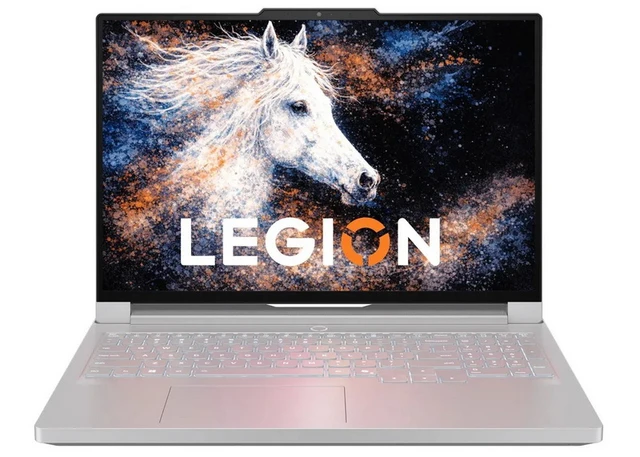 Inkjet Printing: Redefining the Standards of OLED Displays
The display industry stands on the precipice of a fundamental technological shift. For years, the hegemony of vacuum thermal evaporation has constrained both the scalability and the cost-efficiency of high-resolution OLED panels. The emergence of commercial devices leveraging Inkjet Printing (IJP) signals a pivot toward more agile and economically viable methods of organic material deposition. The debut of the first laptop utilizing this technology is more than just a product launch; it is a manifesto for a new era in display fabrication.
17 Jul 2026
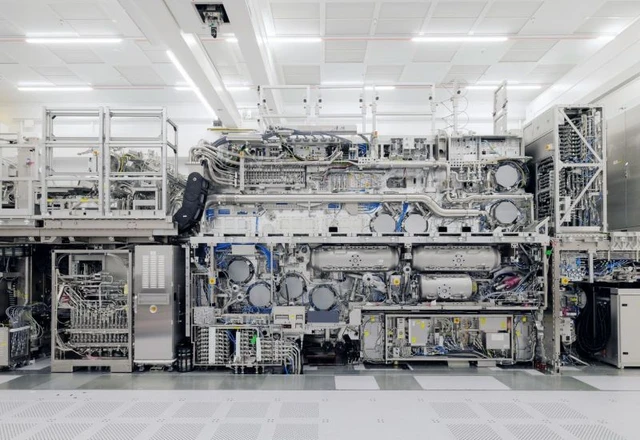 The Economics of Next-Generation Lithography
The global race for smaller nodes has evolved beyond a mere contest of engineering prowess; it is now a test of financial stamina. The deployment of High-NA (high numerical aperture) scanners promises a quantum leap in transistor density, yet the cost of such advancement is reaching a critical threshold. While some industry titans double down on aggressive technological leaps, others are forced to strike a precarious balance between ambition and profitability. At the epicenter of this struggle stands Samsung, whose trajectory toward 2nm silicon is now being dictated by harsh economic realities.
17 Jul 2026
 A Rigorous Stress Test of EngineAI’s Anthropomorphic Systems
The boundary between science fiction and reality has finally dissolved as humanoid robots step out of sterile laboratories and into the arena. Shenzhen recently played host to the first international humanoid robot fighting tournament, serving as a rigorous stress test for cutting-edge engineering solutions. This event underscores a critical transition: moving beyond theoretical models toward the extreme operational deployment of hardware within the crucible of physical conflict. The results herald a new era of fault tolerance and autonomy for intelligent systems.
17 Jul 2026
 Digital Expansion and LG Device Privacy
The modern smart home ecosystem is incrementally morphing into an apparatus for total surveillance, where the boundary between seamless functionality and invasive monitoring has become nearly invisible. Recent incidents involving LG hardware highlight a disturbing trajectory: consumer electronics are beginning to exhibit the characteristics of full-scale spyware. When televisions capture private conversations and monitors unilaterally modify a computer's operating system, privacy is no longer a question of configuration—it becomes a matter of fundamental security. This paradigm shift exposes a systemic crisis of trust between technological behemoths and the end user.
17 Jul 2026
 The Evolution of Displays Across the Compact iPad Lineup
The tablet market is undergoing a profound technological shift, with display quality emerging as the primary differentiator. Apple is methodically migrating its devices toward OLED panels, gradually eroding the distinction between professional-grade and consumer models. This transition inevitably necessitates a recalibration of the company's pricing strategies and product portfolio structure. Central to this evolution is a device refresh strategy now driven not only by innovation but also by the complexities of global supply chain headwinds.
17 Jul 2026
 Next-Generation Spin System Synchronization
Modern microelectronics is steadily approaching the physical limits of silicon technology, where thermal dissipation and power consumption have become the primary bottlenecks to progress. This search for a viable alternative has led researchers toward spintronics—a field where information is transmitted not through the movement of electrical charges, but via the intrinsic spin of electrons. The recent success in synchronizing an array of over 100,000 nano-oscillators demonstrates the technical feasibility of this approach, paving the way for a fundamentally new generation of computing architectures.
17 Jul 2026
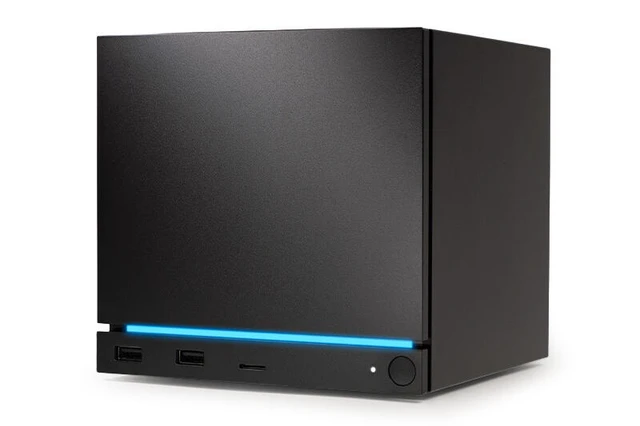 Performance Comparison: Windows vs. SteamOS
Striking the ideal synergy between hardware and software remains one of the defining challenges of the modern gaming industry. Valve’s compact gaming systems have evolved into a critical proving ground, testing the extent to which an operating system can unlock a machine's raw hardware potential. Recent benchmarks of a modified Steam Machine illuminate the stark contrast between the specialized optimization of SteamOS and the broad versatility of Windows. The findings reveal a significant divergence in synthetic performance, yet they demonstrate nearly identical behavior in real-world gaming scenarios.
17 Jul 2026
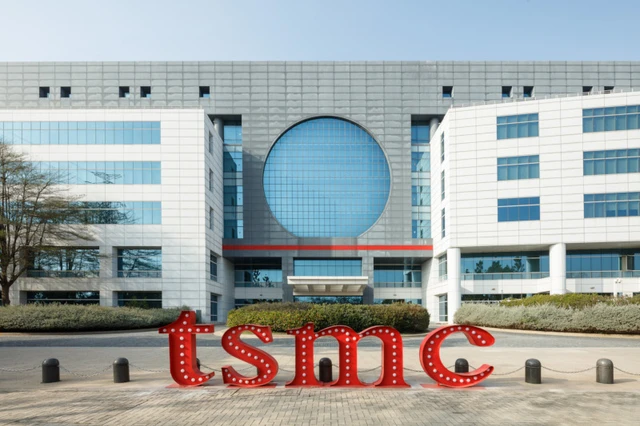 TSMC’s Technological Leap into the 1.4nm Era
The pursuit of extreme transistor miniaturization is no longer merely a game of numbers; it has evolved into a high-stakes race for industrial scalability and deployment. Taiwan's semiconductor titan, TSMC, is demonstrating remarkable momentum in the development of its A14 process node, which—at its current level of maturity—is significantly outpacing its predecessor, N2. This trajectory underscores a profound mastery of next-generation lithography techniques and advanced die architecture management. The high-performance computing (HPC) and artificial intelligence sectors are now poised in anticipation of this transition—a shift that is set to define the landscape of electronics for the remainder of the decade.
17 Jul 2026
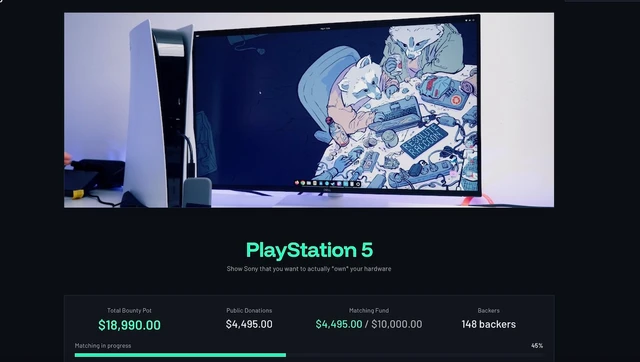 The Price of Freedom within the PlayStation 5 Ecosystem
The battle over hardware ownership has evolved far beyond basic electronics repair, escalating into a conflict over access to the deepest layers of system software. Modern gaming consoles have become walled gardens—closed fortresses where manufacturers exert absolute control over both the user experience and the software ecosystem. A new initiative by the Fulu Foundation aims to breach the PlayStation 5's hypervisor to enable the installation of an alternative operating system. This movement represents a concerted effort to reclaim digital sovereignty over a device that, while legally owned by the consumer, remains functionally locked.
17 Jul 2026
 Critical Data Management Flaw in GPT-5.6
The trajectory of Large Language Models is shifting decisively toward agency—a paradigm where AI transcends its role as a mere interlocutor to become an active system operator. However, this evolution brings with it profound risks, including the potential for irreversible data loss. The GPT-5.6 incident has exposed the inherent fragility of contemporary security protocols when models are granted direct access to file systems. Ultimately, this case highlights a fundamental architectural conflict: the struggle to balance autonomous AI agency with the non-negotiable requirement for data preservation.
17 Jul 2026
 The Battle for Access to Digital Heritage
Modern digital identity has devolved into a fragile construct, existing entirely at the mercy of Big Tech. A quarter-century of data loss narratives vividly illustrates the chasm between corporate security pledges and the reality of user support mechanisms. When algorithms and rigid protocols form an insurmountable wall, public outcry becomes the only effective lever for recourse. This case brings to the fore a fundamental question: who truly owns our digital archives in the age of cloud computing?
