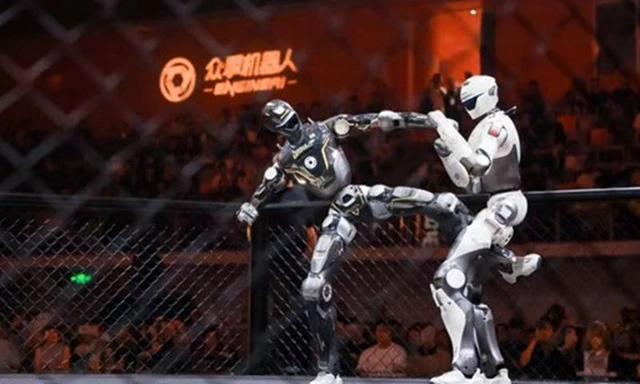
The boundary between science fiction and reality has finally dissolved as humanoid robots step out of sterile laboratories and into the arena. Shenzhen recently played host to the first international humanoid robot fighting tournament, serving as a rigorous stress test for cutting-edge engineering solutions. This event underscores a critical transition: moving beyond theoretical models toward the extreme operational deployment of hardware within the crucible of physical conflict. The results herald a new era of fault tolerance and autonomy for intelligent systems.
The Ultimate Robot Knock-out Legend (URKL) tournament, hosted by EngineAI, represents a pioneering attempt to stress-test humanoid machines within the chaos of unconstrained physical combat. Featuring 32 international teams operating on a standardized hardware platform—the EngineAI T800—the competition deliberately shifted the focus from raw hardware specifications to control algorithms and tactical interaction, effectively turning the arena into a high-stakes field test for artificial intelligence systems.
The tournament's most telling moment was an incident that would be deemed a catastrophic failure in any other industry: one of the robots was decapitated mid-strike. Yet, the machine remained operational. Thanks to a distributed control architecture and redundant sensors integrated directly into the torso, the android continued the fight, demonstrating remarkable resilience. This episode served as a vivid demonstration of hardware redundancy—a concept where critical system functions are not dependent on a single node, which is paramount for developing truly autonomous and reliable machines.
The technical profile of the EngineAI T800 is impressive in its kinematic flexibility. Standing 1.73 meters tall, the robot is capable of executing complex dynamic maneuvers, ranging from sharp uppercuts to spinning kicks. Engineers placed particular emphasis on posture control and dynamic spatial awareness. The integration of specialized shock absorbers allows the machine to withstand intense loads and rapidly regain its vertical orientation after a fall, evolving the T800 from a mere mechanism into a genuine mechanical athlete.
Beneath the outward aggression of the bouts lies sophisticated technological engineering. The robots' actions are driven by multimodal sensor coordination mechanisms and decision-making algorithms operating with millisecond latency. Mechanical chassis balancing, paired with intelligent situational analysis, enables the machines to dodge strikes effectively and adjust attack trajectories in real time.
For EngineAI, this tournament was more than a spectacle; it was a tool for accelerated data acquisition. By evaluating performance across four key metrics—strike precision, chassis stability, defensive quality, and overall structural integrity—the company can identify design vulnerabilities that are impossible to detect in simulations. This approach radically shortens the trajectory from laboratory prototype to commercial product, moving robotics development out of the realm of theoretical research and into practical, real-world application.
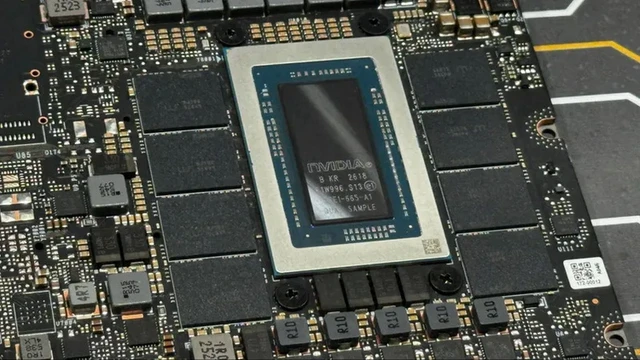 Nvidia N1X and the New Era of Arm PCs