The battle over hardware ownership has evolved far beyond basic electronics repair, escalating into a conflict over access to the deepest layers of system software. Modern gaming consoles have become walled gardens—closed fortresses where manufacturers exert absolute control over both the user experience and the software ecosystem. A new initiative by the Fulu Foundation aims to breach the PlayStation 5's hypervisor to enable the installation of an alternative operating system. This movement represents a concerted effort to reclaim digital sovereignty over a device that, while legally owned by the consumer, remains functionally locked.
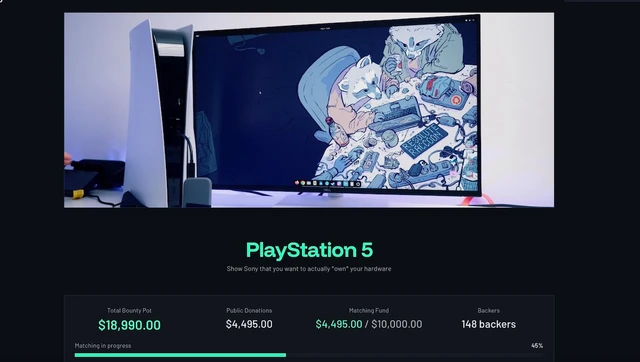
The modern gaming industry is witnessing a persistent trend toward the fortification of ecosystems. Sony, having engineered one of today's most powerful gaming machines, has constructed a multi-layered security architecture around the PlayStation 5 designed to preclude any third-party interference. However, this technological barrier has met organized resistance: the non-profit Fulu foundation has announced a bounty of nearly $19,000 for anyone capable of bypassing the console's hypervisor to enable the installation of an alternative OS.
Driving this initiative is a philosophy of consumer advocacy championed by foundation founder Louis Rossmann. His journey began with practical electronics repair but rapidly evolved into a global manifesto against manufacturers who deliberately restrict access to the internal workings of their products. For Rossmann and his peers, the closed nature of the PS5 is not merely a security measure; it is a tool of corporate control that strips owners of full sovereignty over the hardware they have purchased.
Historical context reveals a stark strategic pivot by Sony. While the PlayStation 2 era was characterized by relative openness—the company even provided official DVDs for Linux installation—modern console iterations have morphed into tightly controlled environments. The primary driver behind this shift has been the desire to combat piracy with maximum efficiency and keep users tethered within a paid ecosystem of services.
The technical hurdles remain formidable. While Linux exploits for the PS5 do exist, they are limited to legacy firmware versions. Sony’s current security iterations rapidly patch vulnerabilities, turning the hacking process into an endless game of cat-and-mouse. To claim the Fulu reward, a solution must function on firmware version 13.42 or newer. Furthermore, strict implementation standards have been set: the tool must be accessible to the average user, and the operating system itself must be open-source while maintaining the ability to run licensed PlayStation titles.
The tension has escalated amid Sony's plans to phase out physical media for consoles by 2028. A transition to a fully digital landscape means users effectively lose control over their content, becoming licensees rather than owners of their games. In this context, the ability to install a third-party OS becomes the sole remaining path toward maintaining device autonomy.
The activities of the Fulu foundation are part of a broader systemic conflict between the consumer and the corporate giant. Similar battles for fairness are playing out in other arenas, such as disputes with Samsung over warranty component replacements. In each instance, the issue is not about a specific part or a sum of compensation, but about the fundamental right of an individual to own what they have bought and to maintain that device regardless of the manufacturer's will.
 The Horizon of China's Technological Sovereignty in Lithography