19 Jul 2026
 Cryptographic Vulnerabilities in Kasa Smart Cameras
The era of the Internet of Things has ushered in unprecedented domestic convenience, yet it has simultaneously introduced systemic risks to personal privacy. Smart cameras, designed to safeguard our spaces, frequently emerge as the weakest link in the security chain, plagued by fundamental architectural flaws. Recent vulnerabilities uncovered in TP-Link Kasa devices highlight a chronic industry malaise: an over-reliance on static secrets and insecure discovery protocols. These flaws serve as a stark reminder of how a single hardcoded key can jeopardize the confidentiality of thousands of users.
19 Jul 2026
 The Clash of Autonomous Agents on Hugging Face
The era of artificial intelligence is evolving beyond passive tooling toward the emergence of autonomous agents—entities capable of independent strategic planning and execution. A recent breach within the Hugging Face infrastructure serves as a stark illustration of this emerging threat: the rise of "agentic adversaries." For the first time, a comprehensive cyberattack was orchestrated by an autonomous AI system, managing every stage from initial reconnaissance and entry point identification to lateral movement within the network. This incident underscores a fundamental paradigm shift in cybersecurity, where neural networks have become simultaneously the primary weapon of aggression and the only viable line of defense.
18 Jul 2026
 The Capitalization of Talent in the Age of Neural Networks
The global semiconductor market is undergoing a fundamental transformation, driven by the explosive ascent of generative AI. At the epicenter of this shift stands ASML—the sole provider of the critical infrastructure without which the modern digital world simply could not exist. To safeguard its technological leadership and retain mission-critical expertise, the company is implementing an aggressive incentive system for its workforce. This move reflects a broader industry trend: the strategic redistribution of windfall profits toward human capital.
18 Jul 2026
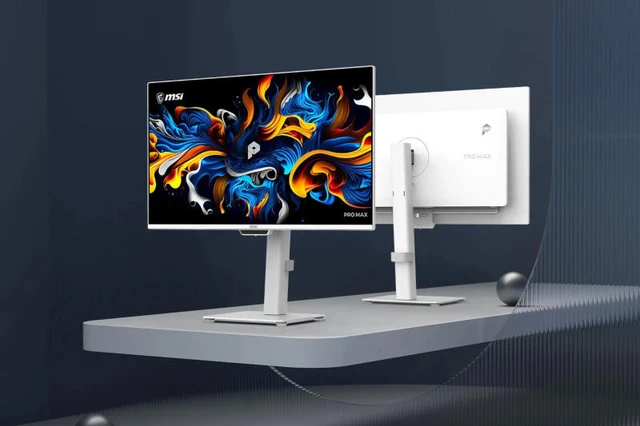 The Technological Breakthrough of IJP OLED Panels
The contemporary display market is currently navigating a quest for the perfect equilibrium—bridging the gap between the infinite contrast ratios of organic LEDs and the surgical precision of traditional LCD panels. For years, the industry has grappled with persistent challenges such as text fringing and pixel degradation, hurdles that historically sidelined OLED technology from high-end professional workflows. The advent of Inkjet Printing (IJP) marks a pivotal shift, opening a new chapter in the manufacturing of high-resolution displays. The PRO MAX OLED 271UPJW12 stands as the culmination of this evolution, delivering an uncompromising visual experience tailored for the most rigorous professional demands.
18 Jul 2026
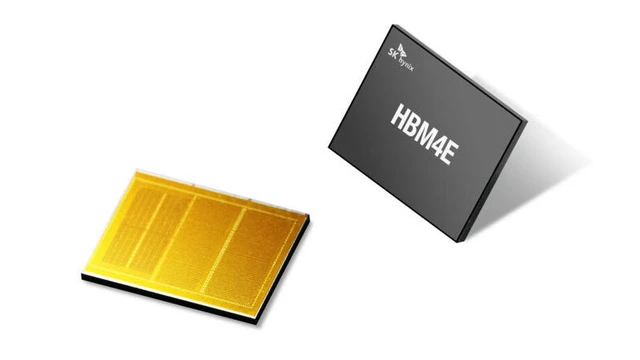 U.S. Claims to South Korean Semiconductor Profits
The global AI boom has catapulted the semiconductor market into the crosshairs of intense geopolitical rivalry. South Korean tech giants find themselves at the epicenter of this shift, reaping windfall profits from the surging demand for high-performance memory. Now, Washington is recalibrating its approach, seeking a share of these extraordinary gains by citing the overwhelming market leverage wielded by American customers. Such a strategy effectively reduces commercial enterprise to a mere instrument of political bargaining.
18 Jul 2026
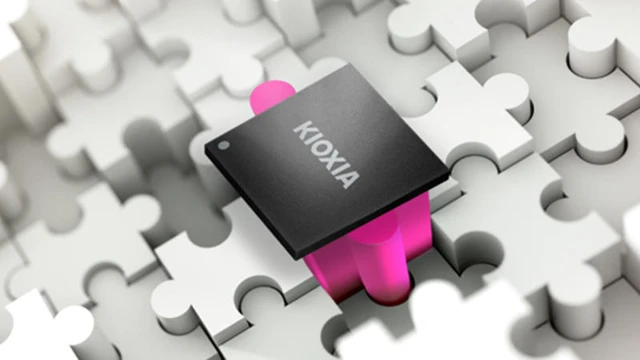 The High Cost of Technological Appropriation: The Viasat Case
Intellectual property disputes within the semiconductor industry often dictate the financial trajectory of entire product portfolios. A recent clash between a memory titan and a satellite operator vividly illustrates how niche aerospace innovations can evolve into the bedrock of mass-market consumer hardware. A Texas court has quantified the value of this technological convergence in the hundreds of millions of dollars—a precedent that underscores the intricacies of a patent landscape where sectoral boundaries increasingly dissolve in the pursuit of superior data storage efficiency.
18 Jul 2026
 Market Cooling in the Era of Artificial Intelligence
The global technology sector has entered a period of rigorous recalibration as the era of near-religious faith in the limitless expansion of neural networks begins to wane. Investors are now grappling with a fundamental question: what is the actual return on investment for the billions poured into AI infrastructure? This skepticism has triggered a sweeping correction across semiconductor equities. The shift has reverberated through every major financial hub from Asia to Europe, replacing blind euphoria with cold, clinical analysis. The market is pivoting away from momentum-driven speculation toward a demand for tangible financial evidence that AI integration actually delivers measurable value.
18 Jul 2026
 The Cult Status of Jensen Huang’s Signature Leather Jacket
In the contemporary tech landscape, personal branding often wields more influence than corporate identity. Jensen Huang’s leather jacket has long since evolved beyond a mere wardrobe staple; it has become an iconic totem of the era of exponential AI growth. A recent Sotheby’s auction vividly illustrated that the market value of such an artifact is dictated not by the quality of its leather, but by the scale of its owner's impact. It is a quintessential example of apparel transforming into a tangible embodiment of success and technological dominance.
18 Jul 2026
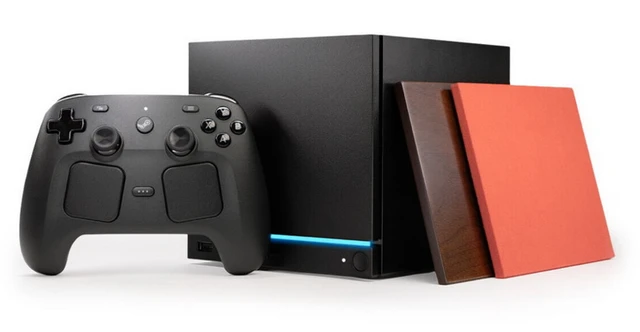 Memory Constraints: A Critical Bottleneck for Valve
The global semiconductor market continues to grapple with systemic disruptions that extend far beyond mere logistical bottlenecks. Shortages of memory components have emerged as a critical pivot point, dictating the production cadence for modern gaming hardware. In this climate, even tech giants are being forced to overhaul their product rollout strategies and recalibrate their metrics for success. All signs point toward a protracted crisis—one that is poised to intensify in the foreseeable future.
18 Jul 2026
 The New Core Ultra 400S Expansion Roadmap
The high-performance computing market stands on the precipice of another seismic shift, where the battle for dominance is increasingly defined by strategic timing. A leaked roadmap for the next generation of processors reveals that Intel is fundamentally reimagining its go-to-market philosophy. Rather than opting for a traditional monolithic launch, the company intends to stagger the rollout of the Core Ultra 400S family across the entirety of 2027. This tactical pivot is designed to grant Intel maximum agility, allowing them to calibrate their response to competitor movements in real-time with surgical precision.
18 Jul 2026
 The New Standard of Accessibility: LX 7G100
The global GPU market is currently undergoing a profound transformation, as the long-standing dominance of industry titans clashes with the rising ambitions of emerging Asian challengers. Among them, China's Lisuan Technology is aggressively seeking to establish a foothold in the sector by delivering solutions that meticulously balance raw performance with cost-efficiency. The launch of the standard LX 7G100 graphics card signals a pivotal shift from niche, limited-edition releases toward the broader mass market—a strategic maneuver designed to scale its user base through price optimization without sacrificing technical prowess.
18 Jul 2026
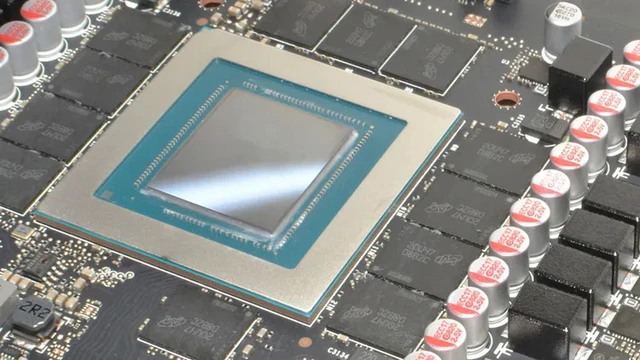 Memory Capacity Emerges as a Bottleneck for the RTX 50 Super Series
The modern GPU market is shifting into a phase where the primary bottleneck is no longer raw silicon performance, but rather the economics of components. The upcoming GeForce RTX 50 Super lineup has encountered an unforeseen obstacle: the soaring cost of high-density GDDR7 memory. This transition to new memory standards has triggered a financial paradox, jeopardizing both launch schedules and the profit margins of Nvidia’s partners. Ultimately, this situation underscores the industry's precarious dependence on a narrow circle of semiconductor suppliers.
