The semiconductor industry has entered a phase of unprecedented acceleration, where traditional growth cycles are giving way to an exponential surge. While it took half a century for the sector's market valuation to reach its first trillion-dollar milestone, the next stage of expansion is poised to unfold in a matter of years. This trajectory is being propelled not only by generative AI but also by a fundamental transformation of data infrastructure and the industrial sector. Current projections suggest the market will hit $3.2 trillion by 2030—a shift that effectively represents a comprehensive reconfiguration of the entire digital economy.
The historical trajectory of microelectronics reveals a long period of linear growth, but we are now witnessing a fundamental qualitative shift. According to Bank of America analytics, the addressable market for semiconductor components is projected to surge from $1.7 trillion to $3.2 trillion between 2026 and 2030. This expansion is driven by a powerful synergistic effect: the proliferation of data centers is fueling demand for high-performance memory, which in turn propels the automotive electronics and industrial automation sectors.
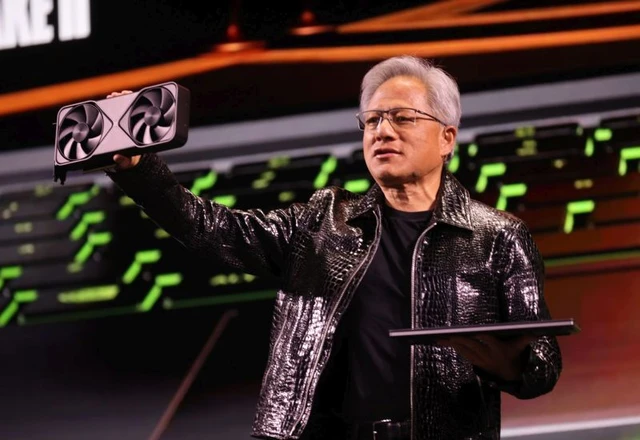
Despite periodic expert concerns regarding a potential "AI bubble" or market oversaturation, empirical data suggests otherwise. The industry has seen no reduction in long-term contracts or deceleration in the construction of new production facilities. On the contrary, the cost of computing resource rentals and specialized chip pricing remain steadfastly high. For instance, the hourly rate for the Nvidia B200 accelerator has demonstrated remarkable resilience, maintaining its premium positioning even after short-term corrections.
Particular attention should be paid to component availability. Demand is so acute that production capacity for the coming year is almost entirely committed across all primary semiconductor types. Analysts believe that shortages or limited availability of specific components will persist through 2028, creating a "seller's market" and sustaining high margins for manufacturers.
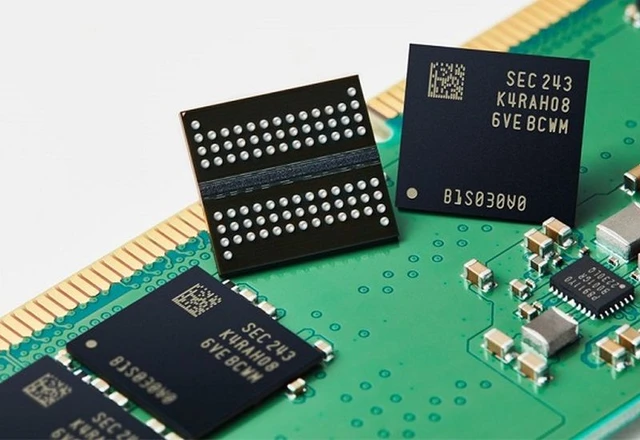
Breaking down the structure of this growth reveals that the memory segment is the primary beneficiary. By 2030, its volume is expected to climb from the current $937 billion to $1.8 trillion. This is driven by the transition to new High Bandwidth Memory (HBM) standards, which are critical for the operation of modern neural networks.
Parallel to this, the server segment is experiencing an exponential surge, with projections moving from $359 billion to $848 billion. While traditional consumer markets, such as PCs and smartphones, are showing steady but modest growth, the automotive and industrial automation sectors are expanding more aggressively. The automotive electronics share is expected to grow 1.5 times, reaching $90 billion—a reflection of the global trend toward electrification and the integration of autonomous driving systems.
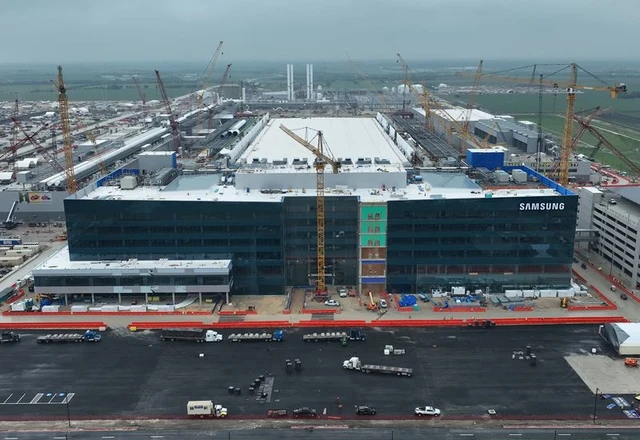
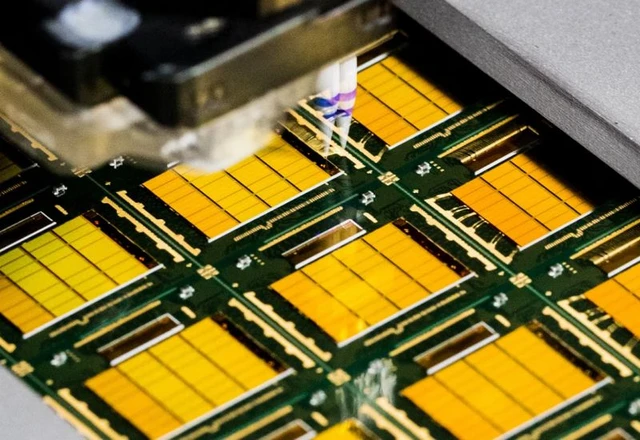
Such massive market expansion inevitably entails colossal capital expenditures. Spending by chipmakers on lithography and assembly equipment is set to more than double, rising from $155.9 billion to $359.8 billion. This indicates that the industry is betting on long-term capacity scaling, preparing for an era where semiconductors become the primary strategic asset of the global economy, comparable in significance to energy in the previous century.
 Forecasting Exponential Growth in Nvidia Shipments