The global EV market is shifting from a race for scale to a battle for cognitive dominance. Chinese OEMs are evolving beyond mere hardware assemblers, repositioning themselves as architects of sophisticated cognitive control systems. Xpeng is taking a bold leap in this direction, pivoting its business model from traditional vehicle sales toward the delivery of high-tech solutions. The licensing of proprietary silicon and software could emerge as the new gold standard for monetization within the mobility sector.
The contemporary automotive landscape is undergoing a fundamental paradigm shift: the vehicle is evolving from a mechanical device into a software-defined product. Within this context, Xpeng, a frontrunner in the Chinese electric vehicle (EV) market, is recalibrating its strategic trajectory. The company intends to transcend the boundaries of proprietary manufacturing to offer its core innovations to third-party stakeholders—ranging from electronic control systems and specialized Turing AI chips to sophisticated autonomous driving software.
This pivot toward becoming a technology vendor already has a proven blueprint. A strategic alliance with Volkswagen, initiated in July 2023 with a $700 million investment for a 4.99% stake, served as a proving ground for this new business model. The fruit of this collaboration was the ID.UNYX 08 electric SUV, which reached the market in just 24 months. This model seamlessly integrates Xpeng’s intelligent cabin management systems with the computational power of Turing chips, demonstrating an extraordinary velocity in integrating complex IT solutions into a mass-production product.
The economic rationale for this transition becomes evident when analyzing the financial metrics. While traditional vehicle sales are facing margin compression—dropping from 14.3% to 12.1% in the second quarter—the technology services segment is experiencing exponential growth. Revenue from services and licensing has nearly doubled, with margins in this vertical surging to 75.1%. This validates the thesis that intellectual property yields significantly higher profitability than the physical assembly of vehicles.
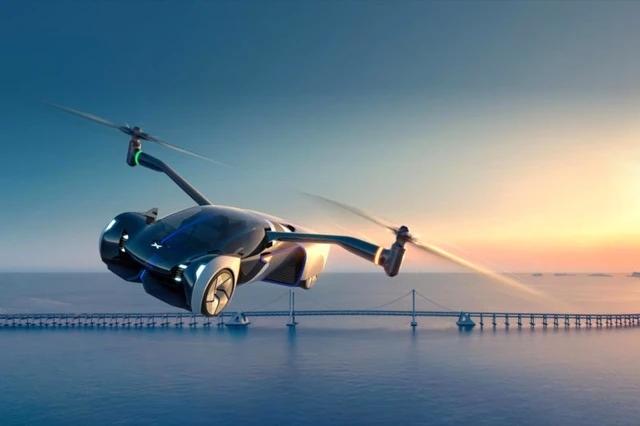
Xpeng’s technological stack is no longer viewed merely as an automotive add-on, but as a universal toolkit for "Physical AI"—the capacity for artificial intelligence to interact effectively with the material world. This ecosystem encompasses not only autopilot systems but also robotaxis, flying cars, and humanoid robots. A dedicated commercialization arm within the company is now actively seeking new partners among software developers and component suppliers, aiming to scale these advancements across adjacent domains of robotics.
Parallel to its evolving business model, Xpeng is accelerating its global footprint. Following a successful launch in Norway, total overseas sales have surpassed 100,000 units. A critical milestone in this expansion is the localization of production: the new G9L SUV, set to debut at the Paris Motor Show, will be the fourth model manufactured at the Magna plant in Austria. This move allows the company to reduce logistical overhead and integrate more deeply into the European market.
The culmination of this strategy is the venture into general-purpose robotics. The introduction of the IRON humanoid robot, slated for commercial delivery by 2027, signals Xpeng’s entry into the vanguard of autonomous systems development. According to leadership's vision, robotics will become the primary driver of profitability in the long term, relegating automotive manufacturing to a supporting vertical. Consequently, Xpeng is evolving from a mere automaker into a global provider of intelligent systems, where the car is simply one of many physical manifestations of its technological stack.
 Forecasting Exponential Growth in Nvidia Shipments