The global AI arms race is entering a phase of hyper-acceleration, pitting the market dominance of Nvidia and AMD against the soaring ambitions of Eastern tech titans. At the heart of this struggle is Huawei, which is aggressively overhauling its development cycles to close the widening technological divide. The company's strategy is pivoting away from the pursuit of single-die supremacy toward the engineering of massive, distributed computing architectures. This approach has become the only viable path to circumvent the stringent restrictions imposed on the supply of cutting-edge components.
The contemporary AI accelerator landscape has evolved beyond a mere race for transistor density per square millimeter. Today, it is a battle of ecosystems and infrastructural solutions. Recognizing the pressure of external sanctions that limit access to the most advanced fabrication processes, Huawei is pivoting toward a strategy of extensive scaling. Rather than pursuing a singular "perfect" chip, the company is focusing on orchestration—integrating multiple devices into a single, ultra-powerful computational organism.
The product roadmap for the Ascend family reveals an aggressive trajectory. The market can expect the Ascend 960DT in the first quarter of 2027, followed by the Ascend 960PR in the third quarter of the same year. Notably, the launch schedule for the first device was significantly accelerated—Huawei effectively moved the release up by three quarters to respond more rapidly to market demands. The company's ambitions are even more expansive: the Ascend 970 family is slated for 2028, with the Ascend 980 following in 2029.
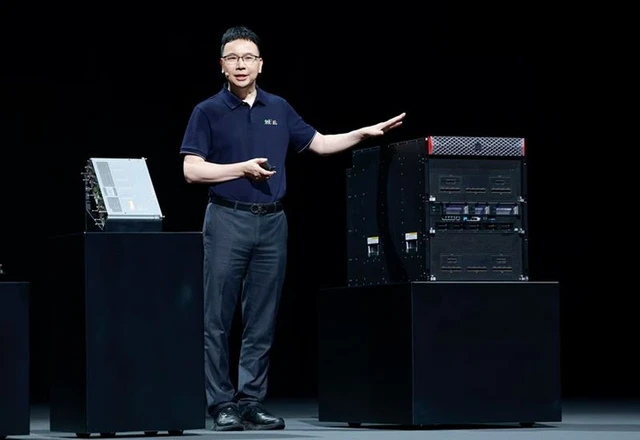
The linchpin of this strategy is the proprietary UnifiedBus interconnect. This data bus allows disparate accelerators to be aggregated into massive computing clusters, minimizing latency and optimizing data throughput. To date, Huawei has developed 11 different types of components supporting this standard, enabling the creation of "superclusters" capable of linking up to one million AI chips. In an environment where individual core performance is capped by technological barriers, such massive-scale parallelization becomes the primary catalyst for scaling total system capacity.
The real-world viability of this approach has already been validated through active deployments. Super-nodes based on the Ascend 910C have entered operational use, with over a thousand such systems shipped to more than 370 customers. While detailed specifications remain proprietary, the sheer scale of this deployment signals that the infrastructure is ready for industrial-grade scalability.
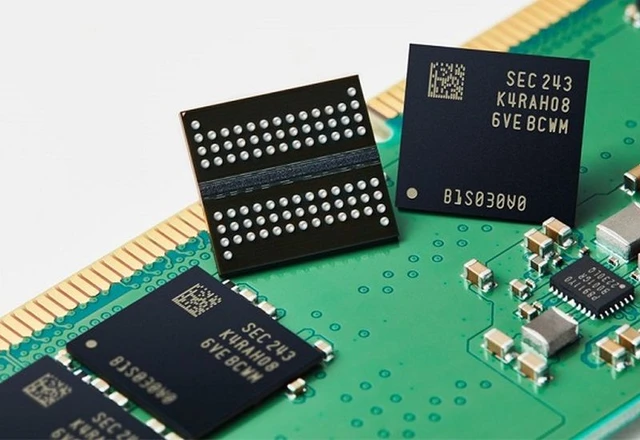
However, the path toward technological autonomy is fraught with significant economic and logistical hurdles. One of the most acute challenges is the shortage of High Bandwidth Memory (HBM), which is critical for running Large Language Models (LLMs). This scarcity has forced the company to recalibrate its pricing strategy, driving up the cost of Ascend accelerators by as much as 60%.
Despite these financial pressures, the software ecosystem continues to expand. Currently, over 5,200 developers engage with the Huawei platform monthly, building the essential software abstraction layer intended to serve as an alternative to Western industry standards. Furthermore, the company's expansion is reaching beyond the domestic Chinese market; South Korea and Egypt have emerged as strategic target markets, underscoring Huawei's drive to establish itself as a global provider of AI infrastructure.
 Forecasting Exponential Growth in Nvidia Shipments