9 Jul 2026
 The Pricing Surge of the Google Pixel Ecosystem
The global semiconductor market is once again grappling with volatility—a turbulence that inevitably trickles down to the end consumer. Memory chip shortages have become the catalyst forcing tech giants to recalibrate their pricing strategies. According to recent leaks, Google will be no exception, factoring these escalating overheads into the price tags of its upcoming Pixel lineup. This shift underscores a troubling trend: the raw cost of hardware is beginning to override the strategic goal of maintaining the market accessibility of premium devices.
9 Jul 2026
 The New Trajectory of HBM Memory Evolution
The meteoric rise of Large Language Models (LLMs) has pushed the semiconductor industry toward a hard physical ceiling. Today's GPU accelerators are hitting a critical wall: conventional approaches to scaling memory capacity are triggering catastrophic thermal issues and systemic efficiency losses. The solution lies in a radical reimagining of die geometry, evolving traditional memory "stacks" into high-performance, integrated blocks. This paradigm shift promises more than just an exponential increase in capacity; it heralds a quantum leap in AI data processing speeds.
9 Jul 2026
 The Cost of Memory in the Age of AI
The global AI arms race has shifted the epicenter of economic power from the architects of algorithms to the titans of hardware. South Korea, having emerged as the global hub for high-performance memory production, is now grappling with an unforeseen byproduct of this technological surge. The meteoric rise in wealth among a select stratum of engineers has begun to erode the nation's traditional social hierarchies, transforming a landmark technological triumph into a catalyst for profound societal fracture and systemic tension.
9 Jul 2026
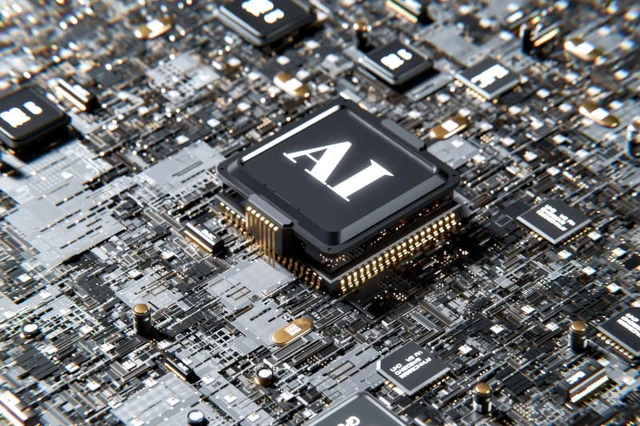 Meta’s Strategic Push for In-House AI Silicon
The global AI arms race is rapidly shifting its center of gravity from algorithmic refinement to hardware infrastructure. For the world's tech titans, an over-reliance on a narrow consortium of compute providers has introduced critical strategic vulnerabilities and mounting financial strain. Meta intends to break this cycle by pivoting toward the large-scale production of its own proprietary, specialized silicon. The unveiling of the Iris chip signals the company's definitive move toward total infrastructural autonomy.
9 Jul 2026
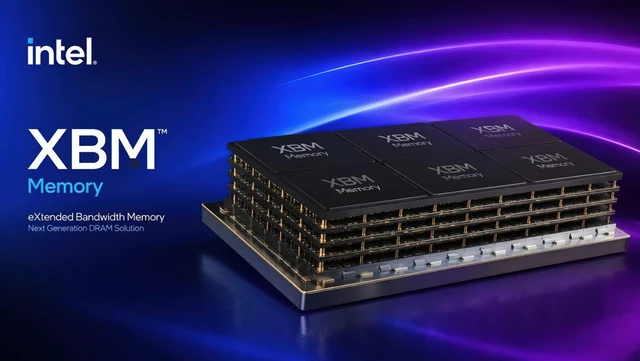 Intel XBM and the New Logic of Memory
The modern AI arms race has hit a critical impasse known as the "memory wall," where the bandwidth of the storage subsystem has become the primary bottleneck stifling performance. While traditional HBM-based solutions are highly efficient, they are becoming prohibitively expensive and complex to manufacture due to their rigid dependence on silicon interposers. In response to this challenge, Intel has introduced Cross-Batch Memory (XBM), a concept that proposes a radical reimagining of memory's physical architecture. This technology seeks to decouple accelerators from these manufacturing constraints and push data density to an entirely new frontier.
9 Jul 2026
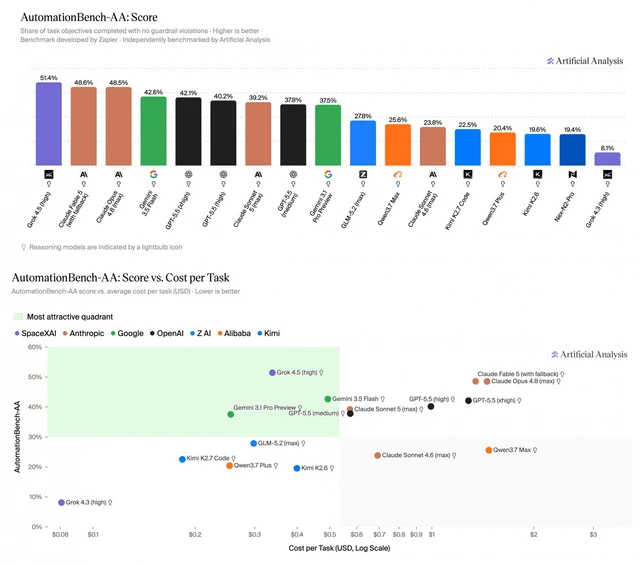 Grok 4.5: An Economic Breakthrough in Automation
The current arms race among Large Language Models (LLMs) is pivoting from a pursuit of raw intelligence toward a focus on operational efficiency. The spotlight has shifted to AI agents capable of autonomously navigating complex SaaS ecosystems—environments where the margin for error is razor-thin and computational overhead is a critical constraint. Fresh data from the independent AutomationBench-AA benchmark reveals an unexpected frontrunner that has fundamentally reimagined the approach to task execution. SpaceXAI’s Grok 4.5 has demonstrated that a pragmatic approach to resource allocation can outperform the "brute force" methodology employed by the industry's reigning flagships.
9 Jul 2026
 China's Computing Power Dilemma
The global AI arms race is no longer just a battle of algorithmic sophistication; it is increasingly defined by the raw physical scale of available compute. In its pursuit of total technological sovereignty, China now finds itself caught in a stark tension between the political mandate for import substitution and the uncompromising constraints of technical reality. Any potential easing of restrictions on the procurement of Nvidia H200 chips only serves to expose the profound crisis gripping China's domestic semiconductor industry. This predicament underscores just how agonizing the decoupling from cutting-edge Western technology has become in the era of Large Language Models (LLMs).
9 Jul 2026
 The Pragmatic Intelligence of the New Grok 4.5 Model
The LLM arms race is shifting from a blind pursuit of raw power toward an era of operational efficiency. The launch of SpaceXAI’s Grok 4.5 marks a pivotal transition, where a strategic alliance with Cursor transforms a development tool into a robust pipeline for training data. Rather than chasing dominance across every benchmark, the new model prioritizes accessibility and practical utility. This represents the first major milestone of a multi-billion dollar synergy, fundamentally rewriting the rules of the AI-assisted coding landscape.
9 Jul 2026
 The Intelligence Leap of Visual Studio Code
Modern integrated development environments (IDEs) are rapidly evolving beyond simple text editors, transforming into comprehensive ecosystems powered by autonomous AI agents. Visual Studio Code remains at the forefront of this shift, integrating tools that transcend basic code completion to actively orchestrate complex development workflows. Version 1.128 focuses on deepening the synergy between the developer and the AI, introducing multi-threaded conversations and multimodal capabilities. This release signals a move toward a more fluid and transparent programming environment, one where AI evolves into a true partner in the architectural design process.
9 Jul 2026
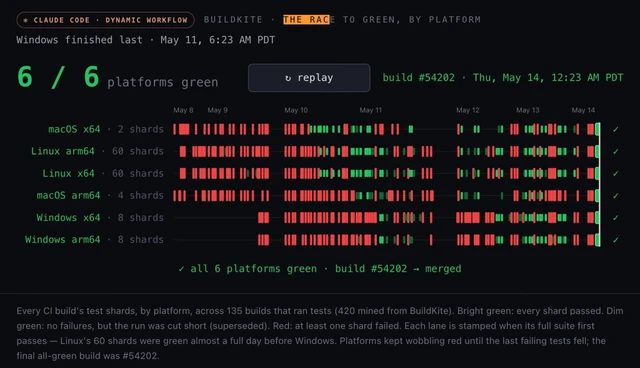 Migrating Bun to Rust: An AI-Powered Transition
Migrating a production-grade runtime from one systems programming language to another is typically viewed as a high-stakes operation of staggering complexity. Traditionally, such transitions necessitate months of painstaking manual refactoring and a total freeze on new feature development. The Bun case, however, signals a radical paradigm shift, one where AI agents step in as the primary executors. This precedent proves that, provided there is robust test coverage, AI is capable of rewriting a million lines of code in a matter of days.
9 Jul 2026
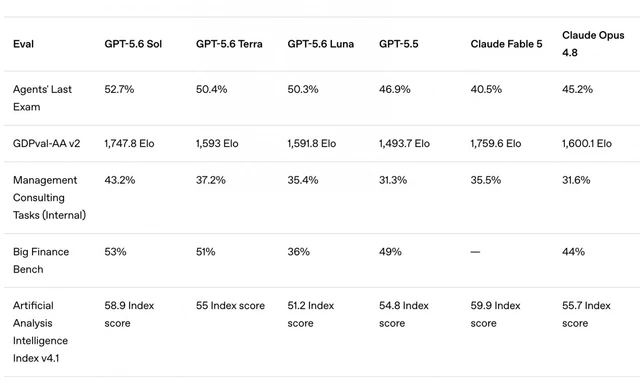 The Economics of Intelligence in GPT-5.6 Models
The LLM arms race is shifting from a showcase of raw computational power toward a new era of optimization and industrial-scale deployment. The launch of OpenAI’s GPT-5.6 family signals a strategic pivot: success is no longer measured by benchmark records, but by the "cost per unit of intelligence." By implementing a tiered access model, OpenAI is bringing sophisticated reasoning capabilities to even its free-tier users, effectively evolving AI from an elite tool into a ubiquitous infrastructural utility.
9 Jul 2026
 The Evolution of OpenAI Toward Autonomous Agents
The line between a simple text-based chatbot and a comprehensive productivity tool is effectively vanishing. OpenAI is shifting its paradigm from providing mere answers to deploying autonomous agents capable of orchestrating complex business processes independently. The rollout of ChatGPT Work and the GPT-5.6 model signals a strategic pivot: AI is evolving from a consultant into an executor, taking ownership of intricate, multi-stage workflows. This represents a decisive move toward the democratization of automation, placing powerful development capabilities directly into the hands of every knowledge worker.
